
There was a time when growing vegetables was simply part of everyday life. A few rows of potatoes, runner beans climbing their poles, a patch of cabbages and perhaps some parsley growing near the kitchen door. The garden was not expected to be particularly fashionable. It had a job to do, and that job was to help put food on the table.
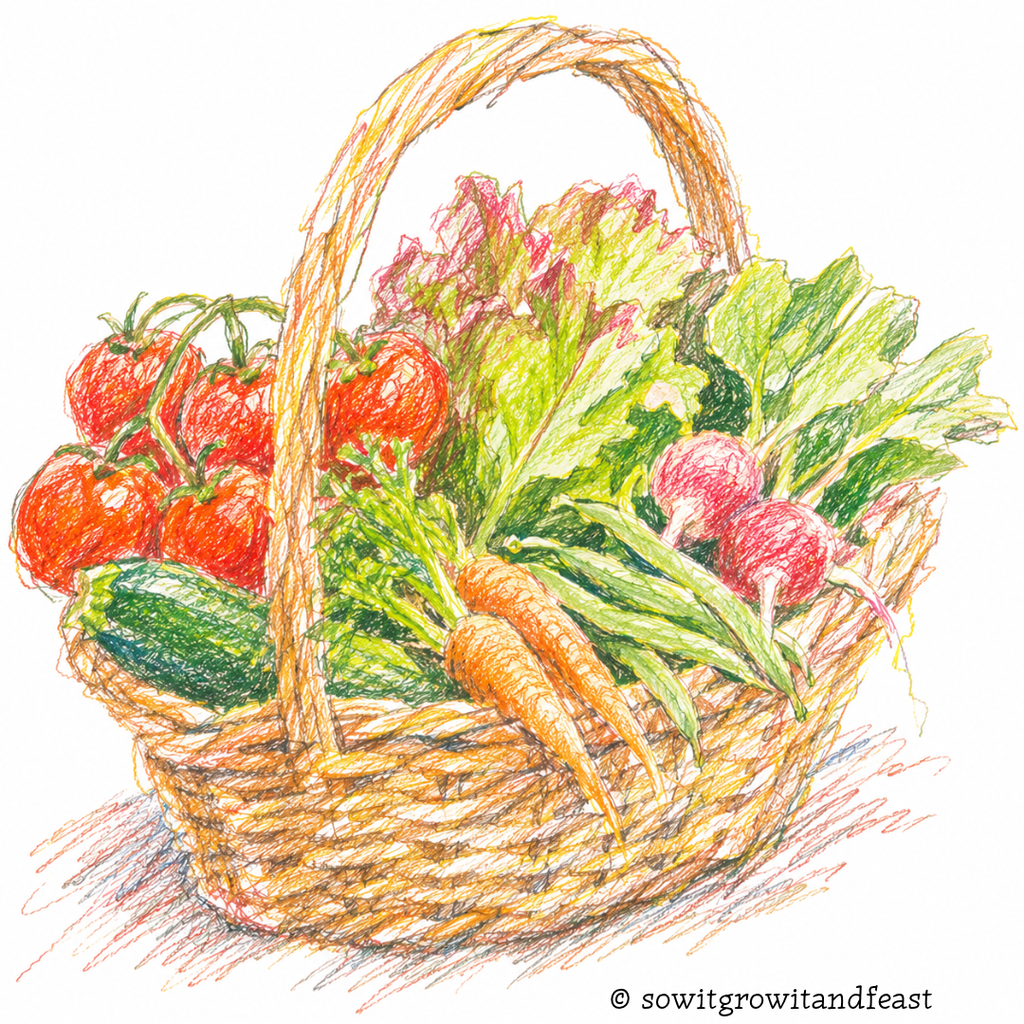
Today, with the cost of the weekly shop taking an increasingly noticeable share of household budgets, the idea of growing some of our own food has a renewed appeal.
A packet of seeds costs a few pounds. A handful of soil, a little sunshine and some patient attention can turn those seeds into something worth eating.
It sounds wonderfully straightforward.
And sometimes it is.
But anyone who has wandered into a garden centre intending to buy a packet of lettuce seeds and emerged with a trolley full of compost, pots, plant supports and a rather expensive watering can will know that gardening is not automatically a money-saving exercise.
The secret lies in knowing what to grow, how to make the most of the space available and, perhaps most importantly, when not to spend money.
A productive kitchen garden does not need to be large, elaborate or expensive.
It simply needs to work for you.
Why Growing Your Own Food Matters When Prices Rise
Food prices are influenced by a complicated collection of factors, many of which are far beyond our control.
Energy costs, transport, agricultural labour, international trade and changing weather patterns all affect what it costs to produce and distribute food.
Extreme weather can damage crops and disrupt harvests. Drought can reduce yields, while prolonged rainfall can make planting and harvesting difficult.
And because food production is connected to global supply chains, events thousands of miles away can influence the prices we see in British supermarkets.
Growing a few vegetables at home will not remove these pressures.
Nor will it make a household entirely self-sufficient.
But it can provide a small measure of independence.
A pot of parsley by the kitchen door means one less packet of herbs to buy. A productive row of runner beans can provide vegetables for several meals. A succession of lettuce can offer fresh leaves throughout much of the growing season.
These may seem like modest savings.
Yet modest savings, repeated regularly, can make a worthwhile difference.
And there is something rather satisfying about knowing that at least part of supper has come from your own garden.
Can Growing Your Own Actually Save Money?
The answer is yes, but not every crop offers the same financial return.
Some vegetables are inexpensive to buy and require considerable space to grow.
Others are relatively costly in the shops but easy to produce at home.
For a small kitchen garden, it often makes more sense to concentrate on the latter.
Grow What You Would Otherwise Buy
The most important rule of budget gardening is wonderfully simple.
Grow food you actually enjoy eating.
There is little advantage in producing an impressive harvest of turnips if nobody in the household particularly likes them.
Similarly, growing twenty courgette plants may seem like a splendid idea in April, but by August you may find yourself leaving vegetables on neighbours’ doorsteps and pretending it was their idea.
A smaller number of productive plants is often far more useful.
Think about the vegetables and herbs that regularly appear on your shopping list.
Which are expensive to buy fresh?
Which do you use frequently?
And which could grow successfully in your available space?
These are the crops most likely to offer worthwhile savings.
The Best Vegetables to Grow to Save Money
Some vegetables are particularly well suited to budget-conscious gardening because they produce generous harvests, can be picked repeatedly or make efficient use of a small space.
| Crop | Why it offers good value |
|---|---|
| Cut-and-come-again lettuce | Repeated harvests of fresh leaves |
| Runner beans | Productive plants over a long season |
| Courgettes | Generous harvests from relatively few plants |
| Tomatoes | Fresh produce that can be expensive to buy |
| Chard | Leaves can be harvested over many months |
| Radishes | Quick-growing and useful between other crops |
| Fresh herbs | Can replace frequently purchased supermarket packets |
| Kale | Hardy crop with a long harvesting season |
The financial value will depend on your growing conditions, how much you harvest and what you would otherwise have spent.
Lettuce: Small Seeds, Repeated Harvests
Lettuce (Lactuca sativa) is one of the simplest crops for a small kitchen garden.
Rather than growing large numbers of whole lettuces at once, try loose-leaf varieties that allow you to harvest the outer leaves while leaving the centre to continue growing.
Sow small quantities every few weeks during suitable weather.
This provides a succession of fresh leaves rather than one enormous harvest that needs eating immediately.
Lettuce can also be grown in containers, making it useful for patios and smaller gardens.
Runner Beans: A Generous Summer Crop
Runner beans (Phaseolus coccineus) are wonderfully productive when grown in suitable conditions.
A few plants climbing a simple support can provide repeated harvests during summer and early autumn.
Pick the pods while they are young and tender, and harvest regularly to encourage continued production.
Surplus beans can be blanched and frozen for later use.
Courgettes: A Little Goes a Long Way
Courgettes (Cucurbita pepo) are famous for their generosity.
One or two healthy plants can provide plenty for a small household during a favourable growing season.
They need space, fertile soil and consistent watering, but their productivity can make them a worthwhile choice.
The trick is to harvest regularly while the fruits are still relatively small.
Leave them unattended for a few days and you may return to discover something resembling a small submarine beneath the leaves.
Tomatoes: Flavour and Value
Tomatoes (Solanum lycopersicum) are particularly appealing because home gardeners can choose varieties for flavour rather than commercial storage and transport.
Cherry tomatoes often produce generous harvests, while larger varieties may provide fewer but substantial fruits.
In Britain, tomatoes generally appreciate a warm, sheltered position, with many varieties performing particularly well in a greenhouse or sunny growing area.
A productive plant can provide several kilograms of fruit, although yields vary considerably.
Herbs: Perhaps the Best Value of All
Fresh herbs can be surprisingly expensive when purchased in small supermarket packets.
Yet many are straightforward to grow.
Chives (Allium schoenoprasum), parsley (Petroselinum crispum), thyme (Thymus vulgaris) and rosemary (Salvia rosmarinus) are all useful kitchen plants.
Some are perennial and can provide harvests over several years.
A few pots near the kitchen door can be remarkably convenient.
And unlike a supermarket packet, a living herb plant may continue producing long after the first handful has been used.
Vegetables That May Not Save You Much Money
Not every vegetable is a sensible choice if saving money is your main priority.
Potatoes, for example, can be inexpensive to buy in bulk.
Growing them at home can be enjoyable, particularly when harvesting delicious new potatoes, but the cost of seed potatoes, compost and containers may outweigh the financial savings.
The same applies to some large, slow-growing crops that occupy valuable space for many months.
Cauliflowers, for example, can be demanding and may produce only one main harvest per plant.
This does not mean they are not worth growing.
It simply means their value may lie more in flavour, variety and enjoyment than in reducing the shopping bill.
A kitchen garden should offer pleasure as well as practicality.
But if the aim is to save money, it helps to know the difference.
Start with What You Have
One of the easiest ways to make vegetable gardening expensive is to assume that everything must be purchased before you begin.
Raised beds, decorative containers, elaborate supports and specialist equipment can all be useful.
But very little of it is essential.
If you already have suitable garden soil, growing directly in the ground is often the least expensive option.
A few simple rows can be just as productive as an elaborate arrangement of raised beds.
Containers are useful where space is limited, but they need not all be new.
Clean, sturdy, food-safe containers can often be reused, provided they have suitable drainage holes.
Old buckets, large pots and other appropriate containers may be perfectly serviceable.
Avoid containers that previously held hazardous chemicals or whose materials are unsuitable for growing food.
Make Your Own Plant Supports
Runner beans and peas need support, but this does not have to involve expensive garden structures.
Hazel poles, bamboo canes and suitable reclaimed materials can all be used.
Simple frames are often perfectly adequate.
There is something rather pleasing about a vegetable garden built from useful things already to hand.
It may not resemble a glossy gardening catalogue.
But the beans are unlikely to mind.
Save Money by Growing from Seed
Buying established vegetable plants is convenient, particularly when you are short of time.
But growing from seed is usually more economical, especially when you want several plants.
A single packet may contain enough seed for multiple sowings.
Lettuce, radishes, peas, beans, carrots and many other vegetables can be grown directly from seed.
Tomatoes, chillies and some other crops benefit from an earlier start indoors.
The important thing is to avoid sowing more than you need.
A hundred lettuce seedlings may look wonderfully promising in March, but finding space for them all can become a rather different matter.
Share Seeds with Other Gardeners
Many seed packets contain more than one household can use.
Sharing seeds with friends, neighbours or local gardening groups can reduce waste and expense.
Seed swaps are also an excellent way to discover unusual varieties.
Check that seeds are appropriately labelled, reasonably fresh and suitable for sharing, and be mindful of plant health and any relevant restrictions.
Compost: Turning Waste into Something Valuable
Healthy soil is the foundation of a productive vegetable garden.
And one of the most useful materials for improving soil can be made at home.
Garden compost is created as organic materials decompose.
Suitable vegetable peelings, garden trimmings, fallen leaves and other compostable materials can gradually become a dark, crumbly soil improver.
Added to garden beds, mature compost contributes organic matter and helps support soil structure and biological activity.
It can also reduce the amount of purchased soil improver you need.
Getting Started with Composting
A compost heap does not need to be complicated.
Choose a suitable position and combine a mixture of nitrogen-rich materials, such as fresh green garden waste, with carbon-rich materials, such as dry leaves and shredded cardboard.
Keep the heap moist but not waterlogged.
Turning it occasionally can introduce air and encourage decomposition.
Avoid adding materials that may attract vermin or introduce persistent weeds and plant diseases unless you are using a suitable composting system capable of managing them safely.
Over time, the materials will break down into compost that can be returned to the garden.
It is one of the most satisfying forms of recycling.
Yesterday’s vegetable peelings helping to grow tomorrow’s supper.
Save Water Without Sacrificing Your Harvest
Water is another cost worth considering, particularly during dry summers.
Vegetables need adequate moisture to grow well, and some crops are particularly demanding.
Courgettes, beans and tomatoes can all suffer when watering is inconsistent.
But efficient watering can reduce waste.
Collect Rainwater
A water butt connected to a suitable downpipe can provide a useful supply for the garden.
Rainwater harvesting is particularly valuable during periods when rainfall is plentiful.
However, stored rainwater should be managed carefully, especially when used around edible crops.
Avoid contaminating leaves and produce intended to be eaten raw, and follow appropriate food hygiene practices.
Mulch the Soil
A layer of suitable organic mulch can help reduce evaporation and suppress weeds.
Compost, leafmould and other appropriate materials can be useful.
Keep mulch away from the stems of vulnerable plants and avoid applying thick layers to cold, wet soil before it has had an opportunity to warm in spring.
Water Where It Matters
Watering the soil around the roots is generally more efficient than repeatedly wetting large areas of foliage.
Water thoroughly when needed rather than applying tiny amounts that barely penetrate the surface.
Established plants may need less frequent watering than newly planted seedlings, although requirements vary with soil, weather and crop.
The aim is not to use as little water as possible.
It is to use water wisely while maintaining healthy growth.
Make Every Inch of Growing Space Work Harder
A small vegetable garden can be surprisingly productive when crops are planned carefully.
Rather than leaving beds empty for long periods, consider what can be grown before or after the main crop.
This is known as succession planting.
Early radishes may be harvested before summer vegetables need the space.
Peas can be followed by suitable autumn salads.
Lettuce can be sown in small quantities throughout the growing season.
The result is a garden that produces food over a longer period.
Grow Vertically
Climbing vegetables make excellent use of limited ground space.
Runner beans, climbing French beans and peas can be trained up suitable supports.
This leaves more room for lower-growing crops.
However, consider the shade cast by taller plants.
Position them so they do not deprive neighbouring vegetables of the light they need.
Use Crop Rotation Sensibly
Crop rotation can help reduce the build-up of certain soil-borne pests and diseases.
It involves moving related vegetable crops between growing areas over successive seasons.
In a small garden, a perfect four-year rotation may not be practical.
Instead, keep a simple record of what has grown where and avoid repeatedly planting the same botanical families in the same soil where possible.
Rotation is helpful, but it does not replace compost, appropriate feeding or good soil management.
Harvest Regularly and Waste Less
There is little financial benefit in growing vegetables that never reach the kitchen.
Harvesting at the right time is essential.
Beans and courgettes should generally be picked regularly while young and tender.
Loose-leaf lettuce can be harvested a few leaves at a time.
Tomatoes are best picked when suitably ripe for their variety and intended use.
Regular harvesting can encourage continued production in some crops.
But it is equally important to plan for what happens after picking.
Store Your Harvest Properly
Different vegetables have different storage requirements.
Potatoes need cool, dark, suitable conditions.
Leafy vegetables generally benefit from refrigeration.
Beans and peas can be blanched and frozen.
Tomatoes can be cooked into sauces and frozen for later meals.
Preserving can help reduce waste, but safe methods are essential.
Use tested recipes for pickles and bottled foods, particularly low-acid vegetables, which require specialised processing for safe shelf-stable preservation.
Sometimes the simplest solution is also the best.
Cook what you need, freeze what you can and share the rest.
The Value of Sharing
One of the loveliest things about growing food is that it creates opportunities to share.
Spare seedlings can be exchanged.
Surplus vegetables can be offered to neighbours.
Seeds can be saved from suitable varieties and shared for future seasons.
Community gardens and allotment associations can also provide valuable opportunities to exchange knowledge, tools and practical help.
And while selling surplus produce may occasionally be possible, it is worth checking relevant rules on food sales, trading and market arrangements before treating it as an income source.
For most home gardeners, sharing is simpler.
A bag of runner beans passed over the garden fence may not appear in the household accounts, but it has a value of its own.
Growing Food with Children
A kitchen garden can be a wonderful place for children to learn where food comes from.
A packet of seeds offers an introduction to biology, weather, seasons and the importance of caring for living things.
Radishes are particularly useful because they grow quickly.
Peas are another favourite, producing shoots, flowers and pods that children can observe.
Sunflowers, although not a vegetable crop in the usual kitchen garden sense, can add a little excitement and provide an opportunity to watch pollinators at work.
Children can help sow seeds, water plants and gather suitable produce under supervision.
And there is something rather satisfying about watching a child eat a vegetable they might previously have regarded with deep suspicion, simply because they grew it themselves.
The Benefits That Cannot Be Measured in Pounds
If the only purpose of a vegetable garden were to save money, we might approach it rather differently.
We would calculate every packet of seeds, every litre of water and every kilogram of produce.
We would compare the results with supermarket prices and perhaps decide that certain crops were not worth the effort.
But gardening offers rewards that do not fit neatly into a household budget.
There is the physical activity involved in planting, tending and harvesting.
The opportunity to spend time outdoors.
The satisfaction of learning new skills.
And the simple pleasure of watching something grow.
Research suggests that gardening can support aspects of mental wellbeing, although individual experiences vary and it should not be regarded as a guaranteed treatment for stress or mental health difficulties.
For many people, the garden provides a welcome change of pace.
A place where attention turns from screens and schedules to soil, weather and the gradual progress of plants.
The first shoots of spring.
The scent of tomato leaves in summer.
The quiet satisfaction of gathering the last beans before autumn.
These things may not reduce the shopping bill, but they enrich life in other ways.
Start Small, Grow What You Love
If you are thinking about growing vegetables to help with household costs, there is no need to transform the entire garden.
Begin with one or two crops.
A pot of herbs by the kitchen door.
A container of salad leaves.
A few runner beans climbing a simple support.
Choose something you regularly buy and enjoy eating.
Learn how it grows, what it needs and how much it produces.
Then, if you have the space and enthusiasm, add another crop next season.
A productive kitchen garden develops gradually.
And there is no shame in discovering that some vegetables are easier or more economical to buy.
Growing your own should make life more enjoyable, not become another source of pressure.
A Little More Independence, One Harvest at a Time
Rising food prices are a reminder of how much our everyday lives depend on circumstances beyond our control.
We cannot influence the weather in distant growing regions, the cost of international transport or the decisions that shape global food markets.
But we can sometimes make a small difference to what happens closer to home.
We can sow a few seeds.
Look after the soil.
Collect rainwater.
Make compost.
And grow something useful in whatever space we have available.
A vegetable garden will not replace the supermarket, and it may not always provide the cheapest possible food.
But with thoughtful choices, it can reduce some household expenses while offering fresher ingredients, useful skills and a closer connection with the seasons.
There is a particular pleasure in walking into the garden to gather something for supper, knowing that it began with a seed and a little patience.
Perhaps the harvest is only a handful of herbs, a few tomatoes or enough beans for one meal.
It is still something worth celebrating.
Because growing your own food is not about producing everything you need. It is about discovering how much can come from a little, and finding satisfaction in the simple act of providing something for yourself.
Further Reading: Why Growing Food Makes You Feel Better, Take the Guesswork Out of Growing Veg, How to Create a Garden That Feeds Your Family, How to Start a Vegetable Garden Now Ready for Spring
Follow us on Instagram, Threads, BlueSky, Twitter, Pinterest & Facebook
Not sure where to start? Take a look at our Grow Your Own Packs with detailed step by step instructions, seeds and 1 years online support.