
Step into any traditional cottage garden and you may stumble across a trio of plants quietly working together in a way that feels almost magical. Tall stems, broad leaves, and dainty tendrils share the same patch of earth, creating a living tapestry of cooperation. This is the Three Sisters method—a beautifully simple, ancient technique for growing crops in partnership rather than isolation.
Beloved for generations, this approach offers a gentle reminder that nature is at its best when it works in harmony.
What Is the Three Sisters Method?
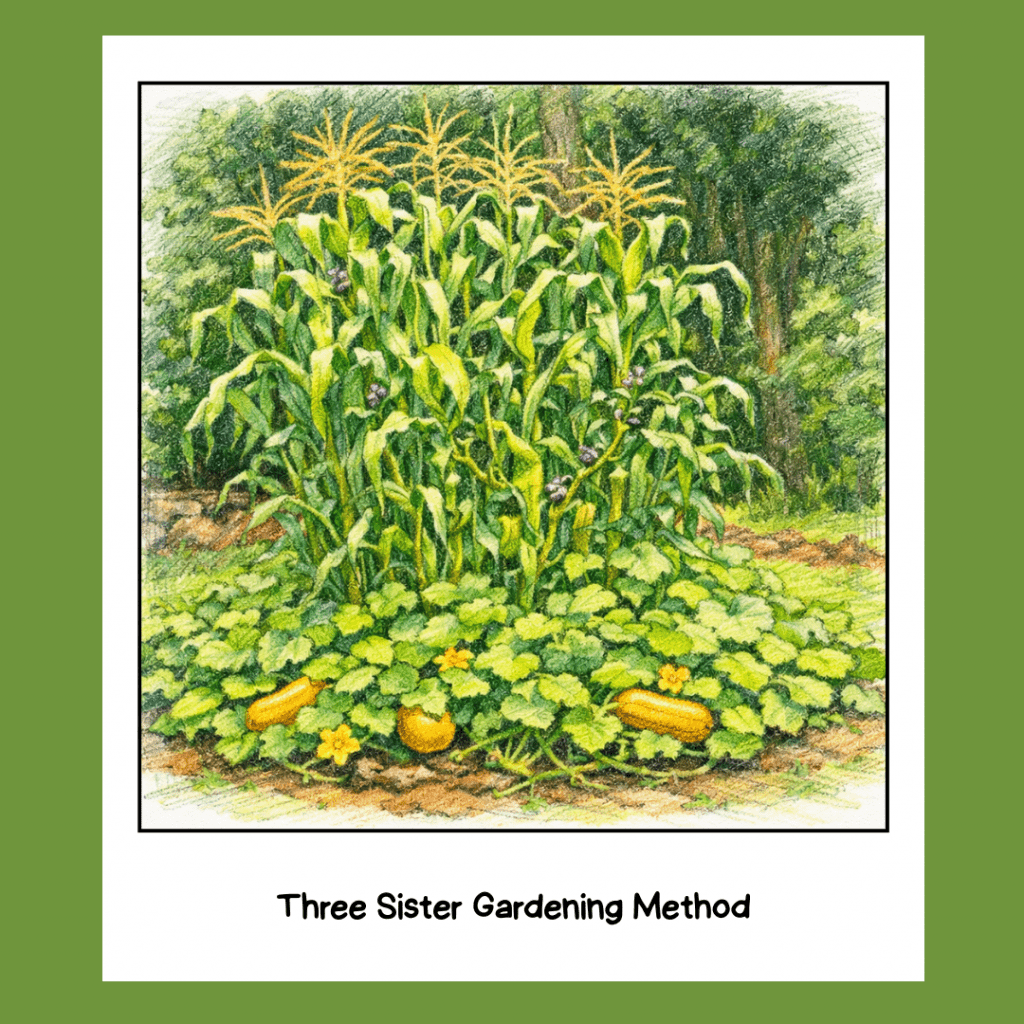
The Three Sisters method is a traditional way of growing sweetcorn, climbing beans, and squash together in the same bed. Each plant plays a distinct role:
- Sweetcorn grows tall, forming a natural support structure.
- Climbing beans twine gracefully around the stems, fixing nitrogen into the soil.
- Squash sprawls across the ground, shading the earth and keeping moisture where it’s needed.
Together, they create a mutually supportive ecosystem—three companions whose strengths complement one another beautifully.
How Did the Method Come About?
The method has its roots in indigenous horticultural traditions, where it developed over centuries through careful observation of how plants behaved in the wild. It offered a practical, resilient way to cultivate nourishing staples using minimal space and without the need for elaborate tools or structures.
Over time, the technique made its way into cottage gardens and kitchen plots across the world, where it was embraced for its simplicity, efficiency, and natural elegance. Today, it remains a favourite among gardeners who enjoy methods that feel both meaningful and grounded in history.
What Are the Benefits?
1. Natural Soil Health
Beans enrich the soil by adding nitrogen, supporting strong crops without extra feed.
2. Reduced Weeding and Watering
The spreading leaves of the squash act as a living mulch, helping to keep the soil damp and discouraging weeds.
3. Space-Saving and Productive
The vertical growth of the sweetcorn and climbing beans allows you to harvest generously even in smaller plots.
4. A Biodiverse Planting Style
The trio attracts a variety of wildlife—from pollinators to beneficial insects—supporting a thriving garden.
5. A Heritage Approach
It’s a method steeped in tradition, offering a sense of continuity with gardeners who have tended the land for countless generations.
Are There Any Disadvantages?
The Three Sisters method is highly rewarding, but it helps to be aware of a few practicalities:
- Timing Matters
Planting out of sequence can lead to beans searching in vain for support or squash overwhelming the space too early. - Not Ideal for Cold, Wet Summers
Sweetcorn needs warmth to thrive, so in cooler climates, growth may be slower. - Squash Can Dominate
Without a little guidance, squash plants may sprawl further than planned. - Requires Good Soil Preparation
Although the plants support one another, they still benefit from a nutritious starting bed.
How to Grow Your Own: Step-by-Step
1. Prepare the Bed
Choose a sunny, sheltered spot with rich, well-drained soil. A circular or slightly mounded bed works especially well for this method.
2. Plant the Sweetcorn First
In late spring, once the soil has warmed, sow sweetcorn seeds in a small cluster—usually a circle of five to seven plants. This creates a sturdy, supportive framework.
3. Add the Climbing Beans
When the sweetcorn reaches around 15–20 cm in height, sow climbing beans around the base of each corn plant. They will begin to twist naturally up the stems.
4. Introduce the Squash
Finally, plant your squash at the outer edge of the bed. As it grows, encourage the vines to roam around the perimeter rather than through the centre, ensuring they don’t smother the sweetcorn.
5. Water Carefully
Water at the base, especially during dry spells. The squash leaves help retain moisture, but all three crops still appreciate a good drink while they establish.
6. Let Nature Take the Lead
Once the trio is settled, the system becomes remarkably low-maintenance. The sweetcorn stands tall, the beans entwine, the squash shelters the soil—and together they flourish.
A Celebration of Companionship in the Garden
There’s something genuinely uplifting about the Three Sisters method. It invites us to see gardening not as a battle against nature, but as a collaboration with it—a quiet partnership where every plant has a purpose.
Whether you’re cultivating a historic garden or simply tucking a few seeds into a raised bed at home, this time-honoured trio offers a delightful, abundant way to grow.
Further Reading: How to Start Your Own Vegetable Patch, How to Plan and Design Your Dream Vegetable Patch, Why Choose Sow It Grow It and Feast for Your Garden?, How to Choose the Perfect Flower Pot for Your Crops, The Principles of Organic Gardening
Follow us on Instagram, Threads, BlueSky, Twitter, Pinterest & Facebook