
There is something rather wonderful about red in the garden.
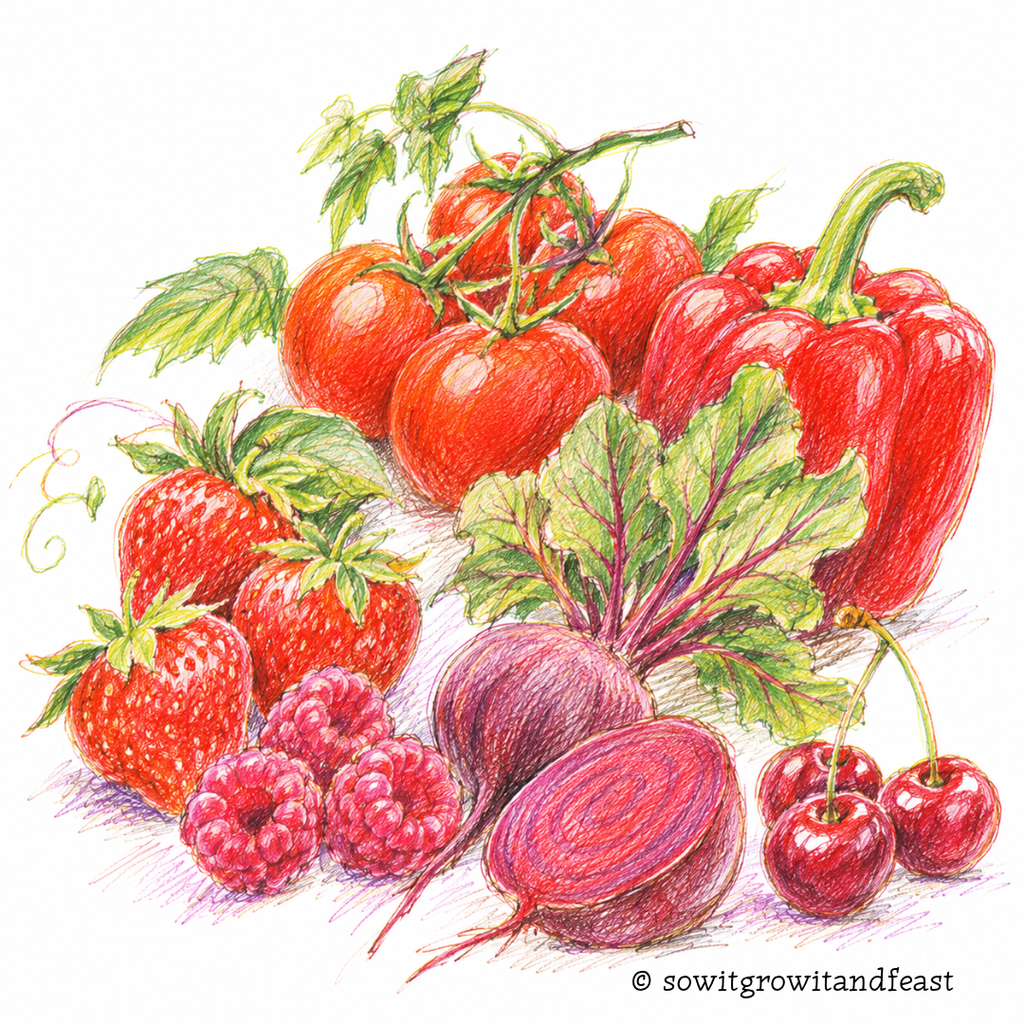
The first strawberry of summer, hiding beneath its leaves. A handful of raspberries picked warm from the sunshine. Tomatoes ripening against the greenhouse glass, cherries hanging like little jewels from their branches and the deep crimson of beetroot waiting beneath the soil.
Red is a colour that rarely goes unnoticed.
It brings life to the vegetable garden, richness to our plates and, occasionally, rather stubborn stains to our clothes.
Anyone who has prepared beetroot while wearing a white shirt will understand that last point.
But the beauty of red fruits and vegetables goes beyond their appearance.
Many contain naturally occurring plant pigments, including lycopene and anthocyanins, alongside different combinations of vitamins, minerals, fibre and other plant compounds.
There is good reason to include a variety of colourful fruits and vegetables in our diets.
Not because any particular colour offers miraculous health benefits, but because different plants provide different nutrients.
And there is another reason to celebrate red foods.
So many of them are wonderfully rewarding to grow.
From a strawberry plant in a terracotta pot to a row of radishes, a raspberry cane along the fence or tomatoes climbing towards the greenhouse roof, you do not need an enormous garden to enjoy a little home-grown colour.
So, rather than worrying about superfoods, detoxes and the latest nutritional promises, let’s concentrate on something much more satisfying.
Let’s sow them, grow them and feast on them.
Why Are Some Fruits and Vegetables Red?
The beautiful reds, pinks and purples found in fruits and vegetables are produced by naturally occurring pigments.
Two particularly interesting groups are carotenoids and anthocyanins.
Lycopene: The Colour of Ripe Tomatoes
Lycopene belongs to the carotenoid family.
It is responsible for much of the red colouring in tomatoes and the pink-red flesh of watermelon.
Unlike beta-carotene, lycopene is not converted into vitamin A by the body.
It has attracted scientific interest because of its chemical properties, although research into potential health effects should not be confused with proof that eating particular foods prevents or treats disease.
Interestingly, processing tomatoes can make some of their lycopene more accessible for absorption.
This means tomato sauces, soups and roasted tomatoes can be useful sources, alongside fresh fruit.
Anthocyanins: From Scarlet to Deep Purple
Anthocyanins are water-soluble plant pigments responsible for many red, purple and blue colours.
They are found in foods including raspberries, cherries, redcurrants and the skins of some apples.
Their colour can change depending on the acidity and other characteristics of the plant tissue.
These compounds are often described as antioxidants, although their behaviour in the body is more complicated than simply neutralising harmful substances.
The important point is that colourful fruits and vegetables contain a wide range of naturally occurring compounds.
And eating a variety of them is far more sensible than expecting one particular berry to perform miracles.
A strawberry can simply be a strawberry.
Preferably one you have grown yourself.
Tomatoes – Solanum lycopersicum
The unmistakable taste of summer.
If I could persuade someone to grow just one edible plant, tomatoes would be very high on the list.
There is something extraordinary about the flavour of a tomato picked at its best.
Warm from the sunshine, fragrant and beautifully ripe, it bears little resemblance to a disappointing winter tomato that seems to have travelled an awfully long way without developing much personality.
Tomatoes provide vitamin C, potassium and various plant compounds, including lycopene in red varieties.
They are also remarkably versatile, both in the garden and the kitchen.
Sow It
In Britain, tomatoes are generally sown indoors during late winter or early spring.
March is a good starting point for many gardeners, although greenhouse crops may be started earlier where sufficient warmth and light are available.
Sow seeds in trays or small pots of peat-free seed compost.
Keep them warm until germination, then provide plenty of light to encourage strong, compact growth.
Grow It
Tomatoes appreciate sunshine, warmth and consistent watering.
Choose varieties suited to your growing conditions.
Some are best grown in greenhouses, while others perform well outdoors in a sunny, sheltered position.
Compact bush varieties are particularly useful for containers and hanging baskets.
Tall cordon varieties need supporting and regular removal of sideshoots.
Feed with a suitable tomato fertiliser once fruits begin developing, following the manufacturer’s instructions.
Feast
Slice ripe tomatoes into a bowl with basil, olive oil and black pepper.
Roast them with garlic and thyme.
Make soup, pasta sauce or a rich tomato chutney.
When the harvest becomes generous, cooked tomato sauces can be frozen for later use.
But the very best tomatoes?
Eat them while they are fresh.
Sometimes they never need to reach the kitchen at all.
Strawberries – Fragaria × ananassa
The first sweet reward of summer.
There are few moments in the growing year quite like discovering the first properly ripe strawberry.
One day it is pale and unpromising.
The next, it has turned a beautiful red and seems to be asking to be picked.
Unfortunately, the birds and slugs have usually noticed it too.
Strawberries provide vitamin C and fibre, alongside anthocyanins and other plant compounds.
They are also among the most useful fruits for gardeners with limited space.
Sow It
Strawberries are usually established from young plants or runners rather than grown from seed.
Plant in spring or late summer to early autumn, depending on the type and conditions.
Choose healthy plants from a reputable supplier.
Grow It
Strawberries grow well in garden beds, containers, hanging baskets and raised planters.
Give them a sunny position and fertile, well-drained soil.
Water during dry weather, particularly when fruits are swelling.
Placing clean straw beneath developing fruit can help keep it away from damp soil.
Protect ripening strawberries from birds using securely fitted, wildlife-safe netting or other suitable barriers.
Remove unwanted runners if you want the plants to concentrate on fruit production.
Feast
Eat strawberries fresh, preferably while they are still warm from the sunshine.
Serve with yoghurt, add them to summer puddings or make a simple compote.
Surplus fruit freezes well for smoothies, sauces and cooking.
Although the idea of having too many strawberries remains something I have yet to experience.
Raspberries – Rubus idaeus
Little jewels from the summer garden.
Raspberries are among the loveliest fruits to grow at home.
They are delicate, fragrant and particularly delicious when freshly picked.
They can also be expensive to buy, which makes growing your own even more satisfying.
Raspberries provide fibre, vitamin C and manganese, alongside anthocyanins and other polyphenols.
With a little planning, it is possible to enjoy raspberries over an extended season.
Grow It
Choose between summer-fruiting and autumn-fruiting varieties.
Summer-fruiting raspberries generally produce their crop on canes grown during the previous year.
Autumn-fruiting varieties usually fruit on new canes produced during the current season.
This distinction matters when pruning.
Summer-fruiting varieties are generally pruned by removing canes that have already fruited.
Autumn-fruiting varieties grown for a single autumn crop can usually be cut down in late winter.
Raspberries prefer fertile, moisture-retentive but well-drained soil.
Most benefit from support, particularly taller summer-fruiting varieties.
Mulch in spring to help conserve moisture and suppress weeds.
Feast
Scatter fresh raspberries over porridge or yoghurt.
Add them to cakes and summer puddings.
Make jam, coulis or compote.
To freeze, spread the berries on a tray until firm, then transfer them to suitable containers.
They are also rather good eaten straight from the freezer.
Not that I would know anything about that.
Beetroot – Beta vulgaris Conditiva Group
The vegetable that refuses to be ignored.
Beetroot is one of the most underrated crops in the vegetable garden.
It is easy to grow, productive and wonderfully versatile.
And it offers two edible harvests: the roots and the tender young leaves.
The familiar deep red colour of beetroot comes primarily from pigments called betalains, particularly betacyanins.
These are different from the anthocyanins responsible for the colouring of many red berries.
Beetroot also provides folate, fibre and potassium, and contains naturally occurring dietary nitrates.
Sow It
Sow beetroot directly outdoors from spring into summer, choosing varieties appropriate to the season.
Sow in shallow drills approximately 2–3cm deep.
Space seeds according to the variety and thin seedlings where necessary.
Many beetroot seed clusters produce more than one seedling, so do not be surprised if several plants appear together.
Sowing small amounts every few weeks can provide a steady harvest.
Grow It
Beetroot prefers an open, sunny position and reasonably fertile soil.
Keep plants watered during prolonged dry spells.
Harvest roots while they are young and tender rather than allowing every beetroot to grow enormous.
Large roots can still be useful, but smaller ones are often particularly good for roasting and salads.
Feast
Roast beetroot with olive oil and thyme.
Combine it with feta, walnuts and salad leaves.
Grate young beetroot into salads or pickle it using a tested recipe.
Tender young leaves can be cooked like spinach or added sparingly to salads.
And when preparing beetroot, perhaps leave the white shirt in the wardrobe.
Red Sweet Peppers – Capsicum annuum
The sweetness of a long, warm summer.
A green pepper and a red pepper may be fruits from the same plant at different stages of ripeness.
Many sweet pepper varieties begin green before gradually changing colour.
As they ripen, their flavour often becomes sweeter and more developed.
Red peppers are a particularly good source of vitamin C and also contain carotenoids.
They are attractive plants to grow, especially in containers or greenhouses.
Sow It
Start peppers indoors during late winter or early spring.
They need warmth to germinate and a relatively long growing season.
Grow It
Peppers generally perform best in a greenhouse, polytunnel or warm, sheltered position in Britain.
They can also grow successfully in large containers.
Provide consistent moisture and suitable feeding during fruit development.
Allow fruits to ripen fully if you want their mature red colour and flavour.
Feast
Slice red peppers into salads.
Roast them until soft and sweet.
Stuff them with rice, vegetables and herbs.
Add them to soups, curries and pasta sauces.
Roasted peppers can be frozen for later use.
Red Chillies – Capsicum Species
A little heat from the kitchen garden.
Chillies bring colour, flavour and occasionally a surprising amount of excitement to the vegetable garden.
Their heat comes from compounds called capsaicinoids, particularly capsaicin.
Red chillies may also contain carotenoid pigments that develop as the fruits ripen.
Different varieties range from pleasantly mild to extraordinarily hot.
Sow It
Sow chillies indoors early in the year.
They need warmth and may take longer to germinate than some other vegetables.
Grow It
Chillies are particularly well suited to container growing.
Give them warmth, sunshine and suitable feeding.
Many varieties crop well in greenhouses, and compact plants can be attractive additions to a sunny patio during summer.
Feast
Use fresh chillies in sauces, curries and stir-fries.
Freeze surplus fruits whole or dry suitable varieties using safe methods.
If growing a new variety, check its expected heat level before using generous quantities.
One enthusiastic chilli plant can produce enough heat to keep the kitchen interesting for months.
Radishes – Raphanus sativus
For gardeners who prefer not to wait.
If patience is not your strongest gardening virtue, grow radishes.
Some varieties can be ready to harvest within four to six weeks under suitable conditions.
They are excellent for beginners, children and anyone who enjoys seeing quick results.
Red-skinned radishes contain vitamin C and other plant compounds, including pigments in the skin.
Their crisp texture and peppery flavour make them particularly useful in spring and summer cooking.
Sow It
Sow radishes directly into the soil from spring onwards.
Make small sowings every couple of weeks for a succession of harvests.
Choose varieties suited to the season, as some perform better in cooler conditions.
Grow It
Radishes grow quickly and require relatively little space.
They are ideal for filling gaps between slower-growing crops.
Keep the soil moist during dry spells.
Hot, dry conditions can cause roots to become woody, excessively peppery or prone to bolting.
Feast
Slice radishes into salads and sandwiches.
Serve them with butter and a little salt.
Try roasting them for a milder flavour.
Tender young radish leaves are edible too and can be added to salads or cooked dishes.
Cherries – Prunus avium
Worth waiting for.
Cherries require rather more patience than radishes.
But a cherry tree offers pleasure long before the first fruit appears.
Its spring blossom is beautiful, attracting pollinating insects and bringing a sense of celebration to the garden.
Then come the fruits.
Sweet cherries provide fibre, vitamin C, potassium and various plant compounds, including anthocyanins in dark red varieties.
Grow It
Choose a suitable sweet cherry variety for your garden.
Some require a compatible pollination partner, while others are self-fertile.
For smaller gardens, consider trees grown on dwarfing or semi-dwarfing rootstocks.
Plant in fertile, well-drained soil in a sunny, sheltered position.
Pruning stone fruit trees requires particular care.
Cherries are generally pruned during the growing season rather than winter to reduce the risk of diseases such as silver leaf.
Protect ripening fruit from birds using suitable wildlife-safe methods.
Because birds appreciate cherries every bit as much as we do.
Possibly more.
Feast
Eat ripe cherries fresh.
Add them to summer puddings, bake them into cakes or make a simple compote.
Remove the stones before serving to young children.
Red Apples – Malus domestica
The familiar comfort of an autumn orchard.
Not every apple is red, of course.
But rosy-skinned varieties bring wonderful colour to the autumn garden.
Apples provide dietary fibre and various plant compounds, particularly in and near the skin.
They are also among the most useful fruits for British gardeners.
With suitable varieties, apples can be harvested from late summer into autumn, and some store well into winter.
Grow It
Choose a variety suited to your climate, soil and available space.
Rootstock selection is particularly important.
A vigorous apple tree may eventually require considerable room, while dwarfing rootstocks can produce much smaller trees.
Some varieties require a compatible pollination partner.
Others are partially or fully self-fertile, although fruiting may still benefit from nearby compatible trees.
Apples prefer a sunny position and reasonably fertile, well-drained soil.
Feast
Eat freshly picked apples as they are.
Bake them with cinnamon.
Make apple sauce, chutney or compote.
And when the autumn harvest becomes generous, there is always apple crumble.
A very satisfactory solution to an abundance of apples.
Rhubarb – Rheum × hybridum
The first rosy promise of spring.
Rhubarb is botanically a vegetable, although we usually treat it as a fruit in the kitchen.
Its colourful stalks range from pale pink to deep crimson, depending on the variety and growing conditions.
Rhubarb provides fibre and some vitamins and minerals, including vitamin K.
But its greatest appeal may be its early arrival.
There are few sights more cheering than the first pink stalks pushing through the soil after winter.
Grow It
Rhubarb is a hardy perennial.
Once established, a healthy crown can produce harvests for many years.
Plant in fertile, moisture-retentive but well-drained soil.
Allow new plants to establish before harvesting heavily.
Established plants benefit from mulching and watering during prolonged dry spells.
Harvest stalks by pulling them carefully away from the crown rather than cutting them.
Important: Only the stalks should be eaten. Rhubarb leaves contain substances, including oxalates, that make them unsafe to eat.
Feast
Make rhubarb crumble, compote or jam.
Roast chopped stalks with a little sugar until tender.
Serve with yoghurt, porridge or custard.
Its sharpness is particularly lovely alongside sweeter fruits.
Watermelon – Citrullus lanatus
A little gardening ambition.
Watermelon is not the easiest crop to grow in Britain.
It requires warmth, sunshine and a long growing season.
But gardeners with a greenhouse, polytunnel or exceptionally sheltered position may enjoy experimenting.
The pink-red flesh of many watermelon varieties contains lycopene.
Watermelon also has a particularly high water content, making it refreshing during warm weather.
Sow It
Start seeds indoors during spring.
Provide warmth for germination.
Grow It
Plant into a warm, sheltered growing position once conditions are suitable.
In much of Britain, growing under cover offers the best chance of success.
Water consistently during active growth.
Support developing fruits if plants are trained vertically.
Feast
A ripe watermelon needs very little preparation.
Slice it, chill it and enjoy.
Sometimes growing something slightly ambitious simply to see whether you can is part of the pleasure of gardening.
Redcurrants – Ribes rubrum
Small fruits with a wonderfully sharp character.
Redcurrants deserve a place in more British gardens.
Their delicate, translucent berries hang in beautiful clusters, looking almost like strings of tiny jewels.
They provide vitamin C and other naturally occurring plant compounds.
Their sharp flavour makes them particularly useful for cooking and preserving.
Grow It
Redcurrants are hardy, deciduous shrubs.
They grow well in fertile, moisture-retentive but well-drained soil.
A sunny position encourages good fruiting, although they can tolerate some light shade.
They can be grown as bushes, cordons or trained against supports.
Protect ripening berries from birds where necessary.
Feast
Use redcurrants in jellies, sauces, summer puddings and fruit compotes.
Their acidity makes them particularly good alongside sweeter fruits.
A spoonful of redcurrant jelly is also a traditional accompaniment to savoury dishes.
Cranberries and Pomegranates: A Little Colour from Further Afield
Not everything on our red plate needs to come from the garden.
Cranberries and pomegranates bring beautiful colour and distinctive flavours to autumn and winter cooking.
Cranberries – Vaccinium macrocarpon
Cranberries are small, tart fruits containing various polyphenols.
They can be grown in Britain, but they require acidic growing conditions and consistent moisture.
They are generally more demanding than many familiar soft fruits.
Fresh cranberries are particularly useful for sauces, baking and preserves.
Pomegranates – Punica granatum
Pomegranates are attractive shrubs or small trees that produce striking flowers and colourful fruits.
They require considerable warmth to ripen fruit successfully.
Although they may grow in sheltered British gardens, reliable fruit production is difficult in many areas.
Their jewel-like seeds are delicious scattered over salads, roasted vegetables and grain dishes.
And there is no shame in buying foods that do not grow particularly well in your garden.
Growing your own should never become a competition to achieve complete self-sufficiency.
Grow what you can.
Enjoy what you grow.
Buy the rest.
Planning Your Own Red Kitchen Garden
You do not need an enormous allotment to grow an interesting selection of red fruits and vegetables.
A few carefully chosen plants can provide harvests across much of the growing season.
For a Small Patio or Courtyard
Try growing strawberries, compact tomatoes and radishes.
All three can be grown in suitable containers.
A sunny patio can become a surprisingly productive little kitchen garden.
For a Modest Vegetable Garden
Add beetroot, red peppers and a raspberry cane.
Choose varieties suited to your space and growing conditions.
A redcurrant bush can also provide an attractive and productive addition.
For a Larger Garden
Consider a cherry tree or a red-skinned apple variety.
A rhubarb crown can provide harvests for many years.
If you have a greenhouse, experiment with chillies or even watermelon.
The trick is to choose crops you genuinely enjoy eating.
There is little point growing six enormous beetroot if nobody in the household likes beetroot.
Unless, of course, you have a particularly appreciative neighbour.
A Red Harvest Through the British Seasons
One of the pleasures of growing your own food is watching the harvest change as the year unfolds.
| Season | Red crops to enjoy |
|---|---|
| Spring | Radishes, early rhubarb and protected early strawberries |
| Early summer | Strawberries, cherries and early raspberries |
| High summer | Tomatoes, raspberries, redcurrants and beetroot |
| Late summer | Red peppers, chillies, tomatoes and autumn-fruiting raspberries |
| Autumn | Red apples, beetroot, late raspberries and stored or preserved produce |
| Winter | Frozen berries, stored apples, tomato sauces, jams and chutneys |
Harvesting times vary according to variety, location and weather.
But with a little planning, the red garden can offer something to enjoy through much of the year.
What to Do When the Red Harvest Becomes a Glut
There comes a point in the growing season when pride in a productive garden can turn into mild panic.
The tomatoes are ripening faster than you can pick them.
The raspberries seem determined to produce another bowl every afternoon.
And the beetroot has apparently decided that every root should be ready at precisely the same moment.
This is where a little preserving becomes useful.
Freeze Your Berries
Strawberries, raspberries and redcurrants freeze well.
Spread them on trays before transferring to suitable containers to help prevent them freezing into one enormous lump.
Frozen berries are useful for smoothies, compotes, puddings and baking.
Turn Tomatoes into Sauce
Roast or simmer surplus tomatoes with onions, garlic and herbs.
Cool promptly and freeze in convenient portions.
Homemade tomato sauce is one of the most useful things to have waiting in the freezer.
Preserve Beetroot
Beetroot can be roasted, cooked and frozen, or pickled using a tested recipe.
For shelf-stable preserves, follow reliable food-safety guidance rather than improvising vinegar quantities or processing methods.
Dry or Freeze Chillies
Suitable chilli varieties can be dried thoroughly and stored appropriately.
Fresh chillies can also be frozen.
Make the Most of Apples
Apples can be cooked into compote, sauce or chutney.
Suitable undamaged storage varieties may also keep for months under appropriate conditions.
And, naturally, there is always crumble.
Three Delicious Ways to Feast on Red
Roasted Tomato and Red Pepper Soup
A wonderfully rich soup for making the most of a late-summer harvest.
Ingredients
- 600g ripe red tomatoes
- 2 red sweet peppers
- 1 red onion
- 3 garlic cloves
- 2 tablespoons olive oil
- 500ml vegetable stock
- A handful of fresh basil
- Salt and black pepper
Method
Preheat the oven to 200°C, or 180°C fan.
Cut the tomatoes, peppers and onion into large pieces.
Place them in a roasting tray with the garlic.
Drizzle with olive oil and season lightly.
Roast for approximately 30–35 minutes, until softened and beginning to caramelise.
Transfer to a saucepan with the vegetable stock.
Simmer briefly, then blend until smooth.
Stir in the basil and adjust the seasoning.
Serve with crusty bread.
Roasted Beetroot, Redcurrant and Feta Salad
A lovely combination of earthy, sharp and salty flavours.
Ingredients
- 4 medium beetroot
- 75g redcurrants
- 100g feta
- A handful of mixed salad leaves
- 2 tablespoons olive oil
- 1 tablespoon balsamic vinegar
- 30g walnuts
- Black pepper
Method
Preheat the oven to 200°C, or 180°C fan.
Wash the beetroot and wrap individually in foil or place in a covered roasting dish.
Roast until tender, usually 45–75 minutes depending on size.
Allow to cool slightly, then peel and cut into wedges.
Arrange over salad leaves.
Scatter with redcurrants, crumbled feta and walnuts.
Drizzle with olive oil and balsamic vinegar.
Finish with black pepper.
Strawberry and Raspberry Summer Compote
A simple way to enjoy a generous berry harvest.
Ingredients
- 250g strawberries, hulled
- 200g raspberries
- 1–2 tablespoons sugar, according to taste
- 1 tablespoon lemon juice
- 2 tablespoons water
Method
Place the strawberries, sugar, lemon juice and water in a saucepan.
Heat gently for approximately five minutes until the strawberries begin to soften.
Add the raspberries and cook for another two or three minutes.
Remove from the heat while some of the fruit still holds its shape.
Serve warm or cold with yoghurt, porridge, pancakes or ice cream.
Eat the Rainbow, But Grow It Too
There is good sense behind the familiar advice to eat a wide variety of colourful fruits and vegetables.
Different plants provide different combinations of fibre, vitamins, minerals and naturally occurring compounds.
Red fruits and vegetables are one beautiful part of that bigger picture.
They do not need extraordinary health claims to justify their place in our diets.
Tomatoes do not need to prevent every illness.
Raspberries do not need to be labelled superfoods.
And beetroot does not need to perform miracles.
They can simply be good food.
But for those of us who enjoy gardening, there is something else to appreciate.
The first strawberry turning red beneath its leaves.
The smell of tomato foliage on a warm summer morning.
The satisfying crunch of a freshly lifted radish.
The delicate sweetness of raspberries picked straight from the cane.
And the glorious colour of a basket filled with produce that began as seeds, young plants and a little optimism.
Growing food encourages us to notice the seasons.
We begin to recognise the small changes that tell us a harvest is approaching.
We learn which varieties thrive in our gardens, which need a little more attention and which seem determined to ignore everything we thought we knew.
And eventually, we walk outside, spot something perfectly ripe and experience that familiar little moment of satisfaction.
I grew that.
Then we pick it, take it into the kitchen and turn it into something delicious.
Or, more often than we care to admit, eat it before we get there.
Because the real pleasure of growing red fruits and vegetables is not simply what they contribute to our diets. It is the colour they bring to the garden, the flavour they bring to our kitchens and the quiet satisfaction of enjoying something we have grown ourselves.
Sow it. Grow it. And feast on it.
Further Reading: Why Orange Foods Deserve a Place on Your Plate, Why Eating Green Is Good For You, Why You Should Eat More Purple, Grow Your Own: Best Fruits for Your Garden, The Importance of Growing Your Own Food
Follow us on Instagram, Threads, BlueSky, Twitter, Pinterest & Facebook
Not sure where to start? Take a look at our Grow Your Own Packs with detailed step by step instructions, seeds and 1 years online support.