
There is a particular moment, usually just after taking a rather confident bite of something containing chilli, when you begin to question your judgement. The first taste is perfectly pleasant. Perhaps a little sweetness, a hint of fruitiness, even a suggestion that the cook has been rather restrained. Then, quite suddenly, your mouth catches fire.
Your eyes begin to water. Your nose runs. A faint warmth creeps across your forehead, followed by the unmistakable suspicion that you may have been a little too ambitious.
Someone helpfully offers a glass of water.
It does very little.
And yet, once the drama has subsided and your dignity has been restored, there is a good chance you will do exactly the same thing again.
Such is the curious appeal of the chilli.
From the gentle warmth of a sweet pepper to the formidable heat of a Carolina Reaper, chillies have an extraordinary ability to transform a meal into something that engages far more than our taste buds.
But what exactly causes that burning sensation? Why do some people happily eat chillies that leave others reaching desperately for the yoghurt? And perhaps most intriguingly, why do we enjoy eating something that our nervous system appears to regard as a threat?
The answer lies in a remarkable natural compound called capsaicin.
A Little Plant with a Remarkable Defence
Chillies belong to the genus Capsicum, part of the Solanaceae family, which also includes tomatoes, potatoes and aubergines.
They originated in the Americas, where they were cultivated and eaten long before being introduced to other parts of the world.
Today, chillies are grown and enjoyed across the globe, from the mildest varieties used in everyday cooking to exceptionally hot cultivars grown by enthusiasts who appear to regard discomfort as something of a personal challenge.
But the heat of a chilli was not developed for our entertainment.
Capsaicinoids, the compounds responsible for pungency, are thought to have evolved partly as a defence against certain animals and microorganisms.
Mammals are sensitive to capsaicin, while birds are much less affected by it.
This distinction is particularly useful for wild chilli plants.
Birds can eat the fruits and disperse the seeds without experiencing the burning sensation familiar to mammals. Their digestive systems can also allow viable seeds to pass through.
The plant gains an opportunity to spread, while the bird enjoys a meal without the accompanying drama.
It is a rather clever arrangement.
Humans, of course, have managed to turn this botanical defence mechanism into one of the world’s most popular culinary sensations.
What Actually Makes a Chilli Hot?
The burning sensation comes primarily from capsaicin, together with related compounds collectively known as capsaicinoids.
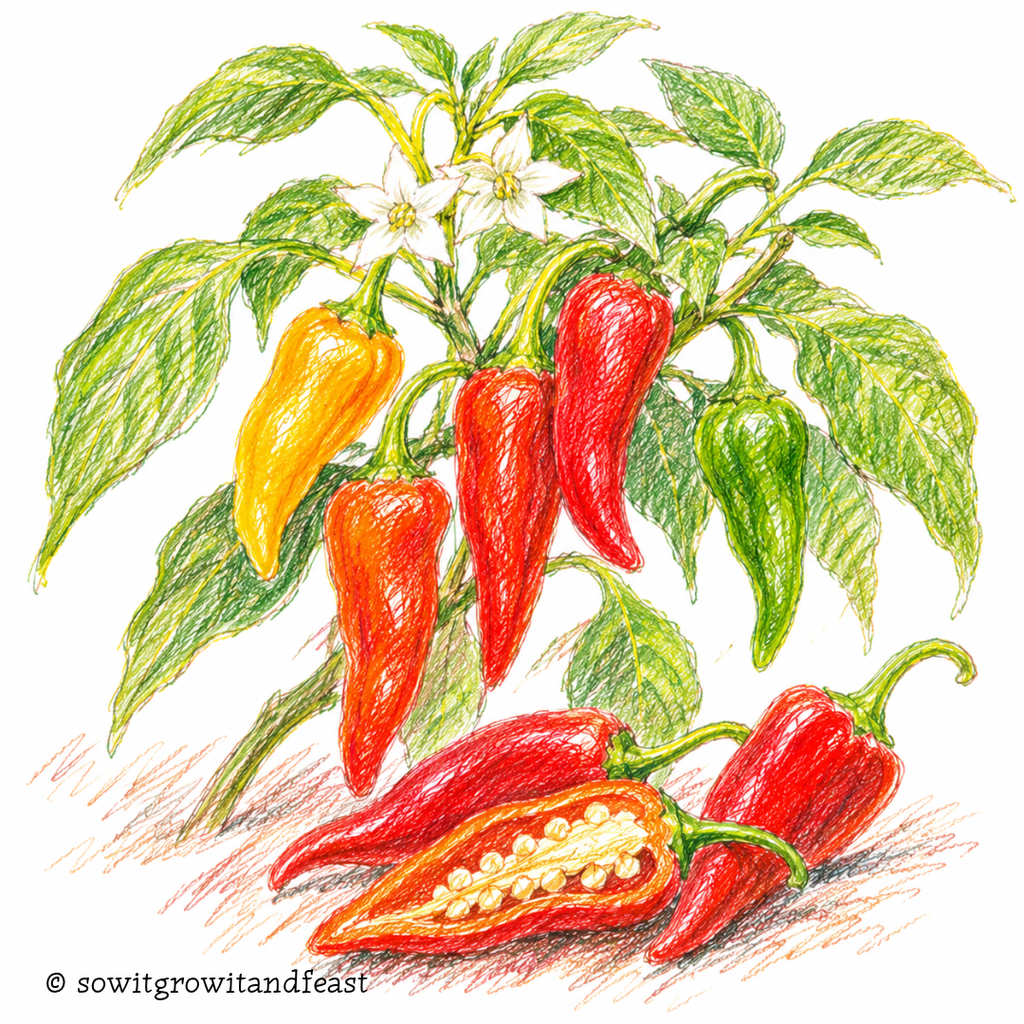
These substances are concentrated particularly in the internal tissues that hold the seeds, known as the placenta.
Contrary to popular belief, the seeds themselves are not the main producers of capsaicin, although they can become coated with it through contact with surrounding tissues.
When we eat a chilli, capsaicin interacts with specialised receptors in our sensory nerves.
These are known as TRPV1 receptors, short for transient receptor potential vanilloid 1.
They normally respond to potentially damaging heat, as well as certain chemical and inflammatory signals.
Capsaicin activates these receptors even though the chilli is not physically hot.
The nerves send signals to the brain, which interprets them as a burning sensation.
In other words, your mouth is not actually catching fire.
It simply has a very convincing reason to believe that it is.
And while the sensation is usually temporary, highly concentrated capsaicin can cause genuine irritation and, in sufficient quantities, tissue injury.
Why Does the Burning Seem to Get Worse?
One of the peculiar things about eating a hot chilli is that the heat does not always arrive immediately.
You may take a bite, enjoy the flavour and briefly congratulate yourself on your impressive tolerance.
Then the burning begins.
Capsaicin is released as the chilli is chewed and comes into contact with the sensitive tissues of the mouth.
As more capsaicin reaches the receptors, the sensation can intensify.
The heat may linger because capsaicin does not dissolve readily in water and can remain associated with the tissues and oils in the mouth.
Different chillies also contain different concentrations and combinations of capsaicinoids, which can influence how their heat is experienced.
Some produce a sharp, immediate sensation.
Others seem to build gradually, leaving you wondering whether the worst has passed just before discovering that it most certainly has not.
The experience is also influenced by the amount eaten, the food accompanying it and individual sensitivity.
Why Do Chillies Make Your Eyes Water?
The burning sensation is only the beginning.
For many people, eating a particularly hot chilli brings an entire collection of physical reactions.
Watering eyes, a running nose, flushed cheeks and perspiration can all make an appearance.
These responses are connected to the way capsaicin stimulates sensory nerves and triggers reflexes controlled by the nervous system.
Watering Eyes
The eyes are particularly sensitive to irritation.
Capsaicin accidentally transferred from the fingers can cause intense stinging, redness and watering.
But even without touching your eyes, eating very spicy food may trigger reflex tearing as part of the body’s response to irritation.
This is why washing your hands after preparing chillies is so important.
For very hot varieties, disposable food-safe gloves are sensible, particularly when removing seeds or chopping large quantities.
And never rub your eyes while handling chillies.
It is a mistake most people only make once.
Stinging Lips
The lips are also sensitive to capsaicin.
Their delicate tissues can experience a pronounced burning sensation, particularly when chilli oils remain on the surface.
The best approach is to avoid spreading capsaicin around the face and gently remove any residue.
A protective lip balm may offer some barrier against direct contact, but it is not a reliable method of preventing chilli burn.
If your lips are already stinging, a little milk or yoghurt may provide temporary relief.
Why Does Your Nose Run When You Eat Spicy Food?
A running nose is one of the more familiar consequences of a fiery meal.
This reaction is sometimes called gustatory rhinitis.
Spicy foods can stimulate nerves that influence secretions within the nasal passages, causing the nose to produce more watery mucus.
The result is an inconvenient need for tissues, often just as you are attempting to maintain a perfectly composed conversation over dinner.
It is not necessarily a sign of an allergy.
Rather, it is a reflex response to the stimulation caused by the food.
Some people experience it more strongly than others, and it can occur even when the chilli does not feel particularly hot.
Why Do Chillies Make Us Sweat?
There is something rather extraordinary about eating food at an ordinary temperature and finding yourself perspiring as though you have just walked through a greenhouse on the hottest day of July.
Capsaicin activates sensory pathways associated with heat.
This can trigger autonomic responses, including sweating and changes in blood flow to the skin.
The body is reacting to signals that resemble those produced by genuine heat exposure.
Yet the chilli has not actually raised the temperature of your mouth to anything approaching the sensation you are experiencing.
It is an impressive demonstration of how closely our perception of heat is connected to the nervous system.
Sweating is particularly common around the forehead, face and scalp.
For some people, even a moderately spicy curry can produce a noticeable reaction.
Others remain remarkably composed while eating chillies that would leave the rest of the table looking distinctly distressed.
The Curious Pleasure of Eating Something That Hurts
Perhaps the most fascinating question is why we enjoy chillies at all.
After all, pain is generally something we try to avoid.
We instinctively withdraw our hand from a hot saucepan, avoid touching nettles and regard stepping barefoot on a piece of Lego as an entirely unreasonable experience.
Yet we willingly add chillies to our food.
And not merely in small quantities.
Some people actively seek out increasingly hot varieties, treating them almost as a culinary adventure.
What Happens in the Brain?
When capsaicin activates pain-sensitive nerve endings, signals travel through the nervous system to the brain.
These signals contribute to the perception of burning and discomfort.
Painful or intense experiences can also engage the body’s natural pain-modulating and reward systems.
Endorphins, which are involved in pain regulation, and dopamine, which plays a role in motivation and reward, are often mentioned in explanations of why spicy food can feel pleasurable.
However, the idea that every hot chilli produces a predictable surge of these chemicals, creating a measurable natural high, is an oversimplification.
The precise neurological responses to eating spicy food are complex and vary between individuals.
Pleasure may also come from anticipation, familiarity, cultural experience and the satisfaction of enjoying an intense sensation in a setting we know is generally safe.
Psychologists have sometimes described this enjoyment of controlled discomfort as benign masochism.
It is the same broad principle that may help explain our enjoyment of frightening films, rollercoasters or an invigorating plunge into cold water.
We experience something uncomfortable while knowing, within reasonable limits, that we remain in control.
Of course, anyone who has accidentally added far too much chilli to supper may feel that the control element has been somewhat overstated.
Can You Build Up a Tolerance to Chillies?
Yes, to an extent.
People who regularly eat spicy food often find that the same level of chilli produces less discomfort over time.
Repeated exposure to capsaicin can reduce the responsiveness of the sensory pathways involved in detecting its effects.
This process is known as desensitisation.
However, tolerance is not simply a matter of training the brain to ignore pain.
It involves changes in sensory responses, alongside familiarity and learned expectations.
The degree of tolerance varies considerably.
Some people naturally enjoy strong chilli heat, while others remain sensitive even after years of eating spicy food.
Genetics, previous experience, cultural food habits and individual sensory differences may all contribute.
Does Tolerance Mean the Chilli Is Harmless?
Not necessarily.
Becoming accustomed to the burning sensation does not mean that extremely hot chillies cannot cause physical irritation.
Large quantities or highly concentrated chilli products can provoke severe discomfort, nausea, vomiting and other adverse reactions.
Extreme chilli-eating challenges are particularly unwise.
There is no nutritional prize for eating the hottest chilli imaginable, and certainly no need to prove one’s courage to a vegetable.
If you would like to become more comfortable with spicy food, begin with milder varieties and increase the heat gradually according to your own enjoyment.
The aim should be pleasure rather than endurance.
How Hot Is Hot? Understanding the Scoville Scale
Not all chillies are created equal.
Some provide a gentle warmth, while others contain extraordinary concentrations of capsaicinoids.
Chilli heat is commonly described using the Scoville scale, named after American pharmacist Wilbur Scoville, who developed an early method of assessing pungency in 1912.
The scale measures heat in Scoville Heat Units, or SHU.
Originally, the method relied on human tasters assessing how much a chilli extract needed to be diluted before its heat was no longer detectable.
Modern measurements generally use analytical techniques to determine capsaicinoid concentrations, which can then be expressed as Scoville Heat Units.
The figures vary according to the variety, growing conditions and individual fruit.
| Chilli variety | Approximate Scoville Heat Units |
|---|---|
| Sweet pepper | 0 |
| Poblano | 1,000–2,000 |
| Jalapeño | 2,500–8,000 |
| Serrano | 10,000–23,000 |
| Cayenne | 30,000–50,000 |
| Scotch bonnet | 100,000–350,000 |
| Habanero | 100,000–350,000 |
| Carolina Reaper | Often over 1,500,000 |
These are broad indicative ranges rather than guarantees of how hot an individual chilli will be.
The Carolina Reaper became famous for its extraordinary heat, but even hotter varieties have since been developed.
In 2023, Pepper X was recognised by Guinness World Records as the world’s hottest chilli pepper, with an officially reported average of approximately 2.69 million SHU.
At that level, the word spicy seems rather inadequate.
Does a Red Chilli Always Mean a Hotter Chilli?
It is tempting to assume that the deeper the colour, the greater the heat.
But colour alone is not a reliable guide.
Many chillies begin green and change to red, orange, yellow or another colour as they ripen.
During ripening, their flavour, sweetness and capsaicinoid concentrations may change.
However, the relationship between ripeness and heat depends on the variety and growing conditions.
Some chillies become hotter as they mature, while others reach peak pungency earlier or show little consistent change.
A small green chilli may be considerably hotter than a large red one.
Size is equally unreliable as a measure of heat.
The best guide is knowing the variety you are growing or buying.
And even then, individual fruits can sometimes provide a surprise.
Why Doesn’t Water Put Out the Fire?
When your mouth begins to burn, the natural instinct is to reach for a glass of cold water.
It seems perfectly reasonable.
Water extinguishes fires, after all.
Unfortunately, capsaicin is not particularly soluble in water.
Drinking water may provide a brief cooling sensation, but it does little to remove capsaicin from the tissues of the mouth.
It can sometimes redistribute the compound, although this does not mean that water will always make the sensation worse.
Cold water may still offer temporary comfort.
But there are usually better options.
What Actually Helps When a Chilli Is Too Hot?
If you have underestimated the strength of a chilli, a few ordinary kitchen ingredients may help.
Milk and Yoghurt
Milk is one of the better-known remedies for chilli burn.
Its proteins, including casein, may help interact with capsaicin and assist in removing it from the mouth.
The fat content and cooling temperature may also contribute to the sensation of relief.
Research suggests that milk can reduce perceived oral burning, although the precise mechanisms and the relative importance of fat and protein are still being investigated.
A spoonful of plain yoghurt can be particularly soothing.
It is also rather more dignified than standing in front of the fridge drinking directly from the milk bottle.
Bread and Rice
Starchy foods such as bread and rice may provide some relief by helping remove or dilute chilli-containing food in the mouth.
They are not chemical antidotes to capsaicin, but they can be useful when eating a spicy meal.
This is one reason rice, flatbreads and other starches are such familiar accompaniments to chilli-rich dishes.
Something Sweet
Sweet foods and drinks may reduce the perception of burning for some people.
A little sugar or honey can sometimes offer temporary relief, although responses vary.
They do not neutralise capsaicin, but sweetness may influence how the sensation is experienced.
What About Oil?
Capsaicin dissolves more readily in fats and oils than in water.
However, swallowing spoonfuls of cooking oil is not a sensible or particularly pleasant remedy.
Ordinary foods containing some fat, such as yoghurt, are generally a more practical choice.
When to Seek Help
Most ordinary chilli burn settles without medical treatment.
However, severe or persistent symptoms, difficulty breathing, repeated vomiting, chest pain or significant eye exposure require appropriate medical advice.
If capsaicin gets into the eyes, rinse promptly with plenty of clean, lukewarm water and seek medical assistance if pain or visual disturbance persists.
Growing Your Own Chillies: From Gentle Warmth to Fiery Heat
For gardeners, one of the pleasures of growing chillies is the extraordinary variety available.
The plants can be productive, ornamental and surprisingly well suited to container growing.
In Britain, chillies generally appreciate a warm, sheltered position, with many varieties performing particularly well in a greenhouse, polytunnel or sunny conservatory.
They can also be grown outdoors in favourable locations during the warmer months.
Most benefit from being started early indoors, as they need a relatively long growing season to mature successfully.
Choosing the Right Variety
If you prefer a gentle warmth, choose a mild chilli rather than beginning with something exceptionally hot.
Jalapeños are popular for their versatility, while cayenne varieties provide a more pronounced heat.
Scotch bonnets are known for their distinctive fruity flavour as well as their considerable pungency.
For those who enjoy growing unusual crops, there are chillies in almost every imaginable shape and colour.
Some produce small upright fruits, while others carry long, slender chillies that hang beneath the foliage.
A collection of plants can be as attractive as it is useful in the kitchen.
Does Stress Make Chillies Hotter?
Gardeners sometimes deliberately reduce watering in the hope of producing hotter chillies.
Water stress can influence capsaicinoid production in some varieties and under certain conditions, but the effects are inconsistent.
Severe drought can reduce plant growth, damage flowers and limit fruit production.
For a healthy, productive crop, it is generally better to provide consistent watering, good light, suitable temperatures and balanced nutrition.
Choose a naturally hotter variety if greater pungency is what you want.
There is little point in making the plant miserable simply to make supper more alarming.
Enjoying Chillies Without Losing Their Flavour
Heat is only one part of what makes chillies interesting.
Different varieties offer remarkably different flavours.
Some are fruity and sweet, others earthy, smoky or almost citrus-like.
A good chilli should contribute something to a dish beyond the sensation of burning.
Fresh chillies can brighten salads, sauces and vegetable dishes.
Dried chillies develop different characteristics and can add depth to soups, stews and slow-cooked meals.
Roasting or cooking may change their flavour, although it does not reliably eliminate capsaicin.
Removing the internal placenta and attached tissues can reduce the heat, but care is needed when handling particularly pungent varieties.
The pleasure lies in finding a balance.
Enough warmth to complement the ingredients, without overwhelming everything else.
Unless, of course, you particularly enjoy the challenge.
A Little Fire in the Kitchen
There is something extraordinary about the relationship between humans and chillies.
A plant evolved a chemical defence that discourages many mammals from eating its fruits.
And we responded by cultivating thousands of varieties, carrying them across continents and incorporating them into some of the world’s most celebrated dishes.
We have even developed a scale to measure just how uncomfortable they can make us.
Yet behind the watering eyes and occasional regrettable mouthful lies a fascinating story of plants, chemistry, evolution and human curiosity.
Capsaicin does not simply add heat to food. It reveals how our nervous system interprets the world, how our bodies respond to perceived danger and how pleasure can sometimes be found in the most unexpected sensations.
For gardeners, chillies offer the additional satisfaction of growing something that can transform even the simplest meal.
A few fruits gathered from a greenhouse plant can bring colour, flavour and warmth to the kitchen long after summer has passed.
And perhaps that is the real attraction.
Not the competition to grow or eat the hottest chilli imaginable, but the remarkable variety of flavours and experiences contained within such small fruits.
After all, a little warmth can be a wonderful thing. The trick is knowing when a little has become quite enough.
Further Reading: Why Growing Food Makes You Feel Better, Take the Guesswork Out of Growing Veg, How to Create a Garden That Feeds Your Family, How to Start a Vegetable Garden Now Ready for Spring
Follow us on Instagram, Threads, BlueSky, Twitter, Pinterest & Facebook
Not sure where to start? Take a look at our Grow Your Own Packs with detailed step by step instructions, seeds and 1 years online support.