Recipe Garden Pots: Grow a Mediterranean Roast in One Pot

Few dishes celebrate summer quite like a tray of roasted Mediterranean vegetables. Sweet peppers, tender courgettes, fragrant basil and golden garlic come together in the oven to create something simple yet deeply satisfying.

With a single generous container, you can grow many of these ingredients together. This Mediterranean Roast Recipe Garden Pot is planted with compact, dwarf vegetables chosen especially for container growing, bringing the flavours of the Mediterranean to a patio, balcony or sunny corner of the garden.


What you’ll need

  • 1 large pot (60cm or larger) with drainage
  • Multi-purpose compost
  • A warm, sunny spot

Plants

  • Aubergine ‘Baby Belle’
  • Basil Italiano Classico
  • Courgette ‘Patio Star’
  • Garlic
  • Onion ‘Red Baron’
  • Sweet pepper ‘Enorma Ibrido’

These dwarf cultivars are well suited to containers and produce a wonderful mix of vegetables and herbs that roast beautifully together.
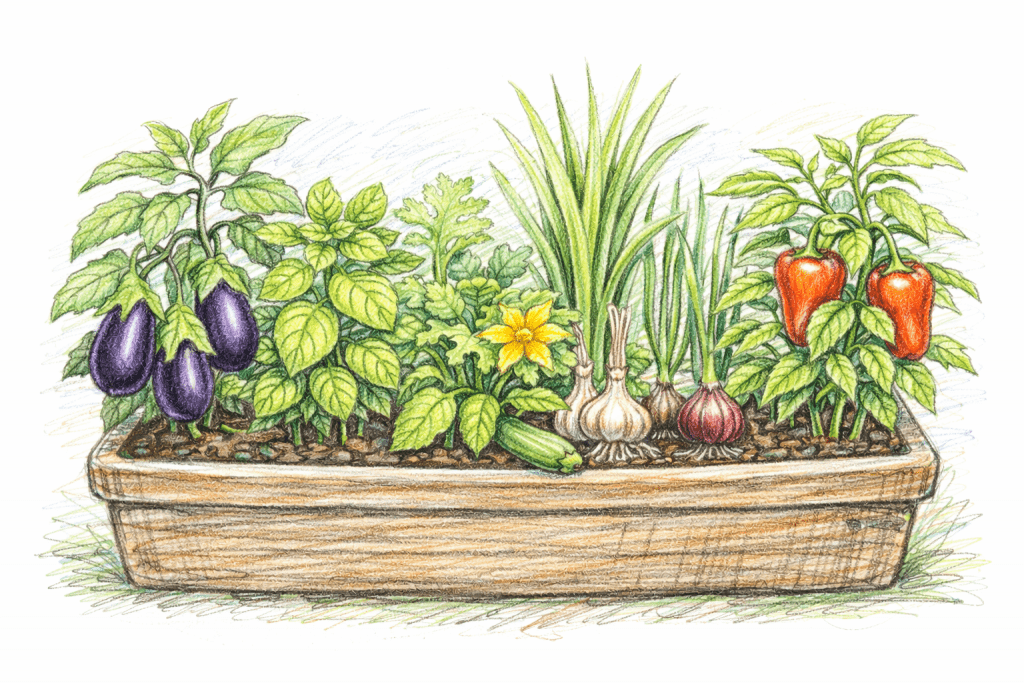
Roast Vegetable Planter. 

Aubergine ‘Baby Belle’

Basil Italiano Classico

Courgette ‘Patio Star’

Garlic

Onion ‘Red Baron’

Sweet pepper ‘Enorma Ibrido’
Grow a Mediterranean Roast Garden in One Pot

Preparing the pot

Choose a wide container around 60cm across. Larger pots hold moisture more evenly and allow several vegetables to grow comfortably side by side.

Fill the pot with fresh compost, leaving a few centimetres at the top so watering is easy and doesn’t spill over.

Place the pot in a warm, sunny position. Mediterranean vegetables thrive in heat and light, so a sheltered patio or south-facing spot is ideal.


Planting your Mediterranean garden

The aim is to create a small but productive mix of plants that grow well together.

1. Start with the main crops

Plant the courgette ‘Patio Star’ slightly off-centre. This compact variety forms a tidy mound and produces plenty of tender courgettes.

Add the aubergine ‘Baby Belle’ and the sweet pepper ‘Enorma Ibrido’ nearby. Both enjoy warmth and sunshine and will soon produce glossy fruits perfect for roasting.

2. Add the onions and garlic

Tuck the red onion ‘Red Baron’ and a few garlic cloves into the spaces around the larger plants. These grow upright and take very little room while adding depth of flavour to the harvest.

3. Finish with basil

Plant basil Italiano Classico around the edge of the pot. Its soft, fragrant leaves spill gently outward and are easy to harvest when cooking.


Caring for the pot

Mediterranean vegetables are generous growers when given warmth and regular care.

  • Water daily, especially during warm weather
  • Place the pot in a sunny, sheltered position
  • Feed occasionally with a liquid tomato feed once flowering begins
  • Harvest vegetables regularly to encourage continued production

With warmth and steady watering, the container soon becomes a lush collection of edible plants.


Harvesting your Mediterranean vegetables

By mid to late summer the pot will begin to offer a generous harvest:

  • Tender courgettes
  • Glossy aubergines
  • Sweet peppers
  • Fresh basil leaves
  • Fragrant garlic
  • Mild red onions

Together they form the perfect base for a simple roasted vegetable dish.


Mediterranean roasted vegetable recipe

A tray of roasted vegetables is one of the easiest and most satisfying ways to enjoy your harvest.

Ingredients

  • 1 aubergine
  • 1–2 courgettes
  • 1 sweet pepper
  • 1 red onion
  • 2 cloves garlic
  • A handful of fresh basil leaves
  • Olive oil
  • Sea salt and black pepper

Method

  1. Preheat the oven to 200°C.
  2. Slice the aubergine, courgette and pepper into generous chunks.
  3. Cut the onion into wedges and lightly crush the garlic cloves.
  4. Place everything in a roasting tray and drizzle with olive oil.
  5. Season with salt and black pepper, then toss gently.
  6. Roast for 25–30 minutes until the vegetables are soft and lightly caramelised.
  7. Scatter fresh basil leaves over the top just before serving.

Serve warm with crusty bread, pasta or grilled meat.


A small garden with Mediterranean flavour

This Mediterranean Roast Recipe Garden Pot shows how a single container can deliver a generous summer harvest. Filled with dwarf vegetables and fragrant herbs, it becomes a miniature kitchen garden devoted to one delicious purpose.

Placed in a warm sunny spot and watered daily, it quietly grows the ingredients for a tray of roasted vegetables that tastes of sunshine and summer.

Further Reading: How to Start Your Own Vegetable PatchHow to Plan and Design Your Dream Vegetable PatchWhy Choose Sow It Grow It and Feast for Your Garden?How to Choose the Perfect Flower Pot for Your CropsRecipe Garden Pots: Grow a Pimm’s No.1 Garden in One Pot, Recipe Garden Pots: Grow a Green Risotto in One Pot, Recipe Garden Pots: Pizza in One Pot

Follow us on InstagramThreadsBlueSkyTwitterPinterest & Facebook

Recipe Garden Pots: Pizza in One Pot

Few dishes are as universally loved as pizza. Simple ingredients, gathered fresh and brought together with care, create something wonderfully satisfying. With a single container planted thoughtfully, you can grow several of the key flavours that make a pizza truly memorable.

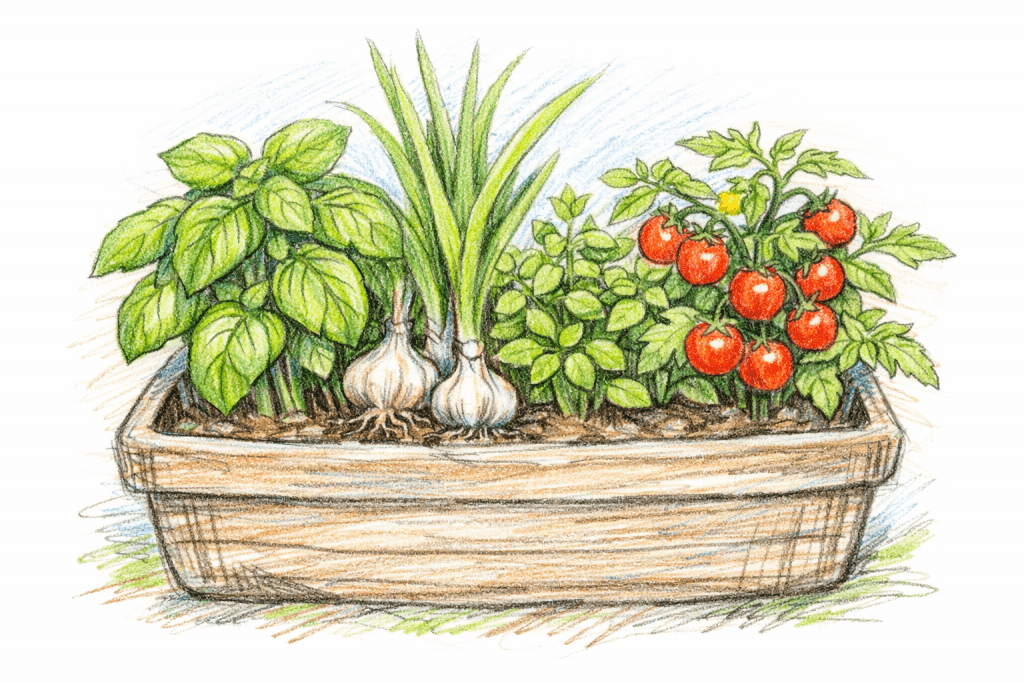
This Perfect Pizza Recipe Garden Pot brings together fragrant herbs and sweet tomatoes – the heart of many classic pizza sauces and toppings. Planted in one generous container, it becomes a small kitchen garden devoted to flavour.


What you’ll need

  • 1 container at least 45cm wide with good drainage
  • Multi-purpose compost
  • A warm, sunny position

Plants

  • Basil — Ocimum basilicum
  • Garlic — Allium sativum
  • Oregano — Origanum vulgare
  • Tomato ‘Red Robin’

These plants offer the classic Mediterranean flavours associated with pizza – sweet tomatoes, aromatic herbs and the gentle warmth of garlic.

Garden Planter with Pizza Ingredient Plants
Recipe in a Pot – Pizza

Preparing the container

Choose a pot at least 45cm across. A container of this size allows the plants to grow comfortably while holding enough compost to retain moisture during warm weather.

Fill the pot with fresh multi-purpose compost, leaving a few centimetres at the top so watering is easy.

Place the container in a sunny, sheltered position, as tomatoes and Mediterranean herbs thrive in warmth and light.


Planting your pizza garden

Plant young plants so they establish quickly and begin producing through the summer.

1. Start with the tomato

Place the tomato ‘Red Robin’ in the centre of the container. This compact variety is ideal for pots and produces clusters of sweet cherry tomatoes perfect for sauces and toppings.

2. Add the garlic

Plant a few garlic cloves around the tomato, spacing them evenly in the compost. As they grow, their slender leaves take up very little room.

3. Position the herbs

Tuck basil and oregano around the edges of the container where they will receive plenty of sun and be easy to harvest when cooking.

The herbs soften the edge of the pot while filling the air with their unmistakable Mediterranean fragrance.


Caring for the pot

These plants thrive with warmth and a little regular attention.

  • Place the pot in a sunny position
  • Water regularly, especially in warm weather
  • Feed the tomato occasionally with a liquid tomato feed once flowers appear
  • Harvest herbs often to encourage fresh growth

As the season progresses, the pot will become a lush and fragrant mix of herbs and fruit.


Harvesting your pizza ingredients

Before long you’ll be able to gather fresh ingredients straight from the pot:

  • Sweet Red Robin tomatoes
  • Fragrant basil leaves
  • Aromatic oregano
  • Fresh garlic

Together they form the classic base flavours of a traditional pizza.


A simple pizza sauce from the garden

When your tomatoes begin to ripen, try making a fresh sauce using your harvest.

Ingredients

  • A handful of Red Robin tomatoes
  • 1 clove garlic
  • A few basil leaves
  • A pinch of oregano
  • Olive oil
  • Salt and black pepper

Method

  1. Chop the tomatoes finely.
  2. Gently crush the garlic and add to the tomatoes.
  3. Stir in torn basil leaves and a pinch of oregano.
  4. Drizzle with a little olive oil and season lightly.
  5. Spread over pizza dough before adding your favourite toppings.

The result is fresh, fragrant and full of garden flavour.


A pot dedicated to pizza

This Perfect Pizza Recipe Garden Pot shows how a single container can grow the essential flavours of one much-loved dish. Placed in a warm sunny corner of the garden, it becomes both a decorative planter and a practical kitchen garden.

With a few leaves, a handful of tomatoes and the scent of herbs in the air, the pot quietly grows the ingredients for the perfect homemade pizza.

Further Reading: How to Start Your Own Vegetable PatchHow to Plan and Design Your Dream Vegetable PatchWhy Choose Sow It Grow It and Feast for Your Garden?How to Choose the Perfect Flower Pot for Your CropsRecipe Garden Pots: Grow a Pimm’s No.1 Garden in One PotRecipe Garden Pots: Grow a Green Risotto in One Pot

Follow us on InstagramThreadsBlueSkyTwitterPinterest & Facebook

Space-Saving Vegetable Crops to Grow

Big Flavours from Small Spaces

Not everyone has sweeping lawns or rows of neat allotment beds. Yet even the smallest outdoor space — a snug patio, a sun-warmed balcony, a modest garden edged by brick and fence — can become richly productive.

Growing space-saving vegetable crops is not about compromise. It is about clever abundance. Compact in habit yet generous in yield, these varieties allow you to grow your own produce in small spaces across the UK, transforming overlooked corners into edible landscapes. With thoughtful planting, every pot, raised bed and window box becomes an opportunity.

And there is something rather wonderful about stepping outside to gather supper from a place no larger than a doorstep.


A Different Way of Seeing Space

When space is limited, imagination becomes your greatest tool.

Small garden vegetables are often quicker to mature, easier to manage and surprisingly prolific. Many provide harvests over weeks rather than days. Others grow happily in containers, making them ideal for patios and courtyards. Some bring such colour and texture that they earn their place as ornament as much as crop.

A single sunny corner, tended well, can provide salads through summer, herbs for cooking and armfuls of homegrown flavour.


Leaves That Keep on Giving

If you are growing veg in a small garden, begin with leaves.

Lettuces, salad mixes and compact chard thrive in shallow soil and can be sown thickly in troughs or pots. Pick a few leaves at a time and they will respond with fresh growth, stretching your harvest across the season.

Peppery rocket and delicate mizuna flourish even in cooler weather, bringing brightness to spring lunches and autumn suppers. They ask only for light, regular watering and a little attention — a modest exchange for bowls brimming with freshness.

There is quiet satisfaction in cutting salad moments before it reaches the plate.


Courgettes, Considered

Courgettes have a reputation for taking over, but modern compact varieties are far better behaved.

Bush-forming plants sit neatly in large containers or raised beds, producing glossy fruits without sprawling across precious ground. Given rich compost, steady moisture and a sunny position, they reward you generously — their golden blossoms opening wide to visiting bees, their fruits swelling day by day.

In a small-space vegetable garden, one well-tended plant can supply weeks of summer cooking.


Growing Upwards

When the ground is scarce, look skywards.

Climbing peas and beans are among the best vegetables for small gardens because they make use of height rather than width. A simple frame of canes transforms a fence into a living wall. Slender stems reach upwards, flowers flutter in the breeze and pods follow in abundance.

Vertical growing does more than save space. It brings produce to eye level, making picking an easy pleasure and turning practical planting into something quietly beautiful.


Roots Beneath Your Feet

Not all abundance is visible.

Carrots, beetroot and radishes are wonderfully suited to compact beds and deep containers. Their seeds are small, their needs simple. Keep the soil light and free-draining, thin seedlings early and allow roots the space to swell unseen.

When lifted from the earth — brushed clean and sliced open — they offer colour as vivid as any flower border.


Pots of Fragrance

Herbs are perhaps the most rewarding crops of all for small spaces.

Basil basking in a sheltered corner, thyme trailing over terracotta, parsley bright against stone — these are plants that ask little yet transform everyday cooking. Many will thrive in containers and return year after year, making them among the most practical edible garden ideas for patios and balconies.

A few pots by the kitchen door can save repeated trips to the shop and bring unmistakable freshness to your table.


Tomatoes in Their Element

Few tastes rival a tomato warmed by the sun.

Patio and bush varieties are perfectly adapted to container growing, making them ideal for small gardens in the UK. With a sturdy pot, good compost and a bright, sheltered position, they will form neat trusses of fruit throughout summer.

Water at the base, support stems gently and watch as green globes turn to glowing red — each one a reminder that even limited space can yield extraordinary flavour.


An Allotment in Miniature

Space-saving vegetable crops encourage creativity.

A narrow path becomes a ribbon of spring onions. A sunny windowsill hosts trays of cut-and-come-again salad. A cluster of pots creates a layered tapestry of leaves, roots and fruits.

This is the beauty of growing veg in small spaces: it invites attentiveness. You notice changes more keenly. You tend more closely. And in return, the garden feels intimate — almost companionable.


Gentle Principles for Success

In smaller plots, care makes all the difference.

Feed your soil generously with compost so roots have richness to draw from. Water consistently, particularly in containers where moisture disappears quickly. Sow little and often for continuous harvests. Combine crops thoughtfully so that herbs, leaves and roots share space companionably.

Above all, pause to observe. A compact garden teaches patience and responsiveness — virtues as valuable as the harvest itself.


Make Every Inch Grow

A small garden need never feel limiting.

From crisp salad leaves to climbing beans, from fragrant herbs to sun-ripened tomatoes, space-saving veg crops to grow at home offer both practicality and pleasure. They help you grow your own produce in the UK without requiring sweeping borders or wide beds.

With care, imagination and a little sunshine, even the humblest corner can provide nourishment and delight.

And when you gather what you have grown — however modest the harvest — it feels anything but small.

Further Reading: How to Start Your Own Vegetable PatchHow to Plan and Design Your Dream Vegetable PatchWhy Choose Sow It Grow It and Feast for Your Garden?How to Choose the Perfect Flower Pot for Your CropsThe Principles of Organic Gardening

Follow us on InstagramThreadsBlueSkyTwitterPinterest & Facebook

No Garden? No Problem. Discover the Joy of Bucket Gardening

For many of us, the dream of harvesting fresh, homegrown produce feels out of reach simply because we lack a sprawling garden or an allotment. But nature is surprisingly adaptable. You do not need acres of land or even a dedicated vegetable patch to enjoy the taste of a sun-warmed tomato or the crunch of a freshly pulled carrot.

If you have a balcony, a small patio, or even just a sunny doorstep, you have a garden waiting to happen. Growing crops in buckets is a fantastic, accessible way to connect with nature and put fresh food on your table. It is inexpensive, manageable, and perfect for beginners and seasoned growers alike. By turning simple containers into thriving micro-gardens, you can bring a little bit of the countryside to even the most urban environment.

Getting Started: Preparing Your Buckets

The beauty of bucket gardening lies in its simplicity. You don’t need expensive terracotta pots; standard 10 to 15-litre plastic buckets (often used for DIY or cleaning) are perfect. They are deep enough for roots to establish and durable enough to last several seasons.

Cleaning and Drainage

If you are repurposing old buckets, give them a thorough scrub with warm, soapy water to remove any residue. Hygiene is important to prevent disease from affecting your new crops.

The most critical step is drainage. Without it, your plants will drown. Take a drill with a standard bit (around 1cm diameter) and create 4-5 holes in the bottom of each bucket. If the bucket sits flush on the ground, drill the holes slightly up the side (about 2cm from the base) to create a small reservoir of water while allowing excess to escape.

Positioning Your Mini Allotment

Vegetables, like us, love the sun. Place your buckets in the sunniest spot you have. South-facing locations are ideal, as most crops require at least 6 to 8 hours of direct sunlight a day to thrive.

However, consider shelter too. Strong winds can dry out containers rapidly and topple tall plants. A spot near a wall or fence often provides the perfect balance of warmth and protection.

15 Vegetables Perfect for UK Bucket Gardens

Ready to plant? Here are 15 crops that flourish in containers in the UK climate, along with everything you need to know to grow them successfully.

1. Potatoes (Earlies)

There is nothing quite like the taste of a new potato boiled with mint and butter.

  • Quantity: 1 to 2 tubers per 15-litre bucket.
  • Sowing/Planting: Plant ‘First Early’ varieties from late March to mid-April.
  • Care: Place tubers on 10cm of compost at the bottom. As shoots appear, cover them with more compost (“earthing up”) until the bucket is full. Water heavily once flowers appear.

2. Bush Tomatoes

Choose ‘bush’ or ‘determinate’ varieties (like Tumbling Tom) which don’t need tall supports.

  • Quantity: 1 plant per bucket.
  • Sowing/Planting: Sow indoors in March; move buckets outside in late May or early June once the risk of frost has passed.
  • Care: Tomatoes are thirsty and hungry. Water daily in summer and feed with tomato fertiliser once the first fruits set.

3. Strawberries

A British summer staple that is incredibly easy to grow in pots.

  • Quantity: 3 to 4 plants per bucket.
  • Sowing/Planting: Plant runners in April or buy potted plants in May.
  • Care: Keep the compost moist but not waterlogged. As fruits develop, ensure they hang over the side of the bucket so they don’t rot on damp soil.

4. Chilli Peppers

Chillies love the heat and do well in the contained environment of a bucket.

  • Quantity: 1 plant per bucket.
  • Sowing/Planting: Sow indoors in February/March. Move outside only when it is very warm, usually mid-June.
  • Care: They need a long growing season. Feed with high-potash feed (like tomato food) when flowering begins.

5. Salad Leaves

Lettuce, rocket, and mixed leaves are perfect for “cut-and-come-again” harvesting.

  • Quantity: Sprinkle seeds thinly across the surface.
  • Sowing/Planting: Sow successionally (every 2 weeks) from March to September for a continuous crop.
  • Care: Water regularly. If they get too dry, they will bolt (go to seed) and taste bitter. Harvest by snipping leaves with scissors; they will grow back!

6. Radishes

The fastest crop you can grow—perfect for impatient gardeners!

  • Quantity: Sow seeds about 2-3cm apart. You can fit 10-15 in a bucket.
  • Sowing/Planting: February to August.
  • Care: They will be ready to eat in as little as 4 weeks. Keep well-watered to ensure they stay crunchy rather than woody.

7. Carrots

Choose varieties like ‘Chantenay’ or ‘Paris Market’ which are shorter and rounder, perfect for containers.

  • Quantity: 10-15 carrots per bucket.
  • Sowing/Planting: Sow directly into the bucket from April to July.
  • Care: Thin seedlings to about 5cm apart. Raising them off the ground in buckets is a great way to avoid the dreaded carrot fly.

8. Spring Onions

A space-saving crop that adds bite to your summer salads.

  • Quantity: Sow seeds 1cm apart; you can grow a nice bunch in one bucket.
  • Sowing/Planting: March to September.
  • Care: Very low maintenance. Just keep the soil moist and pull them up when they reach the size you prefer.

9. Beetroot

You can eat both the roots and the colourful leaves.

  • Quantity: 5 to 6 plants per bucket.
  • Sowing/Planting: Sow directly from April to July.
  • Care: Thin seedlings to 10cm apart. Harvest when they are golf-ball sized for the sweetest flavour.

10. Dwarf French Beans

Look for ‘dwarf’ varieties rather than climbers to avoid needing tall canes.

  • Quantity: 3 to 4 plants per bucket.
  • Sowing/Planting: Sow indoors in April or outdoors late May.
  • Care: Keep picking the pods! The more you harvest, the more the plant will produce.

11. Peas

Fresh peas are sweeter than anything you can buy. Choose dwarf varieties like ‘Kelvedon Wonder’.

  • Quantity: 6 to 8 plants per bucket.
  • Sowing/Planting: March to June.
  • Care: Use twiggy sticks for support. Pigeons love pea shoots, so you may need to cover them with netting until established.

12. Swiss Chard

Beautiful and productive, with stems in vibrant reds, yellows, and whites.

  • Quantity: 3 plants per bucket.
  • Sowing/Planting: March to July.
  • Care: Harvest the outer leaves first, allowing the centre to keep growing. They can often survive a mild winter to provide early spring greens.

13. Courgettes

A single plant can provide a glut of vegetables if you treat it right.

  • Quantity: 1 plant per bucket.
  • Sowing/Planting: Sow indoors in April; plant out end of May.
  • Care: These are hungry giants. Mix manure into your compost before planting and water copiously. Harvest fruits when small (10-15cm) for better flavour.

14. Aubergines

These need a particularly warm, sheltered spot (like a sunny brick wall) to fruit in the UK.

  • Quantity: 1 plant per bucket.
  • Sowing/Planting: Sow indoors January-March. Plant out June.
  • Care: Support the heavy stems with a cane. Feed weekly with high-potash fertiliser once flowers appear.

15. Spinach

Packed with nutrients and grows well in cooler weather.

  • Quantity: 4 to 5 plants per bucket.
  • Sowing/Planting: March to May, and again in August/September.
  • Care: Spinach prefers partial shade in the height of summer. Keep well-watered to prevent it from bolting.

Nurturing Your Bucket Garden

Once your seeds are sown and your seedlings planted, the main task is watering. Buckets hold less soil than the ground, meaning they dry out faster. On hot summer days, check your crops morning and evening. If the top inch of soil feels dry, give them a drink.

Feeding is also essential. Potting compost usually contains enough nutrients for about six weeks. After that, a weekly liquid feed (seaweed extract is excellent) will keep your plants healthy and productive.

Start today. Grab a bucket, some compost, and a packet of seeds. Even the smallest harvest connects you to the seasons and the simple joy of growing your own food.

Buy our Sow It Grow It and Feast! Grow Herbs here!

Find Grow your Own Christmas Lunch hereWhy Not Grow Your Own Chillies in 2026?A Guide to the Winter Salad Garden, Bring Life to Your Kitchen: Grow a Winter Window Sill Herb Garden

Follow us in Instagram for Daily Grow Your Own Inspiration 🌶