There is something wonderfully comforting about a cup of tea. The warmth of the cup between your hands, the gentle curl of steam rising into the air and that first, unhurried sip. But imagine if the leaves and flowers in your teapot had been gathered only moments earlier from your own garden.
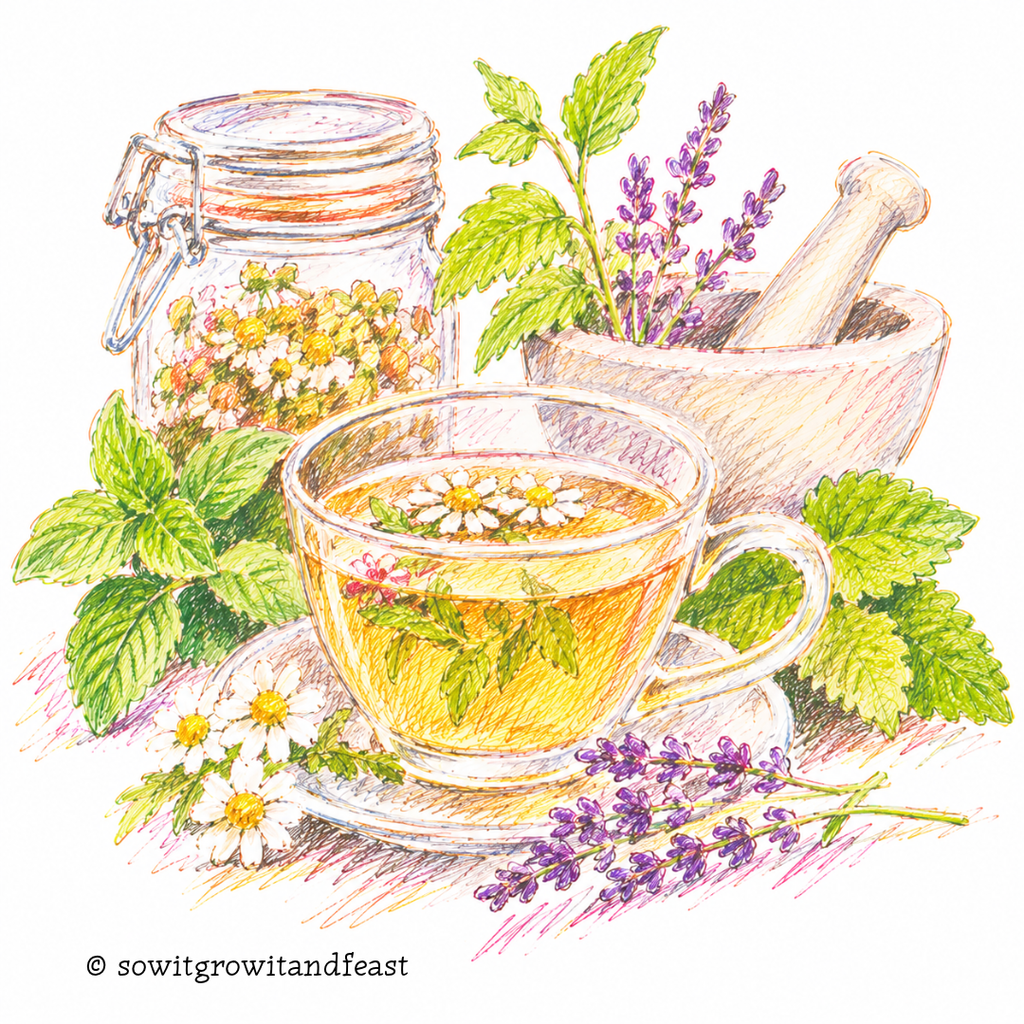
A few sprigs of mint from beside the kitchen door. Lemon balm gathered on a sunny afternoon. Chamomile flowers carefully picked and dried for the quieter months ahead.
Suddenly, making tea becomes something rather more special than putting the kettle on.
Growing and blending your own herbal teas is one of gardening’s simplest pleasures. It requires very little space, offers a wonderful opportunity to explore different plants and brings a little of the garden into everyday life.
And, unlike some gardening projects, you do not need to wait months to enjoy the results. A well-established mint plant can provide enough leaves for a refreshing brew throughout much of the growing season.
Whether you have a large herb garden, a few pots on the patio or a sunny windowsill, there is something rather lovely about growing the ingredients for your own teapot.
A Little History in Every Cup
Long before tea became such an important part of British life, people were preparing drinks from the leaves, flowers, roots and seeds of plants growing around them.
Herbal infusions have been enjoyed across different cultures for centuries, valued for their flavours, fragrances and traditional uses.
In Britain, herbs were once familiar inhabitants of cottage gardens, monastery gardens and physic gardens, where plants were cultivated for culinary and medicinal purposes.
Mint, chamomile, sage and lemon balm were among the many herbs used in traditional preparations.
The arrival and growing popularity of imported tea from Camellia sinensis gradually changed British drinking habits, but herbal infusions never entirely disappeared.
Today, they are enjoying renewed interest, particularly among people who appreciate seasonal living, growing their own food and making use of plants cultivated at home.
And there is something rather satisfying about reviving a practice that connects us with generations of gardeners before us.
What Exactly Is Herbal Tea?
Strictly speaking, the word tea refers to drinks made from the leaves of the tea plant, Camellia sinensis.
Black tea, green tea, white tea and oolong all come from this same species, with differences arising largely from how the leaves are processed.
Herbal teas are more accurately known as tisanes or herbal infusions.
They are made by steeping suitable plant material in hot water to release its flavour, fragrance and soluble compounds.
Depending on the plant, this might include leaves, flowers, seeds, fruit or roots.
Most pure herbal infusions are naturally caffeine-free, although there are exceptions, such as yerba mate, and commercial blends may contain ordinary tea.
The wonderful thing about making your own is the freedom to experiment with flavour.
Some herbs produce delicate, floral infusions.
Others are bright and refreshing.
A few offer deeper, earthy or gently spicy notes.
And once you begin combining them, the possibilities become wonderfully varied.
Why Grow Your Own Herbal Tea Garden?
There are plenty of reasons to grow herbs for tea, but perhaps the most appealing is the pleasure of gathering them yourself.
A small herb garden can provide fresh ingredients throughout the growing season, while drying suitable herbs allows you to enjoy some of those flavours during autumn and winter.
Growing your own also gives you greater control over how the plants are cultivated.
You can choose to avoid unnecessary pesticides, use peat-free compost and select varieties suited to your growing conditions.
There is also the opportunity to discover flavours that are less commonly available in supermarkets.
Fresh lemon balm, for example, has a wonderfully gentle citrus fragrance that can be quite different from a commercially dried infusion.
And freshly gathered mint has a brightness that is difficult to overlook.
A Moment to Slow Down
Perhaps one of the loveliest benefits has very little to do with the drink itself.
Gathering herbs encourages us to spend a few moments outdoors.
We notice which plants are flourishing, which flowers have opened and how the garden changes from one week to the next.
There is something calming about selecting a handful of leaves, rinsing them carefully and preparing a simple infusion.
It creates a small pause in the day.
Not a complicated wellness routine or another task to squeeze into an already crowded schedule.
Just a cup of tea, made slowly and enjoyed properly.
Sometimes that is quite enough.
The Best Herbs to Grow for Homemade Tea
Many herbs are suitable for growing in British gardens, although not every plant traditionally associated with herbal medicine is appropriate for regular consumption.
For a home tea garden, it makes sense to begin with familiar culinary herbs and flowers that are correctly identified and known to be suitable for food use.
Here are some particularly rewarding choices.
Peppermint (Mentha × piperita)
Few herbs are quite as enthusiastic about growing as mint.
Give it reasonably fertile soil, sufficient moisture and a little sunshine, and it will usually reward you with generous quantities of fragrant leaves.
Peppermint produces a refreshing infusion with a distinctive cooling sensation.
It is particularly enjoyable after a meal or as a caffeine-free alternative to ordinary tea.
Mint is also wonderfully easy to harvest.
Simply snip healthy stems, remove the leaves and use them fresh or dried.
Growing advice: Mint prefers moisture-retentive soil and will grow in sun or partial shade.
It spreads vigorously through underground stems, so growing it in a container is often sensible.
Unless, of course, you would like mint to become the dominant feature of your entire garden.
Peppermint has a history of traditional use for digestive complaints, but a cup of peppermint tea should not be treated as a proven remedy for digestive disorders.
People with acid reflux may find that mint aggravates their symptoms.
Lemon Balm (Melissa officinalis)
Lemon balm is one of the most delightful herbs to grow for tea.
Its softly textured leaves release a gentle lemon fragrance when brushed or crushed.
The resulting infusion is light, fresh and pleasantly aromatic.
It combines beautifully with mint and can also be enjoyed on its own.
Lemon balm has a long history of traditional use in relaxing herbal preparations, although evidence for specific health benefits from ordinary homemade infusions remains limited.
Growing advice: Lemon balm grows well in sun or partial shade and prefers reasonably fertile, well-drained soil.
It is a hardy perennial in much of Britain and may self-seed freely if allowed to flower.
Harvest young, healthy leaves regularly to encourage fresh growth.
German Chamomile (Matricaria chamomilla)
There is something particularly charming about chamomile.
Its small, daisy-like flowers have white petals surrounding golden-yellow centres, and the plant produces a gentle, apple-like fragrance.
German chamomile is the species commonly grown for herbal tea.
The dried flower heads produce a delicate infusion with floral, slightly sweet notes.
Chamomile is traditionally associated with relaxation and bedtime routines, although evidence that ordinary chamomile tea reliably improves sleep is limited.
Growing advice: German chamomile is an annual that prefers a sunny position and freely draining soil.
Sow the seeds in spring, covering them only very lightly, as they need light to germinate.
Harvest the flower heads when they are fully open and dry them carefully.
A note of caution: Chamomile may cause allergic reactions, particularly in people sensitive to plants in the daisy family. Seek medical advice before using it regularly if pregnant, breastfeeding or taking medicines that may interact with herbal products.
Lemon Verbena (Aloysia citrodora)
If you enjoy citrus flavours, lemon verbena is a wonderful addition to a herbal tea garden.
Its slender leaves carry an exceptionally fresh lemon fragrance, often stronger and more pronounced than that of lemon balm.
The infusion is beautifully aromatic and can be enjoyed hot or cold.
Growing advice: Lemon verbena prefers a warm, sunny and sheltered position.
It is not reliably hardy throughout Britain, particularly in colder or exposed gardens.
Growing it in a container allows it to be moved into a protected, frost-free position during winter.
The leaves can be harvested during the growing season and dried for later use.
Lavender (Lavandula angustifolia)
Lavender brings a little summer sunshine into the teapot.
Its flowers have a distinctive fragrance and can add a delicate floral note to herbal blends.
However, lavender is best used sparingly.
Too much can make an infusion taste rather like the contents of a linen cupboard.
A few food-grade flowers are usually sufficient to complement other herbs.
Growing advice: English lavender prefers full sun and well-drained soil.
It is particularly suited to relatively dry, sunny positions and dislikes prolonged winter waterlogging.
Harvest suitable flower spikes when the flowers are opening and dry them thoroughly.
Use only correctly identified culinary lavender that has not been treated with unsuitable chemicals.
Rosemary (Salvia rosmarinus)
Rosemary is usually associated with roast potatoes, but its aromatic leaves can also be used in small quantities to make a strongly flavoured herbal infusion.
The taste is resinous, woody and distinctive.
It is not everyone’s idea of a relaxing afternoon drink, but it can be interesting when blended carefully with other suitable herbs.
Growing advice: Rosemary prefers a sunny, sheltered position with freely draining soil.
Established plants tolerate relatively dry conditions, although prolonged winter wet can cause problems.
Harvest young, healthy sprigs and use sparingly.
Ordinary culinary quantities are different from concentrated rosemary extracts or essential oils, which should not be added to homemade tea.
Elderflower (Sambucus nigra)
Few fragrances capture the arrival of early summer quite like elderflower.
The creamy-white flower heads of the common elder appear in late spring and early summer, carrying a distinctive sweet, floral scent.
Although elderflower is perhaps best known for cordial, properly prepared flowers can also be used in infusions.
The flavour is delicate, fragrant and unmistakably seasonal.
Growing advice: Elder is a vigorous native shrub or small tree suited to many British gardens, although it requires considerably more space than most culinary herbs.
Harvest only correctly identified flowers from suitable, unsprayed plants.
Remove green stems as thoroughly as practical and use appropriately prepared flowers rather than leaves, bark, roots or unripe berries, which contain potentially harmful compounds.
Never experiment with unidentified wild plants.
Ginger (Zingiber officinale)
Ginger offers something quite different from leafy herbs.
Its warming, spicy flavour makes it a familiar ingredient in hot drinks.
The edible rhizome can be sliced and infused in hot water, sometimes with lemon.
Although ginger is not a traditional outdoor crop for most British gardens, it can be grown in containers under warm, protected conditions.
Growing advice: Ginger needs warmth, a long growing season and a free-draining growing medium.
It is best started indoors and grown in a greenhouse, conservatory or similarly sheltered environment.
The rhizomes can be harvested once sufficiently developed.
Ginger has been studied for certain types of nausea, but the strength and preparation of homemade infusions vary, so they should not be regarded as a reliable medical treatment.
What About the Health Benefits of Herbal Tea?
Herbal infusions have a long history of traditional use, and some plants contain compounds that are of scientific interest.
However, it is important to distinguish between traditional beliefs, laboratory research, clinical studies using standardised preparations and the effects of an ordinary cup of homemade tea.
These are not necessarily the same thing.
For example, peppermint oil has been studied for certain digestive conditions, but this does not mean peppermint tea will produce the same results.
Similarly, evidence relating to chamomile extracts cannot automatically be applied to a weak infusion of home-dried flowers.
Herbal teas can nevertheless be an enjoyable way to increase fluid intake, particularly for those who prefer something with flavour.
And the simple ritual of preparing and enjoying a warm drink may provide a welcome opportunity to relax.
Herbal does not automatically mean harmless.
Some plants can cause allergic reactions, interact with medicines or be unsuitable during pregnancy, breastfeeding or for young children.
If you take regular medication or have a medical condition, check the suitability of particular herbs with a qualified healthcare professional.
The safest approach is to enjoy familiar, food-safe herbs primarily for their flavour rather than treating homemade infusions as medicines.
How to Harvest Herbs for Tea
The quality of your herbal tea begins in the garden.
Choose healthy, correctly identified plants that have not been treated with chemicals unsuitable for edible crops.
For leafy herbs, harvest when the foliage is fresh and in good condition.
A dry morning, after any dew has evaporated, is often a convenient time.
Many herbs have particularly good flavour before flowering, although this varies between species.
Use clean scissors or secateurs and avoid removing too much growth from young plants.
Regular, moderate harvesting can encourage fresh foliage on herbs such as mint and lemon balm.
For flowers, harvest at the appropriate stage for the particular plant.
Chamomile flowers, for example, are generally gathered when fully open.
Always inspect harvested material for insects, damaged leaves and signs of disease.
And never collect plants from roadsides or areas where contamination may be a concern.
Fresh or Dried Herbs: Which Makes the Best Tea?
One of the pleasures of growing your own herbal tea ingredients is being able to enjoy them both fresh and dried.
Each offers something slightly different.
Fresh Herbs
Fresh mint and lemon balm can produce wonderfully fragrant infusions.
Their flavours often feel bright, delicate and closely connected to the garden.
Fresh herbs are particularly enjoyable during spring and summer, when new growth is abundant.
Wash suitable herbs carefully before use.
Dried Herbs
Drying allows you to preserve some of the harvest for the colder months.
It also changes the character of certain flavours.
Dried herbs are generally more concentrated by weight because much of their moisture has been removed, although some delicate aromatic compounds may be lost during drying.
A jar of properly dried mint or chamomile flowers can bring a welcome reminder of summer to a dark winter afternoon.
And there is something rather satisfying about opening the cupboard and finding a little of the garden waiting inside.
How to Dry Herbs for Homemade Tea
Drying herbs is relatively straightforward, but care is important.
Poorly dried herbs can develop mould, making them unsuitable for consumption.
Begin with clean, healthy plant material.
Remove damaged leaves and inspect carefully for insects.
If washing is necessary, shake off excess water and dry the surface thoroughly before beginning.
Air Drying
Some leafy herbs can be dried in small, loosely tied bundles.
Hang them in a clean, dry, well-ventilated place away from direct sunlight.
Alternatively, spread leaves or suitable flowers in a single layer on a clean drying rack.
The drying time will depend on the plant, humidity and air circulation.
In Britain’s damp climate, air drying may not always be reliable, particularly during autumn and winter.
The herbs should be thoroughly dry before storage.
Leaves should crumble readily, while stems should snap rather than bend.
Using a Dehydrator
A food dehydrator can provide more controlled drying conditions.
Follow the manufacturer’s instructions for the particular herb.
Low temperatures are generally preferable for delicate leaves and flowers, helping to preserve their colour and aroma.
Storing Dried Herbs
Once completely dry and cool, place the herbs in clean, airtight containers.
Store somewhere cool, dark and dry.
Label each container with the plant name and harvesting date.
Check occasionally for signs of moisture, mould or deterioration.
Discard any material that smells musty or shows signs of spoilage.
For the best flavour, use dried herbs while their fragrance remains fresh and distinctive.
How to Brew Your Own Herbal Tea
Making herbal tea is wonderfully simple.
The exact quantities and infusion times depend on the plant and the strength of flavour you prefer.
For familiar culinary herbs such as mint or lemon balm, begin with approximately one to two teaspoons of dried leaves, or a small handful of fresh leaves, for a mug of water.
Place the herbs in a teapot or suitable infuser.
Pour over freshly boiled water and allow the herbs to steep for around five to ten minutes.
Using boiling water helps reduce microbial risks associated with dried plant material, although it cannot make an unsafe or incorrectly identified plant suitable for consumption.
Covering the teapot while the herbs infuse can help retain some of their delicate aromas.
Strain before drinking.
Taste the infusion before adding anything else.
Some herbs are naturally sweet or fragrant enough to need no additional ingredients.
Others may benefit from a little lemon or honey.
And, as with ordinary tea, everyone eventually develops their own preferences.
Some people enjoy a delicate infusion.
Others prefer something that has clearly made its presence known.
Three Simple Herbal Tea Blends to Try
Once you become familiar with individual herbs, blending them can be a lovely way to explore different flavours.
Begin with small quantities.
It is much easier to adjust a single cup than discover you have produced an entire jar of something that tastes suspiciously medicinal.
1. The Summer Garden Blend
Fresh, bright and gently fragrant.
Combine:
- Two parts peppermint leaves
- One part lemon balm leaves
- A little lemon verbena, if available
Infuse in freshly boiled water for approximately five to ten minutes.
This makes a refreshing drink that can be enjoyed hot or cooled and served over ice.
2. The Evening Garden Blend
Softly floral, with a gentle citrus fragrance.
Combine:
- Two parts food-grade German chamomile flowers
- One part lemon balm
- A very small pinch of culinary lavender flowers
Infuse for around five minutes, then taste before allowing it to steep longer.
The lavender should remain a background note rather than dominating the cup.
Chamomile is not suitable for everyone, particularly those with certain plant allergies or potential medicine interactions.
3. The Warming Kitchen Blend
Spicy, fragrant and particularly welcome on chilly afternoons.
Combine:
- A few thin slices of fresh ginger
- A small sprig of peppermint
- A little fresh lemon peel from a thoroughly washed lemon
Pour over freshly boiled water and infuse for approximately ten minutes.
For a stronger ginger flavour, the ginger can be gently simmered in water before adding the other ingredients.
The result is a pleasantly warming drink, especially enjoyable after spending time outdoors.
Creating a Herbal Tea Garden
You do not need an elaborate garden to grow herbs for tea.
In fact, some of the most useful plants grow happily in containers.
A few pots near the kitchen door can provide a surprisingly varied selection.
Mint and lemon balm appreciate reasonably moisture-retentive compost.
Lavender and rosemary prefer sunnier, freer-draining conditions.
Chamomile can be grown from seed in a sunny bed or suitable container.
Lemon verbena is particularly useful in a pot because it can be moved into protection during winter.
Think About the Growing Conditions
Rather than placing every herb together simply because they are destined for the same teapot, group plants according to their needs.
Mediterranean herbs such as lavender and rosemary generally dislike persistently wet soil.
Mint and lemon balm are more tolerant of moisture.
Providing suitable conditions will make the plants easier to care for and more productive.
Grow for Wildlife Too
Allowing some herbs to flower can provide resources for visiting insects.
Mint, lavender and other flowering herbs may attract bees and a variety of pollinators.
A herb garden can therefore be both useful and beautiful.
It provides ingredients for the kitchen while contributing to the wider life of the garden.
And few things are more enjoyable than gathering a little mint while watching bees busy themselves among the flowers nearby.
A Few Important Precautions
Although growing herbal tea ingredients is rewarding, plant identification and food safety are essential.
Not every fragrant or attractive plant is suitable for consumption.
Use only species that are correctly identified and known to be safe for the intended preparation.
Avoid ornamental plants that may have been treated with pesticides not approved for edible crops.
Do not add essential oils to homemade tea, as these are highly concentrated and may be unsafe to swallow.
Take particular care with wild plants, medicinal herbs and plants whose safety depends on specific preparation methods.
Elder leaves, for example, should not be used simply because elderflowers are familiar in drinks.
If you are pregnant, breastfeeding, taking medication or preparing herbal drinks for children, check the suitability of individual herbs before use.
And remember that a homemade herbal infusion is a drink, not a substitute for medical advice or treatment.
A Little of the Garden, Whatever the Season
Perhaps the loveliest thing about growing your own herbal tea is the way it allows the garden to become part of everyday life.
In spring, there are the first fresh leaves of mint and lemon balm.
Summer brings fragrant flowers, long afternoons and the pleasure of gathering herbs in the sunshine.
Autumn offers an opportunity to dry the remaining harvest and fill a few jars for winter.
And when the days grow short, there is something deeply comforting about making a cup of tea from plants you tended months earlier.
A little of the summer garden, preserved for a cold November afternoon.
It is not a complicated pleasure.
There is no need for expensive equipment, elaborate recipes or an impressive collection of unfamiliar herbs.
Begin with one or two plants.
Learn their growing habits.
Discover their flavours.
And enjoy the small ritual of gathering, preparing and brewing something you have grown yourself.
Because sometimes the most rewarding harvest is not a basket of vegetables or a magnificent bunch of flowers, but a simple cup of tea that carries the fragrance of your garden.
And that, surely, is worth putting the kettle on for.
Further Reading: Why Growing Food Makes You Feel Better, Take the Guesswork Out of Growing Veg, How to Create a Garden That Feeds Your Family, How to Start a Vegetable Garden Now Ready for Spring
Follow us on Instagram, Threads, BlueSky, Twitter, Pinterest & Facebook
Not sure where to start? Take a look at our Grow Your Own Packs with detailed step by step instructions, seeds and 1 years online support.