
There comes a point in autumn when the garden begins to retreat into itself. The last tomatoes have been gathered, the vegetable beds are settling beneath their winter covering, and the days seem to grow shorter almost before we’ve had time to notice.
For those of us who love growing things, it can feel rather like saying goodbye to an old friend. The daily pleasure of wandering outside to see what has grown, what needs picking and what might find its way into supper becomes a little less frequent.
But the gardening year doesn’t have to end when the frost arrives.
There is something wonderfully reassuring about a kitchen windowsill filled with growing herbs. A little greenery against the grey of November, the scent of rosemary when you brush past, or the pleasure of snipping a few fresh leaves for supper. It brings a small but welcome piece of the garden indoors, reminding us that even in the quietest months, there are still things to grow, tend and enjoy.
And perhaps the loveliest part is that you don’t need a garden at all.
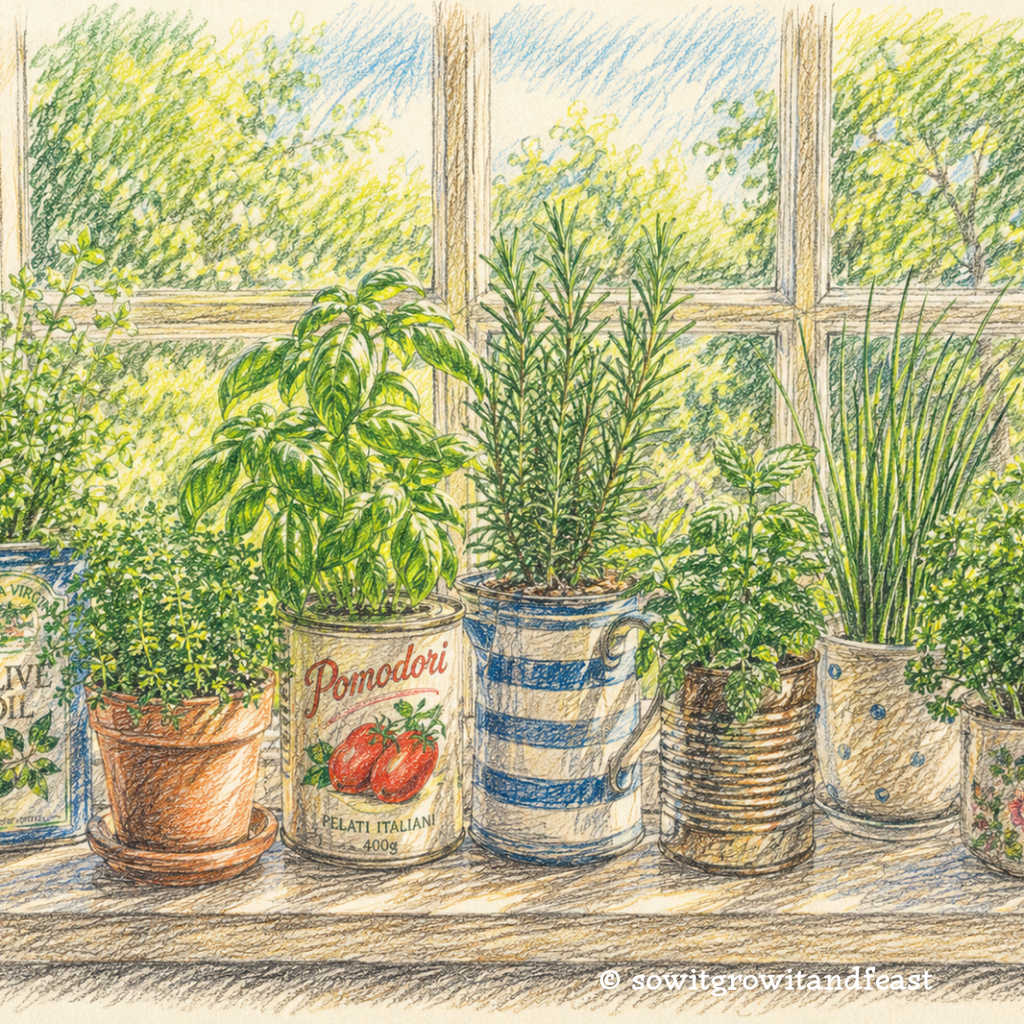
The Pleasure of a Living Kitchen Pantry
There is a particular satisfaction in cooking with something you’ve grown yourself.
It might be a handful of parsley stirred into a warming soup, a few leaves of thyme tucked beneath the skin of a roasting chicken, or freshly chopped chives scattered over buttery new potatoes.
These are small additions, but they can make an extraordinary difference.
Fresh herbs bring fragrance, colour and character to food. They can turn the simplest ingredients into something rather special, often without requiring much effort at all.
And unlike those little packets of supermarket herbs, which have an unfortunate habit of turning limp at the bottom of the fridge, a living plant offers the possibility of another harvest.
Of course, herbs are not entirely without their demands. They need light, suitable temperatures and a little understanding of their individual growing habits. But once you begin to recognise what makes them happy, caring for them becomes part of the everyday rhythm of the kitchen.
A quick check of the compost while the kettle boils. A little watering when needed. The occasional harvest for lunch.
Gardening doesn’t always have to involve muddy boots and a wheelbarrow.
Getting Started with Your Own Herb Collection
One of the pleasures of growing herbs is discovering just how many different flavours can come from such modest plants.
Some are wonderfully familiar. Rosemary, thyme and sage have long been companions to traditional British cooking, while parsley and chives find their way into everything from soups to salads.
Others encourage us to experiment a little further, introducing new fragrances and combinations to the kitchen.
For anyone wondering where to begin, the Sow It Grow It and Feast Grow Herbs Collection offers a way to start growing with a selection of ten established herb plug plants.
Rather than beginning with seeds, which can take time to germinate and establish, plug plants give you young plants that are already growing and ready for their next stage.
They still need care, of course, but they provide a useful starting point, particularly for anyone who is new to growing herbs.
The collection also includes a guidance booklet, offering practical advice on caring for the plants, harvesting their leaves and making use of them in the kitchen.
And that, really, is where the pleasure begins. Not simply in growing the herbs, but in discovering what you can do with them.
Finding the Right Home for Your Herbs
A sunny kitchen windowsill might seem the obvious place for a collection of herbs, and for some varieties it can be an excellent choice.
But not every herb enjoys the same conditions, and winter growing indoors presents a few challenges of its own.
Many Mediterranean herbs, including rosemary, thyme and sage, prefer plenty of light, free-draining compost and relatively cool conditions. They are often happier in a bright, unheated conservatory or cool room than beside a radiator in a centrally heated kitchen.
Basil, on the other hand, prefers warmth and dislikes cold draughts, although the short, dull days of a British winter can make it difficult to keep growing vigorously without additional lighting.
Parsley, chives and mint can be more accommodating, provided they receive sufficient light and their roots are not left sitting in water.
The important thing is to remember that a windowsill is a growing space, not a guarantee of growing success.
A bright, south-facing window will generally provide the most winter light, although even this may not be enough for vigorous growth during the darkest weeks of the year.
Avoid placing plants directly above a hot radiator, and keep tender herbs away from icy window glass on frosty nights.
If you have a particularly gloomy kitchen, a suitable horticultural grow light can make a considerable difference.
And don’t feel obliged to squeeze every herb onto one windowsill. Sometimes the secret to a happy collection is simply giving each plant the conditions it prefers.
A Little Care Goes a Long Way
Herbs are wonderfully rewarding plants, but they do appreciate being understood.
The most common difficulty with indoor herbs is watering. We tend to assume that a drooping plant must be thirsty, when sometimes the opposite is true.
Roots need air as well as moisture, and compost that remains permanently wet can quickly cause problems.
Choose containers with drainage holes and use a suitable potting compost. Check the moisture before watering rather than following a rigid timetable.
Mediterranean herbs generally prefer their compost to dry a little between waterings, while leafy herbs such as parsley and mint usually appreciate more consistent moisture.
Light is equally important. Plants growing in insufficient light often become pale, weak and rather stretched as they search for the sun.
If your herbs begin leaning towards the window, turn their pots occasionally to encourage more even growth.
And when it comes to harvesting, a little restraint is worthwhile.
Regular, careful picking can encourage bushier growth in many leafy herbs, but removing too much foliage at once will weaken a young plant. During winter, when growth naturally slows, harvest lightly and allow time for recovery.
There is no need to rush. A herb garden is something to enjoy over time.
Bringing Fresh Flavour to Winter Cooking
Winter cooking has a character all of its own.
As the evenings draw in, we naturally turn towards soups, casseroles, roasted vegetables and the comforting dishes that fill the kitchen with warmth and fragrance.
Fresh herbs belong beautifully to this kind of cooking.
A few sprigs of rosemary tucked around roasting potatoes release their distinctive woody scent as the oven warms. Thyme brings depth to slow-cooked vegetables, while sage pairs wonderfully with squash, butter and traditional stuffing.
Parsley adds freshness to rich dishes, and chives bring a gentle onion flavour to scrambled eggs, creamy soups and jacket potatoes.
Even a modest harvest can be put to good use.
There is also something rather enjoyable about allowing the herbs themselves to inspire what you cook.
Instead of choosing a recipe and buying the ingredients, you might find yourself looking at a particularly healthy plant and wondering what you could make with it.
A little thyme? Perhaps some roasted mushrooms.
An abundance of parsley? A fresh herb sauce.
A few remaining leaves of basil? Just enough to brighten a bowl of pasta.
It is a lovely way to become more imaginative in the kitchen, making use of what is growing rather than always reaching for something new.
Learning as You Grow
Gardening has a wonderful habit of teaching us something, often when we least expect it.
A plant that struggles in one position may thrive when moved somewhere brighter. A herb that appears rather reluctant to grow might simply need less water, a larger pot or a little patience.
And sometimes, despite our best efforts, a plant doesn’t survive.
It happens to experienced gardeners just as readily as beginners, although we don’t always like to admit it.
The important thing is to understand why, rather than abandon the idea altogether.
The Sow It Grow It and Feast collection includes a growing guide exploring the herbs, their histories, traditional uses and practical cultivation requirements.
There is also twelve months’ access to an online support portal, offering further growing advice, seasonal guidance and help with common problems.
For anyone beginning their first herb garden, that additional knowledge can be particularly useful.
After all, the more we understand our plants, the better equipped we are to care for them.
A Small Connection with Nature
There is another reason to grow herbs indoors, and it has very little to do with cooking.
During winter, when we spend more time inside, tending a few plants can provide a welcome connection with the natural world.
It doesn’t have to become a grand exercise in mindfulness or another task on an already crowded list.
Sometimes it is simply the pleasure of noticing a new leaf.
Or catching the scent of mint as you water it.
Or realising that a plant which looked rather sorry for itself last week has begun to recover.
These small observations encourage us to pay attention to things that might otherwise pass unnoticed.
Plants have their own pace. They cannot be hurried simply because we would like another handful of leaves for supper.
And perhaps that is part of their charm.
They remind us that growth takes time, that different things flourish in different conditions, and that caring for something living can be rewarding in itself.
A kitchen filled with herbs may not replace the pleasure of being outdoors, but it offers a little reminder of the garden during the months when much of it is resting.
A Thoughtful Gift for Someone Who Loves to Grow
For anyone who enjoys cooking, gardening or simply trying something new, a collection of living herbs makes a thoughtful present.
Unlike flowers that eventually fade or a gift that finds its way into a cupboard, herb plants offer the opportunity to grow, learn and harvest.
They can be particularly appealing to someone with limited outdoor space, whether that’s a small courtyard, balcony or no garden at all.
The Sow It Grow It and Feast collection includes the option of adding a personalised message, making it suitable for birthdays, housewarmings or a little unexpected kindness.
A gift voucher is also included with the collection.
And there is something rather lovely about giving a present that might eventually find its way into someone’s favourite recipe.
Looking Ahead to Spring
One of the advantages of beginning with herbs during the colder months is that your growing ambitions needn’t stop at the kitchen window.
As the days lengthen and temperatures rise, many herbs can be moved into larger containers or planted outside, provided they are suited to the conditions and have been gradually acclimatised.
Rosemary, thyme and sage can become valuable additions to a sunny, well-drained herb bed. Chives return year after year, while mint is often best kept in its own container, where its enthusiastic spreading habits can be politely restrained.
Tender herbs such as basil are better treated as seasonal plants in the British climate, growing outdoors only when the weather is reliably warm.
You might eventually create a dedicated herb garden, tuck plants between vegetables or keep a collection of pots close to the kitchen door.
What begins with a few plants on a windowsill can develop into a much greater appreciation of growing your own food.
And that is one of gardening’s greatest pleasures. There is always something new to try.
Keeping a Little of the Garden Growing
Winter may bring shorter days, colder mornings and a quieter garden, but it needn’t bring an end to the pleasure of growing.
A few carefully chosen herbs, a bright place to keep them and a little regular attention can bring freshness and fragrance into the kitchen when the world outside is resting.
You may not have enough basil for endless bowls of pesto in January, and your rosemary might prefer the cool conservatory to the warmth of the kitchen. But even a modest collection can provide a surprising amount of enjoyment.
There is pleasure in the growing, satisfaction in the harvesting and something rather special about adding an ingredient to supper that was still growing only moments before.
Explore the Sow It Grow It and Feast Grow Herbs Collection and discover how a small collection of plants can bring a little more flavour, greenery and everyday pleasure into your home.
Because the gardening year doesn’t really end when winter arrives. Sometimes, it simply moves indoors.
Further Reading: Why Growing Food Makes You Feel Better, Take the Guesswork Out of Growing Veg, How to Create a Garden That Feeds Your Family, How to Start a Vegetable Garden Now Ready for Spring
Follow us on Instagram, Threads, BlueSky, Twitter, Pinterest & Facebook
Not sure where to start? Take a look at our Grow Your Own Packs with detailed step by step instructions, seeds and 1 years online support.