There is something particularly satisfying about cooking a meal made from vegetables grown just outside the door. A simple stir fry is one of the easiest ways to enjoy fresh produce, especially when the ingredients have been picked only moments before they reach the kitchen.
Many stir fry vegetables are surprisingly quick and easy to grow. Even a small garden bed, a raised planter or a few containers can provide a steady supply of tender leaves, shoots and peppers throughout the growing season.
The following plants are ideal for creating a fresh garden stir fry mix:
- Leaf Salad Stir Fry Mix
- Pak Choi ‘Chu Choi’
- Pak Choi ‘Rubi’
- Pea ‘Exzellenz’
- Sweet Pepper ‘Bullhorn’
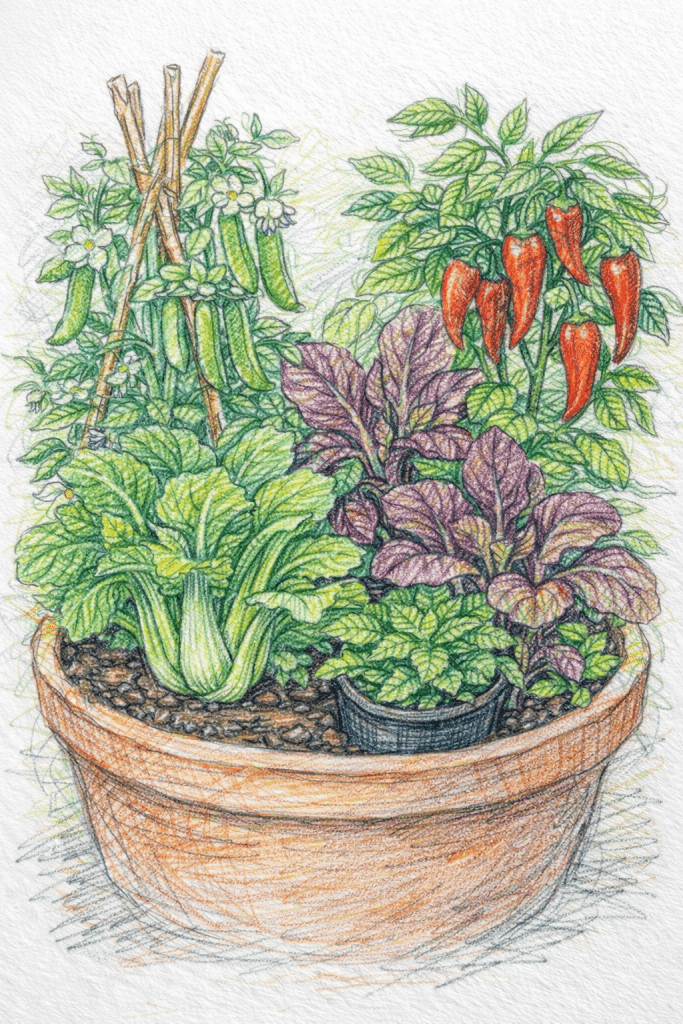
Most of these crops grow quickly and can be harvested several times, making them both practical and rewarding for home gardeners.
Sowing the Stir Fry Leaves
The leaf salad mix, pak choi and pea shoots can all be sown directly onto the surface of compost. This method is simple and works well in shallow trays, containers or small garden beds.
How to Sow
- Fill a tray or container with fresh compost and gently level the surface.
- Lightly water the compost so that it is evenly moist.
- Scatter the seeds across the surface. They can be sown fairly closely together as they will be harvested young.
- Press the seeds gently into the compost with your hand or a flat board.
- Cover very lightly with a thin dusting of compost or vermiculite.
- Water gently using a fine spray.
Place the container in a bright position and keep the compost lightly moist. Within a short time, small green shoots will begin to appear.
These tender leaves grow quickly and can be ready to harvest in only a few weeks.
Growing Pea ‘Exzellenz’ for Shoots
Peas grown for shoots are one of the easiest crops to raise. When sown densely in a tray, the young stems and leaves can be harvested as a sweet and delicate addition to stir fry dishes.
Allow the shoots to grow until they are around 10–15 centimetres tall before cutting.
Starting Sweet Pepper ‘Bullhorn’
Unlike the leafy crops, sweet peppers benefit from being started indoors.
Sowing Peppers
- Fill small pots with compost.
- Sow the seeds about 1cm deep.
- Place the pots in a warm, bright location such as a windowsill or greenhouse.
- Keep the compost lightly moist.
Once the seedlings have grown into young plants and the weather has warmed, they can be planted into larger containers or a sunny garden bed.
Peppers will take longer to mature than the leafy crops but reward patience with colourful, sweet fruits that bring both flavour and colour to a stir fry.
Harvesting Your Stir Fry Vegetables
One of the joys of growing leafy stir fry vegetables is how easily they regrow.
When harvesting:
- Use scissors or snips to cut the leaves at the base of the stems.
- Avoid pulling the whole plant from the soil.
- Leave the roots in place so the plants can produce fresh growth.
With regular watering and good light, many of these crops will reshoot and provide several harvests.
A Simple Garden Stir Fry
Once your vegetables are ready, preparing a quick stir fry takes only a few minutes.
Ingredients
- A handful of stir fry salad leaves
- Pak choi leaves and stems
- Pea shoots
- 1 sweet pepper, sliced
- A little garlic and ginger
- Soy sauce or a splash of sesame oil
Method
- Heat a little oil in a pan or wok.
- Add garlic and ginger and cook briefly.
- Add the pepper and cook for a minute.
- Stir in the pak choi and pea shoots.
- Finish with the leafy greens and a splash of soy sauce.
Cook quickly so the vegetables remain bright and crisp.
A Garden Harvest Worth Savouring
Growing vegetables for a stir fry is wonderfully rewarding. With only a few trays of compost and a sunny corner, it is possible to enjoy fresh harvests again and again.
From the first tender shoots to the final peppers of the season, these crops bring both colour and flavour to the kitchen.
And when the vegetables have travelled only a few steps from garden to pan, the meal somehow tastes even better.
Further Reading: How to Start Your Own Vegetable Patch, How to Plan and Design Your Dream Vegetable Patch, Why Choose Sow It Grow It and Feast for Your Garden?, How to Choose the Perfect Flower Pot for Your Crops, Recipe Garden Pots: Grow a Pimm’s No.1 Garden in One Pot, Recipe Garden Pots: Grow a Green Risotto in One Pot, Recipe Garden Pots: Pizza in One Pot
Follow us on Instagram, Threads, BlueSky, Twitter, Pinterest & Facebook