
There is something wonderfully optimistic about sowing chilli seeds in the depths of winter. Outside, the garden may be cold, damp and showing little enthusiasm for the months ahead. Yet indoors, tucked into a pot of compost on a warm windowsill, the beginnings of summer are already stirring.
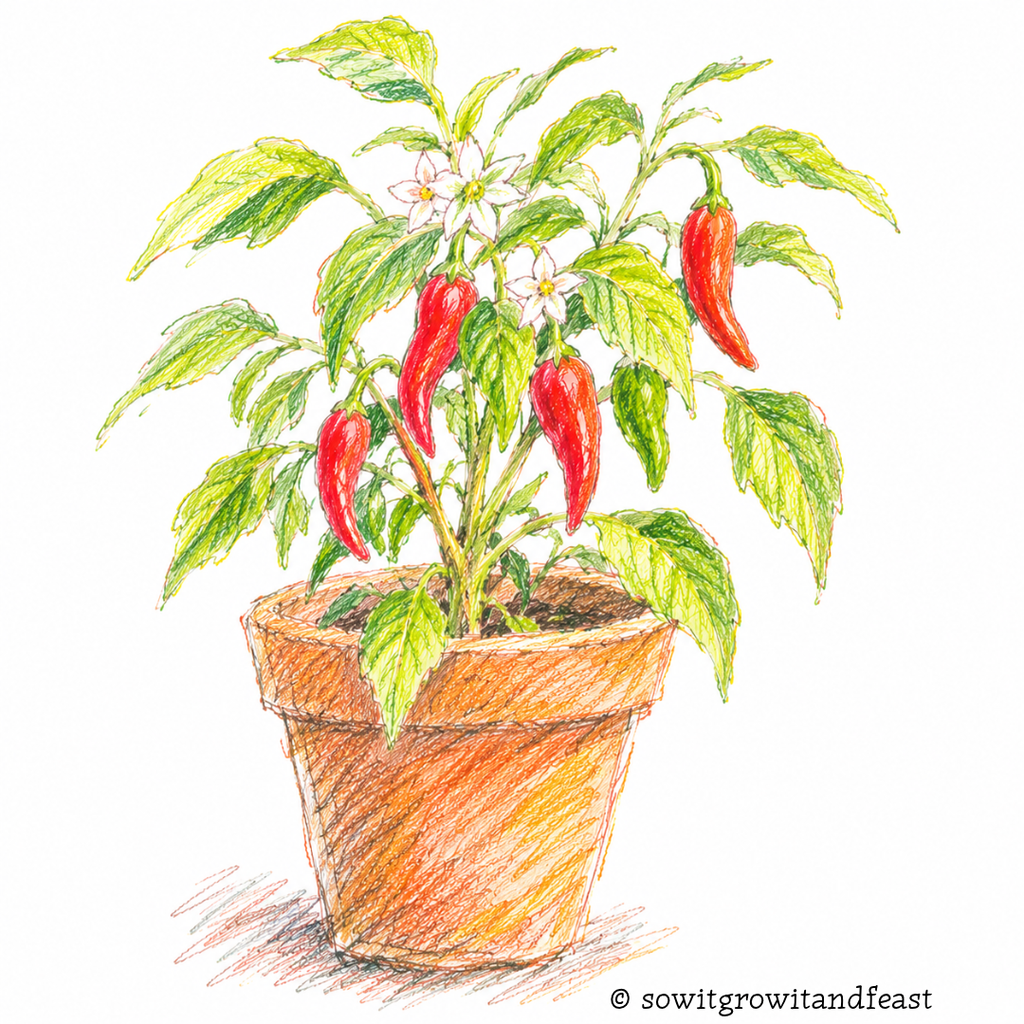
While much of the vegetable garden is still resting, chilli growers are quietly getting ahead.
A few tiny seeds, a little warmth and some patience are all that is needed to begin. With luck, those unremarkable little seeds will eventually become handsome plants carrying glossy fruits in shades of green, yellow, orange, purple and red.
And what extraordinary fruits they can be.
From the gentle warmth of a mild chilli to the formidable heat of a Scotch bonnet, there is a remarkable variety of flavours, shapes and colours to discover.
Growing chillies in Britain does require a little understanding of their needs. These are plants that appreciate warmth, good light and a long growing season, none of which our winters are particularly famous for providing.
But with an early start and the right care, even a modest collection of pots can produce a worthwhile harvest.
Better still, some chilli plants can be kept for several years, rewarding a little winter attention with an earlier start the following spring.
Why Sow Chilli Seeds in Late Winter?
There is a good reason chilli enthusiasts begin sowing while the rest of us are still contemplating whether it is worth venturing outside without a coat.
Chillies belong to the genus Capsicum, part of the Solanaceae family, alongside tomatoes, potatoes and aubergines.
Originating in warmer regions of the Americas, they generally need a longer growing season than many vegetables commonly grown in Britain.
The journey from seed to ripe fruit can take several months, particularly with slower-growing varieties.
Starting seeds indoors during late winter gives plants time to develop before they are moved into a greenhouse, polytunnel or sheltered outdoor position.
When Should You Sow Chillies in the UK?
For many gardeners, February and March are suitable months to begin.
However, the best sowing time depends on the variety and the growing conditions you can provide.
Some slower-growing types, particularly those belonging to Capsicum chinense, such as habaneros and Scotch bonnets, benefit from an earlier start.
Faster-growing varieties may be successfully sown later.
The important consideration is not simply warmth.
It is light.
A seedling encouraged into growth during January or February may struggle if it receives insufficient daylight. The result is often a collection of thin, stretched plants leaning rather desperately towards the nearest window.
If you have a heated propagator and suitable grow lights, early sowing can be worthwhile.
Without them, waiting until February or March may produce stronger plants.
Sometimes patience is the better gardening technique.
Choosing the Right Chilli Varieties
One of the great pleasures of growing your own chillies is the opportunity to explore varieties that rarely appear in supermarkets.
There is an extraordinary range to choose from, and not all chillies are grown simply for their heat.
Some offer gentle warmth and sweetness. Others have fruity, smoky or citrus-like flavours.
And then there are those that appear determined to test the limits of human endurance.
Chillies Worth Growing in Britain
Jalapeño – Capsicum annuum
A popular and versatile chilli with thick-walled fruits that are usually harvested green but can ripen to red. Jalapeños are useful for cooking, stuffing, pickling and making sauces.
Cayenne – Capsicum annuum
Produces slender fruits that ripen from green to red. Cayenne chillies are useful fresh or dried and generally offer a more pronounced heat.
Hungarian Hot Wax – Capsicum annuum
An attractive variety producing elongated fruits that change from pale yellow to orange and red as they mature. A useful choice for gardeners wanting a productive chilli with moderate to considerable heat, depending on the individual fruit.
Scotch Bonnet – Capsicum chinense
Famous for its distinctive fruity flavour and substantial heat. It needs a long, warm growing season and is often best suited to greenhouse cultivation in Britain.
Basket of Fire – Capsicum annuum
A compact, ornamental chilli that can be grown in containers and hanging baskets. It produces numerous small, colourful fruits with considerable heat.
For beginners, a relatively early-maturing Capsicum annuum variety is often the most straightforward choice.
Once you have gained confidence, the more demanding varieties become an enjoyable challenge.
How to Sow Chilli Seeds Successfully
Chilli seeds are not particularly difficult to sow, but they do appreciate the right conditions.
Warmth is especially important during germination.
Preparing Your Pots
Begin with clean seed trays or small pots filled with a suitable peat-free seed compost.
The compost should be fine enough to provide good contact with the seeds while allowing excess water to drain away.
Moisten it before sowing so that it is evenly damp rather than saturated.
Place the seeds approximately 5–6 mm deep and cover lightly with compost.
Water gently if necessary.
Label each variety clearly.
This may seem unnecessary when you have only two or three types, but by summer, remembering which small green plant was supposed to produce mild chillies and which was the exceptionally hot one can become rather important.
The Ideal Temperature for Germination
Most chilli seeds germinate best in consistently warm conditions, commonly around 21–28°C.
Some varieties, particularly Capsicum chinense, may benefit from temperatures towards the warmer end of this range.
A heated propagator can be particularly useful in a British home during winter.
It provides steady warmth and avoids the temperature fluctuations that can occur on windowsills.
Germination may take one to three weeks, although some varieties can take longer.
Do not be too quick to abandon a pot that appears to be doing absolutely nothing.
Chillies occasionally require a little patience before making their entrance.
Should You Cover the Seeds?
A propagator lid or clear cover can help retain moisture while the seeds germinate.
However, excessive humidity can encourage fungal problems.
Check the compost regularly, provide ventilation as needed and remove or open the cover once seedlings emerge.
The aim is to maintain suitable moisture, not to create a miniature tropical rainforest.
Looking After Young Chilli Seedlings
Once the first seedlings appear, their requirements begin to change.
Warmth remains useful, but good light becomes increasingly important.
Seedlings grown in poor light often become weak and elongated.
Place them in the brightest suitable position available, while protecting them from cold draughts and sudden temperature changes.
A bright south-facing windowsill may be sufficient later in spring, but supplementary grow lights can be helpful for very early sowings.
When to Pot On
Once seedlings have developed their first true leaves and are large enough to handle safely, they can be transplanted into individual pots.
The first leaves to appear are seed leaves, or cotyledons.
The true leaves follow and begin to resemble the foliage of a mature chilli plant.
Handle seedlings carefully, supporting them by a leaf rather than squeezing the delicate stem.
Use a suitable peat-free potting compost and water gently after transplanting.
As the plants grow, move them into progressively larger pots when their roots have filled the available space.
Avoid placing a very small seedling directly into an enormous container, where excessive wet compost may increase the risk of root problems.
When Can Chilli Plants Go Outside?
This is where British weather requires a little diplomacy.
A warm afternoon in April may feel like summer has arrived, but chilli plants are not impressed by cold nights.
Chillies are frost-tender and can suffer when temperatures fall too low, even if frost does not occur.
For most parts of Britain, outdoor planting is generally safest after the risk of frost has passed and night-time temperatures are reliably mild.
This may be late May or June, depending on location and the season.
In colder or exposed gardens, it can be sensible to wait longer.
Hardening Off Your Plants
Plants raised indoors need time to adjust to outdoor conditions.
This process is known as hardening off.
Begin by placing plants outside in a sheltered, lightly shaded position for a short period during mild weather.
Gradually increase their exposure to sunlight, wind and outdoor temperatures over approximately one to two weeks.
Bring them indoors or into suitable protection whenever conditions become too cold.
Sudden exposure to strong sunshine can scorch tender leaves, while cold winds can damage young growth.
A little patience now can prevent considerable disappointment later.
Growing Chillies in Pots, Greenhouses and Gardens
One of the appealing things about chilli plants is their suitability for container growing.
You do not need an extensive vegetable garden.
A sunny patio, sheltered courtyard or greenhouse can provide an excellent growing space.
Growing Chillies in Containers
Choose a container with adequate drainage holes and fill it with a suitable peat-free compost.
The final pot size will depend on the variety and its mature growth habit.
Compact chillies may thrive in relatively modest containers, while vigorous plants benefit from more root space.
Place pots where they receive plenty of light and warmth.
During hot weather, container-grown plants may need frequent watering.
However, avoid leaving them standing in waterlogged compost.
Growing Chillies in a Greenhouse
A greenhouse can make a considerable difference to chilli growing in Britain.
The additional warmth and shelter can encourage stronger growth and help fruits ripen.
However, greenhouses can become excessively hot during summer.
Ventilation is essential.
Open vents and doors when conditions require it, and consider shading during prolonged periods of intense sunshine.
Good airflow also helps reduce humidity-related problems.
Can Chillies Grow Outdoors in Britain?
Yes, particularly in warm, sheltered gardens.
Choose a sunny position protected from strong winds.
A south-facing wall can provide useful warmth, although plants still need adequate moisture.
Outdoor success depends on the variety and the weather.
In cooler summers, some chillies may produce fruit but struggle to ripen fully before autumn.
For reliable crops, especially with hotter, slower-growing varieties, protected cultivation is often preferable.
Watering Chilli Plants: Finding the Right Balance
Chillies appreciate consistent moisture, but they dislike sitting in saturated compost.
Too little water can cause wilting, reduced growth and flower or fruit problems.
Too much can deprive roots of oxygen and encourage root diseases.
The aim is to water according to the plant’s needs rather than following a rigid timetable.
Check the compost regularly.
Water thoroughly when appropriate, allowing excess water to drain away.
During warm summer weather, a productive plant in a container may need watering much more frequently than it did in spring.
Should You Let Chilli Plants Dry Out to Make Them Hotter?
There is a persistent gardening belief that deliberately stressing chilli plants produces hotter fruits.
Water stress can influence capsaicinoid production in some varieties, but the results are inconsistent and depend on the plant and growing conditions.
Severe drought can reduce yields and damage plants.
If you want hotter chillies, choosing a naturally pungent variety is generally more reliable than depriving a plant of water.
There is little advantage in making your chilli plant thoroughly miserable simply to make supper more alarming.
Feeding Chillies for Healthy Growth and Good Harvests
Chilli plants need nutrients to support healthy leaves, flowers and fruit.
However, more fertiliser does not necessarily mean more chillies.
Excessive feeding, particularly with nitrogen, can encourage lush foliage without a corresponding increase in fruit production.
Feeding Young Plants
Young seedlings growing in suitable compost generally do not need immediate additional feeding.
As plants become established and begin active growth, supplementary feeding may be useful, particularly in containers where nutrients are gradually depleted.
Follow the recommendations for the compost and fertiliser being used.
Feeding During Flowering and Fruiting
Once flowers and fruits begin to develop, a suitable high-potassium liquid fertiliser, such as a tomato feed, can be useful.
Apply according to the manufacturer’s instructions.
The frequency will depend on the product, compost, container size and plant growth.
Avoid assuming that feeding every fortnight is always necessary.
Overfeeding can be as unhelpful as underfeeding.
Do Chillies Need Epsom Salts?
Epsom salts contain magnesium sulphate and are sometimes recommended for chilli plants.
However, routine applications are unnecessary unless magnesium deficiency is present or suspected.
Yellowing between leaf veins can have several causes, including nutrient imbalances, root problems and unsuitable growing conditions.
Adding magnesium without understanding the cause may not help.
A balanced fertiliser and healthy root environment are usually a better starting point.
Likewise, liquid seaweed products may be useful as supplements, but they should not automatically be regarded as complete fertilisers.
Flowers, Pollination and Fruit Development
One of the most exciting moments in chilli growing is the appearance of the first flowers.
Small and often rather delicate, they are the beginning of the harvest to come.
Most cultivated chilli varieties have flowers capable of self-pollination.
However, movement from insects or gentle air circulation can help transfer pollen.
In a greenhouse, good ventilation and occasional gentle movement of the plants may assist pollination.
There is usually no need to hand-pollinate every flower.
Why Are My Chilli Flowers Falling Off?
Flower drop can be caused by several factors.
Excessive heat, low temperatures, irregular watering, poor light and other stresses may interfere with successful fruit development.
Some flower loss is normal.
But if large numbers are falling without setting fruit, examine the growing conditions.
Check temperatures, watering, light and ventilation before reaching for additional fertiliser.
Often, improving the environment is more effective than adding another product.
Common Chilli Pests and How to Manage Them
Chilli plants can attract several familiar garden pests, particularly when grown under glass.
The most common include aphids, whitefly and red spider mite.
Regular inspection is one of the simplest and most effective ways to identify problems before they become serious.
Aphids
Aphids gather on tender shoots and the undersides of leaves, feeding on plant sap.
Large populations can distort growth and produce sticky honeydew.
Small infestations may be removed by hand or washed away carefully with water.
Beneficial insects such as ladybirds and hoverfly larvae can also help control aphids.
Glasshouse Whitefly
Whiteflies are small, pale insects that often gather beneath leaves.
When disturbed, they may rise in a little cloud.
They can weaken plants and produce honeydew.
Yellow sticky traps can help monitor adult activity, while suitable biological controls may be useful in greenhouses.
Red Spider Mite
Red spider mites thrive particularly well in hot, dry greenhouse conditions.
Early symptoms may include fine pale speckling on leaves, followed by webbing when infestations become severe.
These pests can be difficult to manage once well established.
Regular monitoring, appropriate greenhouse management and suitable biological controls are useful approaches.
Using Pest Control Products
If a treatment is necessary, choose a product authorised for the intended use in the UK and follow its label instructions.
Do not assume that homemade sprays or products described as natural are automatically safe for edible crops or beneficial wildlife.
Good plant care and early intervention are often the most effective starting points.
Preventing Diseases and Viruses
Healthy chilli plants are generally more resilient, but good growing conditions cannot prevent every disease.
Viruses, fungal diseases and root problems can all affect plants.
Some viruses produce mottled or distorted foliage, stunted growth and poor fruit development.
However, these symptoms are not unique to viral infections.
Nutrient problems, pests and environmental stress can sometimes look similar.
Good Hygiene Matters
Use clean pots, trays and tools.
Remove unhealthy plant material where appropriate and avoid spreading sap between plants.
Keep greenhouse growing areas tidy and inspect new plants before introducing them to an established collection.
Where a serious viral infection is suspected, seek reliable diagnostic advice.
There is generally no cure for a systemically virus-infected chilli plant, and removing affected plants may be necessary to protect others.
Preventing Root Problems
Well-drained compost and sensible watering are essential.
Waterlogged growing conditions can encourage root diseases.
Good ventilation and adequate spacing also help reduce the conditions that favour some fungal problems.
Crop rotation can be useful when chillies are grown in garden soil, particularly because they belong to the same family as tomatoes, potatoes and aubergines.
However, rotation is less relevant to plants grown in fresh compost in individual containers.
When and How to Harvest Chillies
Chillies can often be harvested at different stages of ripeness.
Many begin green and change colour as they mature.
Depending on the variety, the final colour may be red, orange, yellow, purple or even brown.
Some varieties are traditionally harvested green, while others develop their characteristic flavour when fully ripe.
Does Ripeness Affect Heat?
It can.
Capsaicinoid concentrations may change during fruit development, but the relationship between ripeness and pungency varies between varieties.
A red chilli is not automatically hotter than a green one.
The best approach is to understand the characteristics of the variety you are growing.
Harvesting Without Damaging the Plant
Use clean scissors or secateurs to cut ripe fruits from the plant, leaving a short section of stalk attached.
Avoid pulling or twisting forcefully, as chilli branches can be brittle.
Regular harvesting may help encourage continued fruit production while conditions remain favourable.
Handle very hot varieties carefully.
Wearing gloves is sensible when harvesting or preparing exceptionally pungent chillies, and always avoid touching your eyes.
What to Do with Your Chilli Harvest
One of the pleasures of growing chillies is discovering just how versatile they are in the kitchen.
Fresh chillies can be added to soups, stews, curries, sauces and vegetable dishes.
Different varieties contribute different flavours as well as heat.
Some are sweet and fruity, others earthy or smoky.
Freezing Chillies
Freezing is one of the simplest ways to preserve a harvest.
Wash and dry the fruits thoroughly, then freeze them in suitable containers or freezer bags.
They may soften after thawing, but they remain useful for cooking.
Drying Chillies
Thin-walled varieties are often particularly suitable for drying.
Use a food dehydrator or another reliable controlled drying method, ensuring the fruits become thoroughly dry before storage.
Britain’s damp autumn weather can make traditional air-drying unreliable.
Store properly dried chillies in airtight containers in a cool, dry place.
Making Chilli Sauces
Homemade chilli sauces are a wonderful way to enjoy a generous harvest.
However, sauces intended for long-term storage require safe, tested preservation methods.
Do not assume that adding a little vinegar makes a homemade sauce shelf-stable.
Where a reliable preservation method is not used, refrigerate promptly and follow appropriate food safety guidance.
Can You Keep Chilli Plants Through Winter?
One of the more interesting characteristics of chillies is that they are not necessarily annual plants.
Although commonly grown as annual crops in Britain, many Capsicum species are perennial in suitable climates.
With the right conditions, plants can survive for several years.
Overwintering can be particularly worthwhile for slow-growing or unusual varieties.
It may also provide a head start the following spring.
However, not every plant survives, and success depends on its health, variety and winter conditions.
Bringing Chilli Plants Indoors
Before temperatures fall too low in autumn, move suitable container-grown plants into a bright, frost-free position.
Inspect them carefully for pests before bringing them indoors.
This is especially important if other houseplants are nearby.
A cool conservatory, bright spare room or suitable heated greenhouse may provide an appropriate environment.
The plants should be protected from frost and prolonged cold.
Watering During Winter
As light levels and temperatures fall, growth usually slows.
Plants therefore need less water than during summer.
Allow the compost to dry somewhat between waterings, while avoiding prolonged complete dryness.
The aim is to keep the roots healthy without encouraging excessive soft growth.
Feeding can usually be reduced or stopped while plants are growing very little.
Should You Prune Chilli Plants for Winter?
Some growers prune established plants before overwintering to reduce their size and remove damaged growth.
However, severe pruning is not always necessary or beneficial.
The best approach depends on the plant’s condition and the space available.
Remove dead or diseased material and avoid cutting back healthy growth unnecessarily, particularly if the plant will remain actively growing in a warm, bright position.
Waking Plants Up in Spring
As daylight increases and temperatures rise, overwintered plants may begin producing fresh growth.
Gradually increase watering as active growth resumes.
Repot if necessary and begin feeding when appropriate.
Before moving plants outdoors, harden them off carefully.
An established plant may flower and fruit earlier than a newly grown seedling, although this is not guaranteed.
There is something rather satisfying about seeing a familiar chilli plant return to life after winter.
It feels like welcoming back an old friend.
Albeit one capable of producing something that may make your eyes water.
Growing Chillies Is About More Than Heat
It is easy to think of chillies simply as ingredients that make food hot.
But growing them reveals a much more interesting side to these remarkable plants.
There is the anticipation of the first seeds germinating while winter still holds the garden.
The pleasure of watching glossy leaves develop.
The arrival of delicate flowers, followed by tiny fruits that gradually swell and change colour.
And finally, the satisfaction of gathering something that has taken months of care to produce.
Chilli plants can be wonderfully ornamental, particularly when carrying fruits at different stages of ripeness.
They also offer an opportunity to explore flavours and varieties that may be difficult to find in the shops.
And because many can be grown successfully in containers, they are accessible to gardeners with limited space.
A sunny patio, sheltered balcony or modest greenhouse can be enough to begin.
A Little Warmth While the Garden Sleeps
There is a special pleasure in sowing seeds during the final weeks of winter.
Outside, the days may still be short and the soil cold.
But indoors, beneath the surface of a small pot of compost, the next growing season is quietly beginning.
Chillies reward this early optimism.
They ask for warmth, light, patience and a little attention, but in return they offer colourful plants, distinctive flavours and the possibility of a harvest that stretches well into autumn.
Some may even remain with us for another year.
And perhaps that is what makes growing chillies so appealing.
They remind us that gardening is never simply about the final harvest.
It is about the anticipation, the small discoveries and the pleasure of nurturing something from its very beginning.
Because sometimes, the best way to bring a little warmth into a cold British winter is to plant the promise of something fiery.
Further Reading: Why Growing Food Makes You Feel Better, Take the Guesswork Out of Growing Veg, How to Create a Garden That Feeds Your Family, How to Start a Vegetable Garden Now Ready for Spring
Follow us on Instagram, Threads, BlueSky, Twitter, Pinterest & Facebook
Not sure where to start? Take a look at our Grow Your Own Packs with detailed step by step instructions, seeds and 1 years online support.