There is something rather magical about a pumpkin.
Perhaps it is the way a tiny seed, no bigger than a fingernail, can produce a plant that sprawls across half the vegetable garden, eventually revealing great round fruits beneath its enormous leaves. Or perhaps it is the pumpkin’s remarkable ability to signal the changing seasons. Few vegetables announce the arrival of autumn quite so confidently.
By October, pumpkins are everywhere. They sit on doorsteps, brighten harvest displays and appear in village produce shows, where the largest specimens are admired with a mixture of respect and disbelief.
Yet there is much more to pumpkins than Halloween lanterns and competitions to grow the biggest vegetable.
They have a fascinating history, stretching back thousands of years to the ancient agricultural communities of the Americas. They are wonderfully versatile in the kitchen, and many varieties can be stored long after the garden has settled into winter.
And despite their impressive size, pumpkins are surprisingly straightforward to grow.
All they really ask for is sunshine, fertile soil, plenty of room and a gardener prepared to be patient.
Although, as anyone who has grown a vigorous trailing variety will tell you, plenty of room is a phrase open to considerable interpretation.
What Exactly Is a Pumpkin?
Pumpkins belong to the gourd family, Cucurbitaceae, alongside courgettes, marrows, cucumbers, melons and other squashes.
Most familiar pumpkins belong to the genus Cucurbita, although the word ‘pumpkin’ is a common name rather than a precise botanical classification.
Several species produce fruits that we call pumpkins, including:
- Cucurbita pepo – includes many traditional orange carving pumpkins, miniature pumpkins and several culinary varieties.
- Cucurbita maxima – includes many large-fruited pumpkins, giant exhibition varieties and some richly flavoured culinary types.
- Cucurbita moschata – includes certain pumpkins grown for their excellent eating qualities, particularly in warmer climates.
This means pumpkins are closely related to courgettes and marrows, but they are not necessarily the same species.
Like other squashes, pumpkins are botanically fruits because they develop from flowers and contain seeds.
In the kitchen, however, we generally treat them as vegetables.
Pumpkins are annual plants, completing their life cycle within a single growing season.
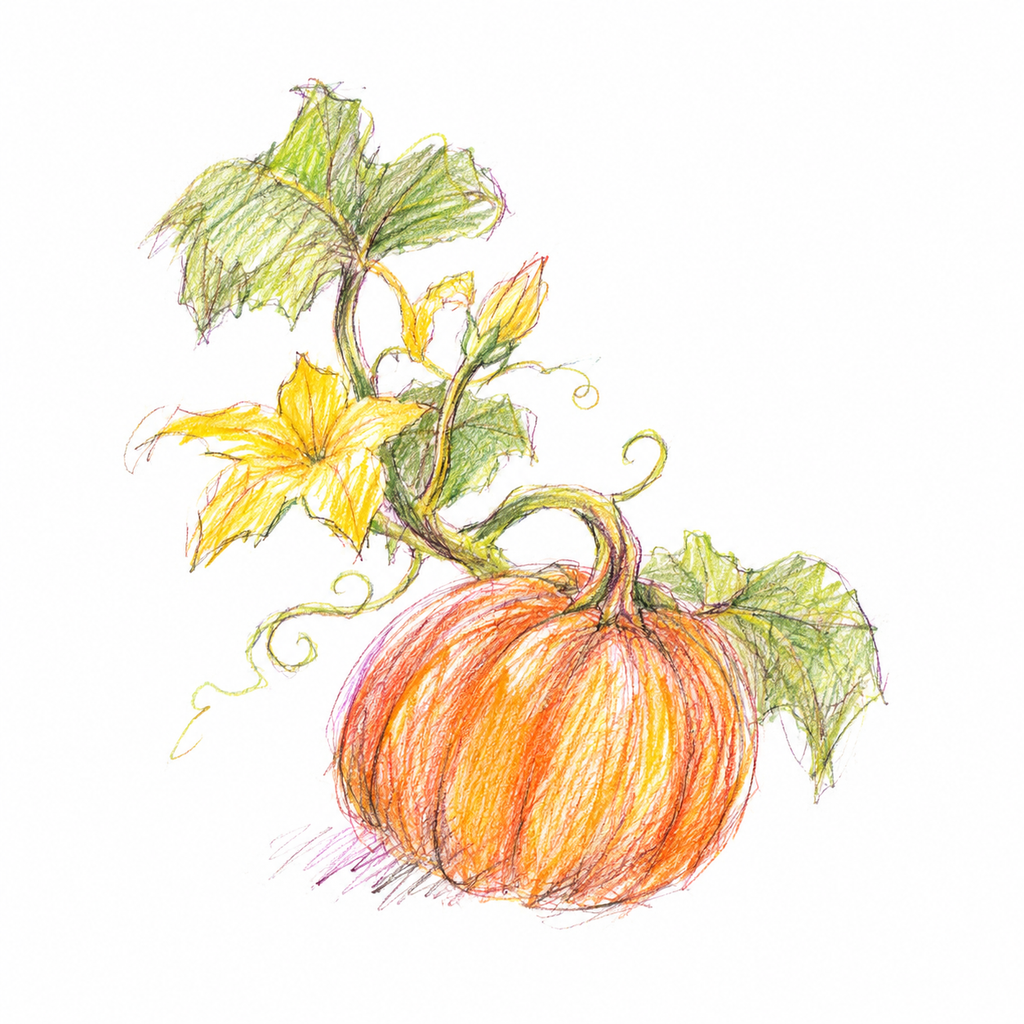
Most produce long, trailing stems, broad leaves and large golden-yellow flowers.
Their fruits can be round, flattened, elongated or deeply ribbed, with skins ranging from orange and yellow to cream, green and blue-grey.
And although we tend to imagine pumpkins as enormous orange globes, some of the most delicious varieties are surprisingly small.
Choosing the Best Pumpkins to Grow
Before planting a pumpkin seed, it is worth deciding what you want from your harvest.
Are you hoping to carve a spectacular Halloween lantern?
Would you prefer sweet, richly flavoured flesh for soups and roasting?
Or is your ambition to produce something so enormous that getting it home from the allotment becomes a logistical exercise?
Different varieties have different strengths.
Pumpkins for Carving
Traditional carving pumpkins are generally selected for their size, shape and suitability for hollowing out.
They often have relatively large internal cavities and skins that can be carved without too much difficulty.
Varieties worth considering include:
‘Jack O’Lantern’ – Cucurbita pepo
A familiar orange pumpkin producing rounded fruits suitable for Halloween displays.
It can also be cooked, although its flavour is generally less concentrated than that of varieties bred specifically for eating.
‘Howden’ – Cucurbita pepo
A traditional carving pumpkin with a rounded shape and rich orange colouring.
It is particularly suitable for larger Halloween lanterns.
These pumpkins are wonderful for decorating, but they are not necessarily the best choice if flavour is your priority.
Pumpkins for Cooking
For the kitchen, choose varieties bred for their flavour, texture and sweetness.
Smaller culinary pumpkins often have denser flesh and less watery interiors than large carving varieties.
‘Small Sugar’ – Cucurbita pepo
A traditional small pumpkin valued for its sweet flesh.
It is particularly suitable for pies, baking, soups and purées.
‘Rouge Vif d’Étampes’ – Cucurbita maxima
Sometimes sold as the Cinderella pumpkin, this beautiful French heirloom variety produces flattened, deeply ribbed orange-red fruits.
It has attractive flesh suitable for cooking, although flavour and texture depend on growing conditions and maturity.
‘Crown Prince’ F1 – Cucurbita maxima
Strictly speaking, this is usually marketed as a winter squash rather than a traditional pumpkin.
However, it deserves mention because it is an excellent choice for British gardeners interested in richly flavoured, long-keeping fruits.
Its blue-grey skin conceals dense, sweet orange flesh that is particularly good roasted.
Miniature Pumpkins
Small pumpkins are delightful for autumn displays and can be useful where individual fruits need to be manageable.
‘Jack Be Little’ – Cucurbita pepo
Produces small, flattened orange fruits that fit comfortably in the hand.
They are particularly attractive in seasonal arrangements.
‘Baby Boo’ – Cucurbita pepo
A miniature pumpkin with pale, almost white skin.
It makes a beautiful contrast with traditional orange varieties.
Although miniature pumpkins may be edible when grown from known culinary seed, their eating qualities vary. Always check the variety’s intended use.
Giant Pumpkins
For gardeners with a competitive streak, giant pumpkins offer a rather different challenge.
‘Dill’s Atlantic Giant’ – Cucurbita maxima
This famous variety has been developed for producing exceptionally large fruits.
Under specialist growing conditions, giant pumpkins can weigh hundreds of kilograms, with world-record specimens exceeding a tonne.
Growing one requires considerable space, fertile soil, consistent watering and careful management.
It also requires a plan for moving the finished pumpkin.
That last detail is easily overlooked in April.
Where Do Pumpkins Come From?
Pumpkins have a history stretching back thousands of years.
The various species of Cucurbita were domesticated in different parts of the Americas, with archaeological evidence of squash cultivation dating back many millennia.
Cucurbita pepo, which includes many familiar carving pumpkins, has a particularly long history of cultivation in North America.
Other species, including Cucurbita maxima, were domesticated in South America.
These plants were important food crops for numerous Indigenous communities, providing edible flesh and seeds.
Their cultivation developed over generations, long before European contact with the Americas.
Pumpkins and the Three Sisters
Squashes formed part of traditional agricultural systems practised by various Indigenous peoples of North America.
One of the best-known is the Three Sisters, which brings together maize, climbing beans and squash.
The crops complement one another in several ways.
Maize provides height and can support climbing beans.
Beans form associations with nitrogen-fixing bacteria, helping them obtain nitrogen, although this does not mean they immediately fertilise neighbouring plants.
Squash spreads across the ground, shading the soil and helping to reduce weed growth and moisture loss.
Together, the crops make productive use of growing space.
The Three Sisters is not one universal method. Different communities developed their own planting arrangements suited to local climates, crops and traditions.
For British gardeners, the principle offers an interesting example of thoughtful companion growing, although adaptations may be necessary for our cooler summers.
How Pumpkins Became Part of Halloween
The association between pumpkins and Halloween has an intriguing history.
Long before pumpkins became the familiar symbol of the festival, people in Ireland and parts of Britain carved lanterns from root vegetables, particularly turnips.
These lanterns were associated with seasonal customs and folklore, including stories surrounding wandering spirits and the character known as Stingy Jack.
When Irish immigrants carried these traditions to North America, pumpkins offered a larger and generally easier material to carve.
Over time, the illuminated pumpkin became closely associated with Halloween.
The custom eventually returned across the Atlantic in its modern form.
Today, pumpkin lanterns are familiar throughout Britain, although the older tradition of carving turnips is still remembered in some places.
There is something rather wonderful about the way a humble vegetable can carry centuries of folklore across continents.
How to Grow Pumpkins in the UK
Pumpkins are rewarding plants, but they do need the right conditions.
They are tender annuals that dislike frost and cold soil.
They grow best in warm, sunny, sheltered positions with fertile soil and reliable moisture.
In Britain, the greatest challenge is often providing a sufficiently long growing season for the fruits to mature before autumn frosts arrive.
Choosing an appropriate variety is therefore particularly important.
When to Sow Pumpkin Seeds
For most British gardeners, late April and early May are suitable times to begin sowing pumpkin seeds indoors.
Starting seeds under cover gives young plants a head start before they are planted outside.
However, avoid sowing too early.
Pumpkins grow quickly, and seedlings can become large and difficult to manage while waiting for suitable outdoor conditions.
Sowing Pumpkin Seeds Indoors
Fill individual pots with good-quality peat-free seed compost.
Sow one seed per pot, approximately 2–3cm deep.
Place the pots somewhere warm, ideally around 18–21°C.
Keep the compost moist but not waterlogged.
Seeds generally germinate within approximately five to ten days under suitable conditions.
Once seedlings appear, move them into a bright position to encourage sturdy growth.
Pumpkins dislike unnecessary root disturbance, so individual pots are preferable to seed trays that require seedlings to be separated.
Biodegradable pots can be useful, but they are not essential.
Ordinary pots work perfectly well if the rootball is handled carefully when transplanting.
Can You Sow Pumpkins Directly Outdoors?
Yes.
Pumpkin seeds can be sown directly into prepared soil once the risk of frost has passed and the ground has warmed.
In many parts of Britain, this means late May or early June.
Direct sowing avoids transplanting, but seedlings may establish more slowly in unsettled weather.
For varieties requiring a long growing season, starting indoors is often the more reliable approach.
Preparing the Soil for Pumpkins
Pumpkins are vigorous plants with considerable appetites.
Their enormous leaves, long stems and developing fruits require fertile soil and consistent moisture.
Choose a sunny position that receives plenty of direct sunlight throughout the day.
Shelter from cold winds is particularly valuable.
The soil should be well drained but capable of retaining moisture during dry weather.
Before planting, incorporate generous amounts of well-rotted garden compost or manure into the growing area.
Organic matter helps improve soil structure and supports moisture retention.
Avoid placing fresh manure directly around young roots.
How Much Space Do Pumpkins Need?
This depends on the variety.
Compact or semi-bush pumpkins may need approximately 1–1.5m between plants.
Vigorous trailing varieties can require 2–3m or more, and some giant pumpkin plants spread considerably further.
Always check the recommendations supplied with your seeds.
If you have a small garden, choose a variety specifically described as compact rather than hoping a vigorous trailing pumpkin will remain politely within its allocated space.
It almost certainly will not.
Planting Pumpkins Outdoors
Before planting indoor-raised pumpkins into the garden, they need time to adjust to outdoor conditions.
This process is known as hardening off.
Over approximately seven to ten days, gradually expose the plants to outdoor temperatures, sunlight and breezes.
Begin by placing them outside during mild daytime conditions and bringing them under cover at night.
Increase their exposure gradually.
Once the danger of frost has passed, plant them into their prepared positions.
In many parts of Britain, this will be towards the end of May or early June.
Water thoroughly after planting.
Young plants may benefit from temporary protection during unusually cool or windy weather.
Watering Pumpkins
Pumpkins need consistent moisture, particularly while flowering and developing fruits.
Their large leaves lose considerable amounts of water during warm weather.
During dry spells, water thoroughly so moisture reaches the root zone.
Avoid frequent, superficial watering that wets only the surface.
Direct water towards the soil around the plant rather than unnecessarily soaking the foliage.
A mulch of well-rotted compost or other suitable organic material can help conserve moisture and suppress weeds.
Why Consistent Watering Matters
Irregular watering can place plants under stress and affect fruit development.
Severe drought may cause flowers or developing fruits to fail.
Container-grown pumpkins are especially vulnerable because their roots have access to a limited volume of compost.
Check soil moisture regularly and adjust watering according to the weather.
Feeding Pumpkin Plants
Pumpkins benefit from fertile soil and may require additional feeding during their most productive period.
Plants grown in well-prepared garden soil may need relatively little supplementary feeding.
Those grown in containers often require more regular nutrients.
Once flowering begins, a suitable liquid feed formulated for fruiting vegetables can be used according to the manufacturer’s instructions.
Avoid excessive nitrogen feeding.
Too much nitrogen may encourage impressive leaves without producing an equally impressive harvest.
Healthy roots, sufficient moisture and successful pollination are just as important as fertiliser.
Pumpkin Flowers and Pollination
One of the loveliest sights in a summer vegetable garden is a pumpkin plant in flower.
Large, golden-yellow blossoms appear among the broad leaves, often attracting bees and other pollinating insects.
Pumpkin plants generally produce separate male and female flowers on the same plant.
Male flowers grow on slender stalks.
Female flowers have a small swelling immediately behind the blossom.
If pollination is successful, this swelling develops into a pumpkin.
Why Are My Pumpkins Not Developing?
It is quite normal for pumpkin plants to produce flowers without immediately setting fruit.
Early in the growing season, male flowers often appear before female flowers.
Poor weather can also reduce pollinator activity.
If a female flower is not adequately pollinated, the small developing fruit may yellow, shrivel and drop away.
This is particularly common during prolonged wet or cool weather.
How to Hand Pollinate Pumpkins
If natural pollination is poor, pollen can be transferred by hand.
Choose a freshly opened male flower and collect pollen using a small, soft brush.
Gently transfer it to the stigma inside a freshly opened female flower of the same species.
This is best done during the morning while flowers are open.
Hand pollination can be particularly useful during unsettled weather or when insect activity is limited.
However, it is not normally necessary where pollinators are visiting the flowers regularly.
Common Pumpkin Pests and Problems in Britain
Pumpkins are generally robust plants, but they can encounter several difficulties during the growing season.
Slugs and Snails
Young pumpkin seedlings are particularly vulnerable.
Protect newly planted pumpkins and inspect them regularly.
Once established, vigorous plants are usually better able to tolerate some feeding.
Powdery Mildew
Powdery mildew is common on pumpkins and other squashes, particularly towards the end of summer.
It appears as a white, powdery coating on the leaves.
Severe infections can reduce plant vigour.
Adequate spacing, consistent watering and avoiding unnecessary plant stress can help.
Remove badly affected foliage where appropriate, but avoid stripping plants of too many healthy leaves.
Aphids
Aphids may gather on tender shoots and leaves.
Small populations are often controlled naturally by ladybirds, hoverfly larvae and other beneficial insects.
Encouraging a wildlife-friendly garden can help support these natural predators.
Poor Fruit Development
Small pumpkins sometimes begin developing but then turn yellow and shrivel.
Poor pollination is one possible cause.
Irregular moisture, low temperatures and other growing stresses may also contribute.
Check growing conditions before assuming the problem is caused by disease.
Bitter Pumpkins: An Important Warning
Pumpkins and other squashes can occasionally contain elevated levels of cucurbitacins, naturally occurring bitter compounds that can cause serious gastrointestinal illness.
This is uncommon in commercially bred edible varieties but can occur, particularly where seed has been saved from uncontrolled crosses involving ornamental gourds or unsuitable plants.
Never eat pumpkin flesh that tastes unusually bitter.
Discard the entire fruit.
Cooking does not reliably remove these compounds.
For edible crops, purchase seed from reputable suppliers and take care when saving your own.
Growing Giant Pumpkins
There is something wonderfully eccentric about the British tradition of growing enormous vegetables.
Village shows and horticultural competitions have long celebrated impressive pumpkins, and some growers devote considerable time and expertise to producing extraordinary specimens.
Growing a giant pumpkin is rather different from producing a few fruits for the kitchen.
It requires careful planning, generous growing space and consistent attention.
Choose the Right Variety
For giant pumpkins, genetics matter enormously.
‘Dill’s Atlantic Giant’ is one of the best-known varieties associated with competitive giant pumpkin growing.
Specialist growers often select seed from plants with a proven history of producing exceptionally large fruits.
Give the Plant Plenty of Space
Giant pumpkins develop extensive vines and root systems.
They need a substantial area of fertile soil, plenty of sunshine and reliable access to moisture.
Crowded plants are unlikely to reach their full potential.
Concentrate Growth on Fewer Fruits
Growers often restrict the number of fruits developing on a plant.
This allows more of the plant’s resources to be directed towards the remaining pumpkin.
For competitive growing, some growers eventually retain just one carefully selected fruit.
Protect Developing Pumpkins
As pumpkins grow, their weight increases considerably.
Positioning developing fruits on suitable boards, sand or other supportive materials can help reduce prolonged contact with damp soil.
Care must be taken not to damage the stem or restrict the fruit as it expands.
Maintain Consistent Watering
Large pumpkins need reliable moisture.
Rapid growth can place considerable demands on the plant, particularly during warm weather.
Avoid allowing the soil to become severely dry and then suddenly saturating it.
Consistent growing conditions are preferable.
Feed Sensibly
Giant pumpkin growers often use carefully planned feeding programmes.
However, there is no single fertiliser that guarantees enormous fruits.
Soil fertility, plant health, weather, genetics and watering all influence the final result.
Excessive feeding can cause problems rather than improve growth.
And while winning a village show is a perfectly respectable ambition, it is worth remembering that the largest pumpkin is not necessarily the most delicious.
When Are Pumpkins Ready to Harvest?
Pumpkins are generally harvested in autumn, once the fruits have matured.
The exact timing depends on the variety and growing conditions.
In Britain, many pumpkins are ready during September and October.
However, the calendar alone is not a reliable guide.
Signs That a Pumpkin Is Ready
Look for several indicators of maturity:
- The fruit has developed the characteristic mature colour of its variety.
- The skin has become firm and resists light pressure from a fingernail.
- The stalk has begun to become woody or corky, depending on the variety.
- The plant may be naturally beginning to decline towards the end of the growing season.
Not all ripe pumpkins are orange.
Some varieties remain green, cream or blue-grey when fully mature.
Harvest Before Frost
Pumpkins are vulnerable to frost damage.
Where possible, harvest mature fruits before the first significant frost.
Use clean secateurs or a sharp knife, leaving a short length of stalk attached.
Avoid lifting pumpkins by their stalks.
A damaged stalk can create an entry point for decay.
Handle the fruits carefully, as bruising can shorten their storage life.
How to Cure and Store Pumpkins
One of the advantages of growing suitable mature pumpkins is that some varieties can be stored for several months.
However, keeping qualities vary considerably.
Carving pumpkins are often less suitable for long-term storage than varieties bred specifically for eating and keeping.
Curing Pumpkins
Many mature pumpkins benefit from a period of curing after harvest.
This allows the skin to harden further and helps minor superficial injuries dry.
For suitable varieties, curing generally involves keeping the fruits somewhere warm, dry and well ventilated for approximately seven to fourteen days.
A warm greenhouse can be useful during suitable weather, provided temperatures do not become excessive and fruits are protected from damp and cold nights.
Avoid curing fruits that are already damaged or showing signs of decay.
Storing Pumpkins
After curing, store suitable pumpkins somewhere cool, dry, frost-free and well ventilated.
Temperatures around 10–15°C are often appropriate for many varieties.
Avoid damp sheds, freezing conditions and prolonged refrigeration of whole pumpkins.
Place fruits so they are not touching where practical.
Inspect them regularly and use any showing signs of softening or decay promptly.
Storage life depends on the variety, maturity and conditions.
Some culinary pumpkins can keep for several months, while others are best used much sooner.
Are Pumpkins Good for You?
Pumpkins can make a valuable contribution to a varied, balanced diet.
Their nutritional composition varies according to species, variety and maturity.
Pumpkins with deep orange flesh are often rich in carotenoids, including beta-carotene.
The body can convert beta-carotene into vitamin A, which contributes to normal vision, immune function and the maintenance of healthy skin.
Pumpkin flesh can also provide vitamin C, potassium and dietary fibre.
It is generally relatively low in energy and contains a high proportion of water.
However, nutritional values vary considerably between varieties, so it is misleading to assume every pumpkin provides exactly the same amounts of vitamins and minerals.
Don’t Forget the Seeds
Pumpkin seeds are also nutritious.
They provide protein, unsaturated fats and minerals including magnesium and zinc.
Seeds from known edible pumpkin varieties can be cleaned, dried and roasted.
Their shells vary in toughness, so some are more pleasant to eat whole than others.
Pumpkin seeds make a delicious addition to salads, soups and homemade bread.
Cooking with Pumpkins
Although pumpkins are closely associated with Halloween, their greatest pleasure may be found in the kitchen.
The flesh of culinary varieties can be sweet, earthy and richly flavoured.
Roasting brings out their natural sweetness, while soups and curries make excellent use of their soft texture.
The key is choosing a pumpkin grown for eating rather than assuming every large carving pumpkin will provide equally good flavour.
Roasted Pumpkin and Sage Soup
A warming soup that captures the flavours of autumn.
Ingredients
- 800g prepared culinary pumpkin
- 1 onion, chopped
- 2 garlic cloves
- 2 tablespoons olive oil
- 750ml vegetable stock
- A handful of fresh sage leaves
- Salt and black pepper
- A little cream or crème fraîche, optional
Method
Preheat the oven to 200°C, or 180°C fan.
Peel the pumpkin if necessary, remove the seeds and cut the flesh into even-sized pieces.
Place on a roasting tray with the onion and garlic.
Drizzle with olive oil and season lightly.
Roast for approximately 30–40 minutes, until the pumpkin is tender and beginning to caramelise.
Transfer the vegetables to a saucepan.
Add the vegetable stock and simmer gently for approximately ten minutes.
Blend until smooth.
Finely chop the sage and stir it through, allowing the flavour to infuse.
Finish with a little cream or crème fraîche if desired.
Serve with crusty bread.
Roasted Pumpkin with Garlic and Rosemary
Sometimes the simplest recipes are the best.
Ingredients
- 800g culinary pumpkin
- 2 tablespoons olive oil
- 3 garlic cloves
- 2 sprigs fresh rosemary
- Salt and black pepper
Method
Preheat the oven to 200°C, or 180°C fan.
Cut the pumpkin into wedges or chunks, removing the seeds.
Peel if the skin is too tough to eat.
Toss with olive oil, crushed garlic, rosemary and seasoning.
Spread in a single layer on a roasting tray.
Roast for approximately 30–40 minutes, turning occasionally, until tender and golden.
Serve alongside roast chicken, sausages, lentils or other seasonal vegetables.
Traditional Pumpkin Pie
Pumpkin pie may be more closely associated with North American autumn celebrations, but it is a lovely way to use sweet culinary pumpkins.
For the best flavour, choose a small, richly flavoured variety rather than a large carving pumpkin.
Ingredients
- 1 prepared sweet shortcrust pastry case, approximately 23cm
- 425g cooked, well-drained pumpkin purée
- 2 eggs
- 150ml double cream
- 100g light brown sugar
- 1 teaspoon ground cinnamon
- ½ teaspoon ground ginger
- A pinch of ground nutmeg
Method
Preheat the oven to 190°C, or 170°C fan.
Blind-bake the pastry case according to your pastry recipe until lightly golden.
Whisk together the pumpkin purée, eggs, cream, sugar and spices until smooth.
Pour into the prepared pastry case.
Bake for approximately 35–45 minutes, until the filling is set around the edges with only a slight wobble in the centre.
Allow to cool before slicing.
Serve with a little lightly whipped cream.
Roasted Pumpkin Seeds
Pumpkin seeds are too useful to throw away.
Remove the seeds from the fruit and separate them from the surrounding fibres.
Wash thoroughly and dry.
Toss with a little olive oil, salt and your preferred seasoning.
Paprika, cumin or rosemary all work well.
Spread on a baking tray and roast at approximately 160–170°C until crisp, stirring occasionally.
Cooking time will vary depending on the size and moisture content of the seeds.
Allow to cool before eating.
Only use seeds from known edible pumpkin varieties.
Creative Ways to Use Pumpkins Beyond the Kitchen
Pumpkins have a wonderful ability to bring colour and character to the autumn home and garden.
Their shapes, textures and colours make them particularly suitable for seasonal displays.
Halloween Lanterns
Carving pumpkins is one of the most familiar autumn traditions.
Choose a healthy pumpkin with a firm skin and stable base.
Cut an opening, remove the seeds and fibrous centre, and carefully carve a design.
Battery-operated lights are a safer alternative to candles, particularly where children or pets are present.
Autumn Doorstep Displays
Arrange pumpkins of different sizes and colours around a doorway.
Combine orange varieties with cream, green and blue-grey squashes for a more natural seasonal arrangement.
A few pots of autumn-flowering plants, branches or dried seedheads can complete the display.
Harvest Table Decorations
Small pumpkins make attractive centrepieces.
Arrange them with autumn leaves, rosehips and other seasonal materials.
They work particularly well for harvest celebrations and family gatherings.
Children’s Growing Projects
Pumpkins are excellent plants for introducing children to gardening.
Their large seeds are easy to handle, the plants grow quickly and the developing fruits are fascinating to watch.
Encourage children to measure the circumference of a pumpkin each week.
It is a simple way to explore plant growth and seasonal change.
Temporary Pumpkin Planters
Small pumpkins can be hollowed out and used as short-lived decorative containers for suitable autumn plants.
However, pumpkin flesh contains considerable moisture and will eventually soften and decay.
They are not suitable as durable planters or permanent garden containers.
Use a separate small plant pot inside the hollowed pumpkin where practical, and avoid leaving the arrangement indoors once deterioration begins.
Are Pumpkin Bird Feeders a Good Idea?
Hollowed-out pumpkins are sometimes suggested as natural bird feeders.
However, this is not always advisable.
Pumpkin flesh can spoil and develop mould, particularly in damp autumn weather.
Mouldy food may be harmful to birds and other wildlife.
If using a fresh pumpkin as a temporary feeder, it must be kept clean, inspected frequently and removed before any deterioration occurs.
A purpose-made bird feeder is generally a more hygienic and reliable option.
Similarly, leaving large quantities of rotting pumpkin in the garden is not necessarily beneficial to wildlife.
Food waste can attract unwanted pests and may create hygiene problems.
Composting suitable pumpkin remains is usually the better approach.
Composting Your Halloween Pumpkin
Once Halloween has passed, pumpkins can still be useful.
Provided they have not been contaminated with unsuitable paints, glitter, plastics or other materials, the flesh can be added to a home compost heap.
Remove candles, batteries, decorations and other non-compostable items first.
Chop the pumpkin into smaller pieces to help it break down more quickly.
Because pumpkin flesh contains considerable moisture, mix it with dry, carbon-rich materials such as shredded cardboard, dry leaves or small woody prunings.
This helps maintain a balanced compost heap.
Avoid adding badly diseased plant material to a typical cool composting system.
Saving Pumpkin Seeds for Next Year
Saving seeds can be rewarding, but pumpkins require particular care.
Different varieties within the same Cucurbita species can cross-pollinate.
For example, many traditional pumpkins, courgettes and marrows belong to Cucurbita pepo and may cross with one another.
The fruit produced in the current season retains the characteristics of the mother plant, but seeds from that fruit may produce very different plants the following year.
Crosses involving ornamental gourds or unsuitable plants can sometimes result in bitter, potentially toxic fruits.
For reliable seed saving, growers need to understand species compatibility and use appropriate isolation or controlled pollination methods.
F1 hybrid varieties also do not reliably produce offspring identical to the parent.
For most home gardeners, purchasing fresh seed from a reputable supplier is the simplest approach.
Never eat pumpkin or squash flesh that tastes unusually bitter.
Growing Pumpkins in Smaller Gardens
Pumpkins are often associated with enormous vegetable patches, but smaller gardens need not miss out entirely.
The secret is choosing the right variety.
Compact or semi-bush pumpkins are generally more manageable than vigorous trailing types.
Some small-fruited varieties can also be trained upwards on sturdy supports.
Growing Pumpkins Vertically
Where space is limited, suitable trailing pumpkins can be trained along a strong trellis or framework.
Choose varieties producing relatively small fruits.
The support must be capable of carrying the weight of the mature plant and its developing pumpkins.
Larger fruits may require individual slings for support.
Very heavy pumpkins are best grown at ground level.
Always consider the eventual weight of the crop before deciding to grow vertically.
A pumpkin plant may look modest in May, but it can become considerably more ambitious by August.
Planning Your Pumpkin Patch for Next Year
If you are new to growing pumpkins, begin with one or two plants.
Choose varieties according to what you hope to do with the harvest.
For Halloween, select a traditional carving pumpkin.
For cooking, choose a variety with good eating qualities.
For smaller gardens, look for compact plants and manageable fruit sizes.
Prepare the soil well, provide sufficient growing space and maintain consistent watering throughout summer.
Keep a gardening diary to record sowing dates, flowering, fruit development and harvesting.
Note which varieties mature successfully in your garden and which provide the best flavour.
These observations become increasingly valuable from one season to the next.
The Magic of the Autumn Pumpkin Harvest
By October, the pumpkin patch has often changed beyond recognition.
The vigorous green growth of summer is beginning to fade. Leaves yellow, stems become woody and the fruits that once hid beneath the foliage emerge into view.
There they sit, round and substantial, glowing orange or resting quietly in shades of cream, green and grey.
Each one represents months of growth.
A seed planted in spring. A succession of golden flowers. The visits of bees on warm summer mornings. Watering during dry spells and the patient business of waiting for the fruit to mature.
There is something deeply satisfying about carrying a home-grown pumpkin into the kitchen.
Perhaps it will become a lantern, glowing on the doorstep as the evenings grow darker.
Perhaps it will be roasted with garlic and rosemary, or transformed into a warming soup.
Or perhaps it will simply sit on a shelf for a little while, a beautiful reminder of the season that has passed.
Pumpkins have a remarkable ability to connect the garden, the kitchen and the changing year.
They bring together ancient agricultural traditions, familiar autumn customs and the simple pleasure of growing our own food.
And while their size and colour may first capture our attention, their greatest charm lies in something quieter.
They remind us that a small seed, given the right conditions and a little patience, can become something quite extraordinary.
A generous harvest, a warming meal and a little autumn magic, all from a single seed planted in spring.
Further Reading: Why Growing Food Makes You Feel Better, Take the Guesswork Out of Growing Veg, How to Create a Garden That Feeds Your Family, How to Start a Vegetable Garden Now Ready for Spring
Follow us on Instagram, Threads, BlueSky, Twitter, Pinterest & Facebook
Not sure where to start? Take a look at our Grow Your Own Packs with detailed step by step instructions, seeds and 1 years online support.