
September can feel like the beginning of the end in the cut flower garden. Dahlias are still producing armfuls of flowers, cosmos is often at its best and the last sweet peas may be hanging on, but mornings are cooler, evenings are drawing in and the garden has begun its slow turn towards autumn.
Yet this is also a month for beginnings.
A little time spent sowing flower seeds in September can bring some of the earliest and strongest flowers to the cutting garden next year. Cornflowers, larkspur and love-in-a-mist can all be started now, along with the delicate white umbels of ammi and the cheerful flowers of calendula.
These are hardy annuals: plants capable of germinating in autumn, surviving the winter as young plants and bursting back into growth when warmth and light return in spring. Autumn-sown hardy annuals will often flower earlier than those sown in spring, extending the cutting season and providing flowers while later sowings are still gathering strength.
There is something rather pleasing about it. Just as this year’s garden begins to fade, next year’s flowers are already quietly under way.
Preparing a cut flower bed for autumn sowing
Choose a reasonably open, sunny part of the garden. Most annual cut flowers flower best with plenty of light, and good drainage becomes particularly important for seedlings that have a British winter ahead of them.
Begin by clearing away weeds and the remains of previous crops. Perennial weeds are worth removing thoroughly now; it is much easier than trying to disentangle them from young flower seedlings next spring.
Prepare the surface so that it is reasonably fine, level and crumbly. Break up large clods and rake the ground gently before firming it.
Resist the temptation to lavish fertiliser on the bed. Hardy annuals generally do not require especially rich ground and overly fertile soil can encourage plenty of lush foliage at the expense of flowers.
It is useful to mark out short rows with a cane and label each one as you sow. Straight rows may look rather regimented in autumn, but they make it considerably easier to distinguish your emerging flowers from weeds.
Make a shallow drill, sow the seed thinly and cover according to the instructions on the seed packet. Water gently with a watering can fitted with a fine rose if the ground is dry.
And then, largely, leave them to it.
The soil is still holding some of summer’s warmth, while September usually brings increasing moisture. Seeds germinate, put down roots and establish themselves before colder weather slows their growth.
In exposed gardens or during particularly severe weather, young seedlings can be given some protection with horticultural fleece or a cloche. The greatest enemy is often not cold, however, but prolonged wet. Good drainage matters.
It is also sensible not to sow every seed you own. Keep some in the packet for spring. A second sowing in March or April provides both insurance against winter losses and a later succession of flowers.
Cornflower – Centaurea cyanus
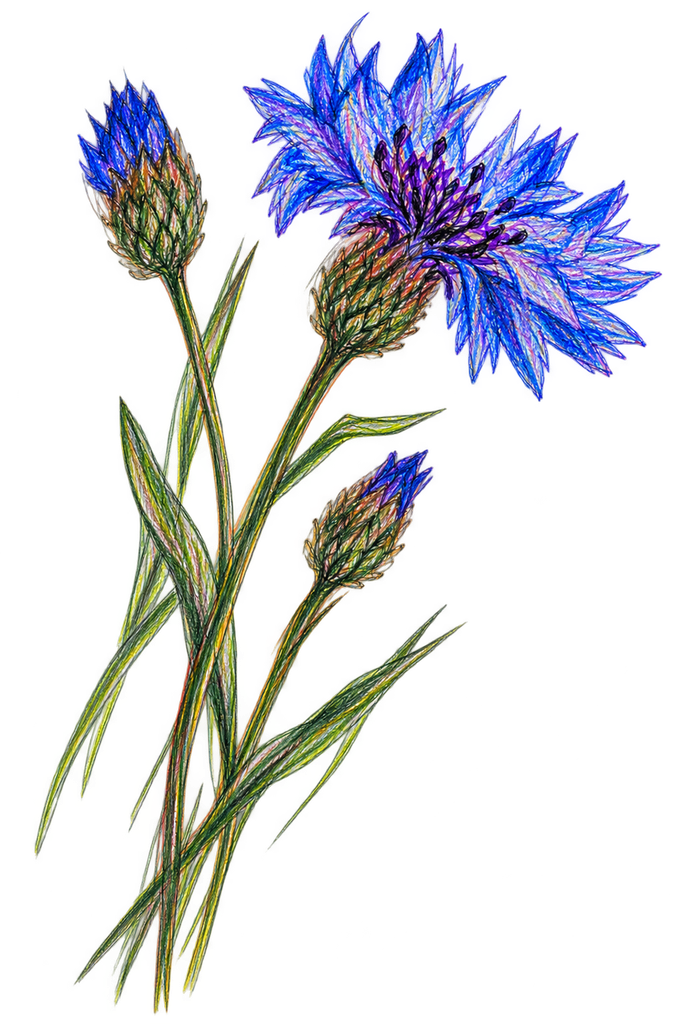
Few flowers give a cutting garden quite such an unmistakable touch of early summer.
The cornflower is a slender hardy annual, traditionally bearing intensely blue flowers on fine branching stems. Garden varieties now extend through white, pink, mauve and very dark plum, but the clear blue remains difficult to resist.
Sow cornflowers directly into prepared ground in September, scattering the seed thinly along shallow drills. Once the seedlings are established, thin them so that individual plants have enough room to branch and develop.
Autumn-sown plants establish strong root systems and can produce wonderfully useful early stems for cutting.
Cornflowers also carry a fragment of Britain’s agricultural history. They were once familiar flowers of arable fields, growing among cereal crops alongside poppies and corn marigolds. Changes in farming greatly reduced their presence in the countryside, making their vivid blue flowers far less common in the wild than they once were.
In the cutting garden, however, they remain delightfully uncomplicated.
Cut them as the flowers are beginning to open and keep picking. The more regularly the plants are cut and deadheaded, the longer they tend to continue flowering.
Love-in-a-mist – Nigella damascena
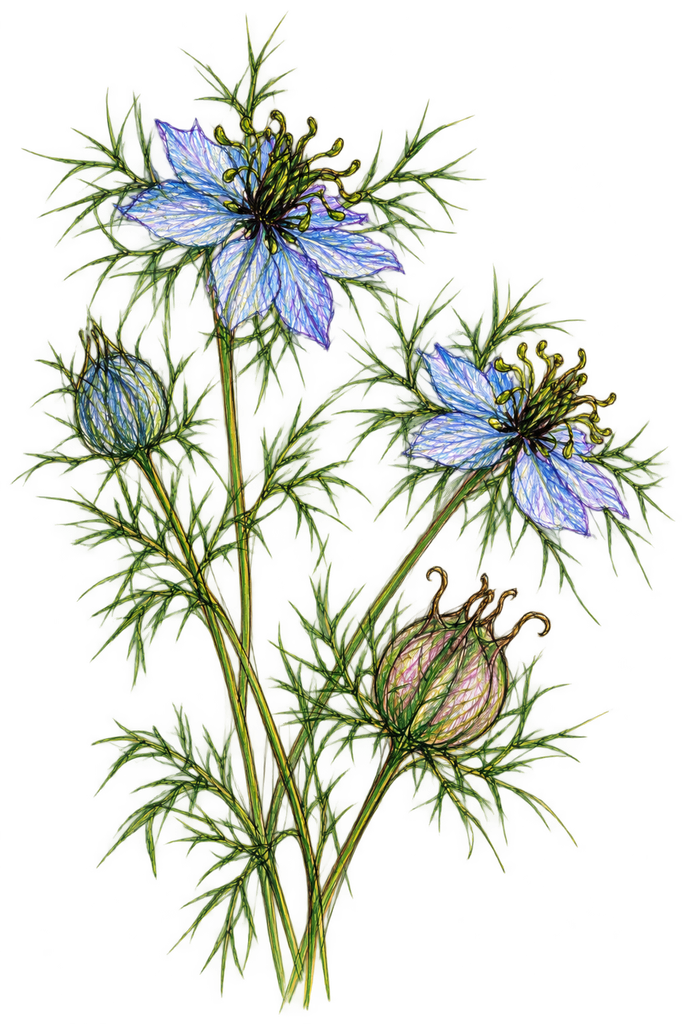
If cornflowers bring colour, love-in-a-mist brings texture.
The wonderfully named Nigella damascena produces delicate flowers, most commonly blue or white, held among a haze of finely divided, almost feathery foliage. It is this soft green ruff surrounding the flowers that gives the plant its romantic common name.
Nigella is one of the easiest hardy annuals to grow. Sow it directly where it is to flower, as it is happier without too much disturbance.
It is also a flower with two lives in the cutting garden.
First come the flowers, beautifully airy among larger blooms. Leave some uncut, however, and they develop into distinctive inflated seed pods. These are excellent in fresh arrangements and can also be dried for winter use.
Nigella is an enthusiastic self-seeder, so once it has found a place it likes, you may discover seedlings appearing of their own accord in subsequent years.
For many gardeners, that is part of its charm.
Larkspur – Consolida species
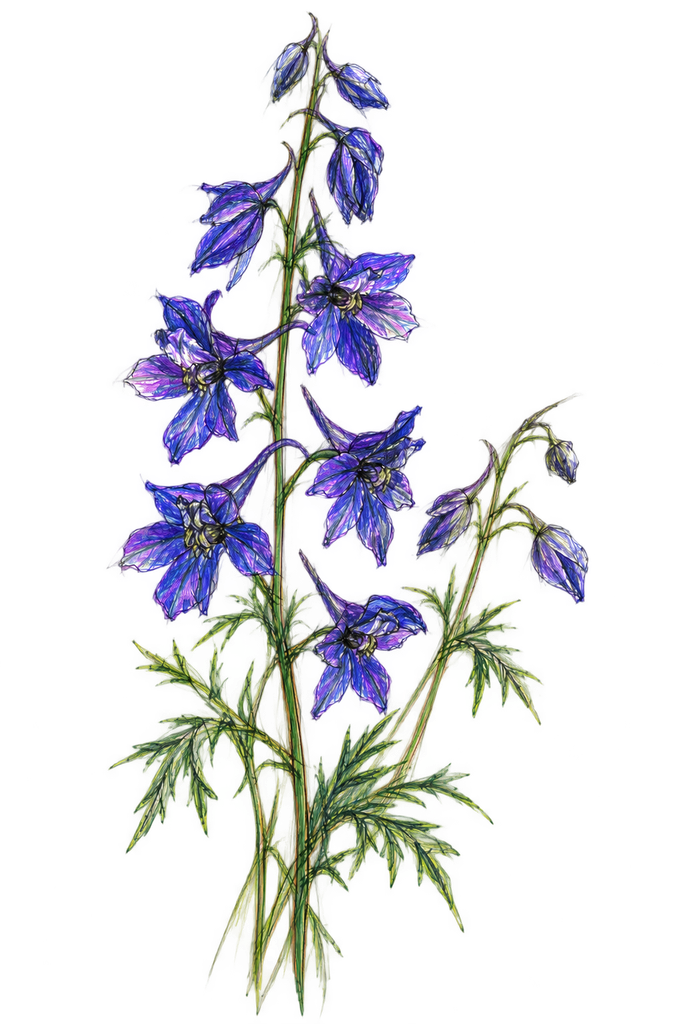
For height and elegance, sow larkspur.
Closely resembling small annual delphiniums, larkspur produces tall stems lined with flowers in blue, violet, pink and white. Its vertical form makes it particularly useful in a mixed arrangement, where it provides the height that a vase of round, daisy-shaped flowers can otherwise lack.
September is an excellent opportunity to sow it.
Larkspur germinates readily in cooler conditions and can be sown directly into shallow drills in prepared soil. Avoid crowding the seedlings; plants given sufficient room tend to develop stronger, more useful stems.
The botanical relationship with delphiniums explains the family resemblance. Larkspur was once commonly included within the genus Delphinium, although annual larkspurs are now generally placed within Consolida.
The flowers can be used fresh, but they are also valuable for drying. Hang good stems upside down somewhere dry and airy and they can retain a surprising amount of their colour.
One note of caution: larkspur is poisonous if eaten, so it should not be confused with edible flowers or used to decorate food.
Bishop’s flower – Ammi majus
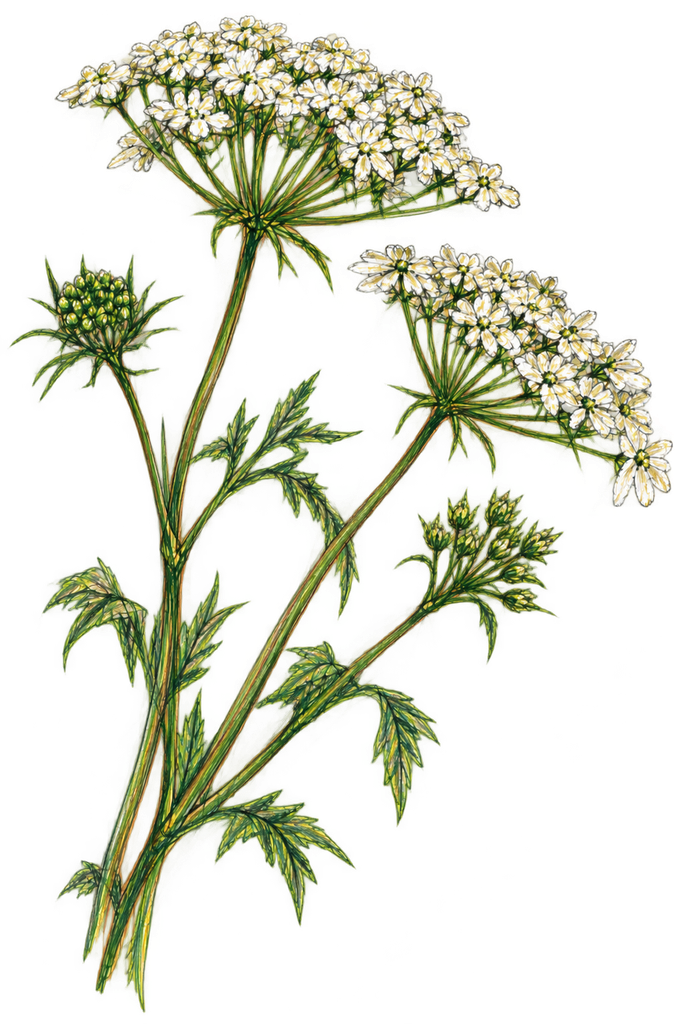
Every cutting garden needs flowers that do not demand to be the centre of attention.
Ammi majus is one of the best.
Tall, branching stems carry flat, lace-like heads made up of countless tiny white flowers. They have something of the appearance of cow parsley and bring the same lightness to a vase, weaving between roses, dahlias and other larger flowers without overwhelming them.
Florists often call these sorts of flowers ‘fillers’, but that rather understates their importance. A few stems of ammi can transform a bunch of individually beautiful flowers into something that feels like a proper arrangement.
Sow Ammi majus directly in September and thin the seedlings once established. Plants can become surprisingly substantial, so allow them space.
Botanically, ammi belongs to the carrot family, Apiaceae. The characteristic umbrella-shaped flower heads of this family are known as umbels – the same distinctive structure seen in cow parsley, fennel and wild carrot.
Left in the garden, the flowers are also attractive to a variety of visiting insects.
Pot marigold – Calendula officinalis
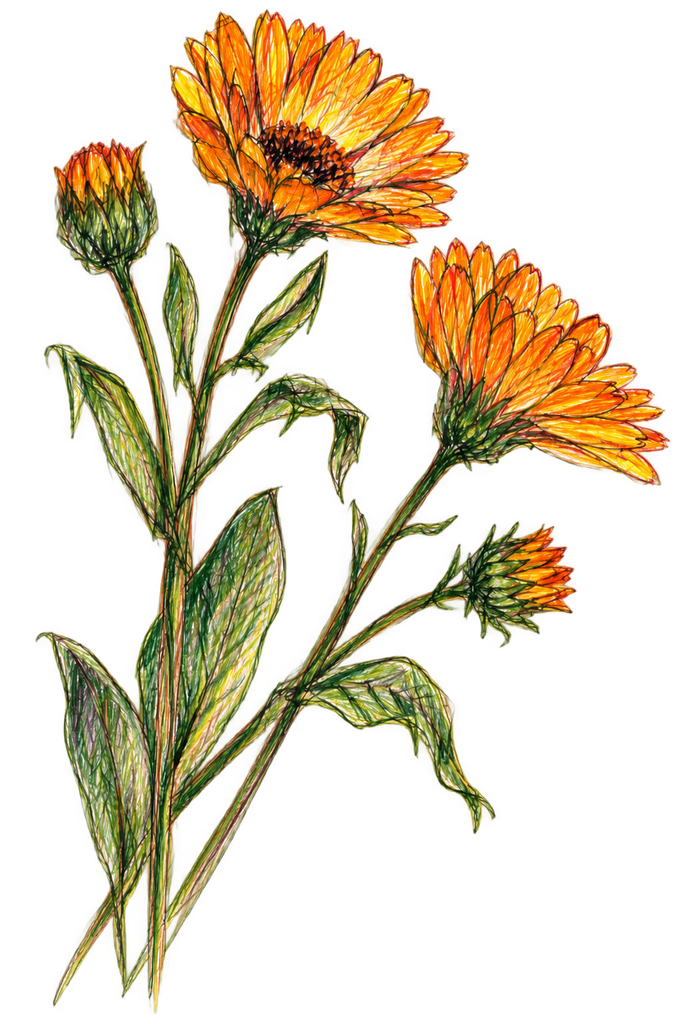
Calendula is one of those plants that earns its place many times over.
Its yellow, gold and orange flowers bring warmth to the cutting garden and continue producing over a remarkably long season if regularly picked. There are also softer apricot, cream and bronze-flowered varieties for gardeners who prefer a more muted palette.
Sow Calendula officinalis directly into the soil in September. It germinates readily and is generally forgiving, making it an excellent flower for anyone trying autumn sowing for the first time.
Its common name, pot marigold, distinguishes it from the unrelated French and African marigolds belonging to the genus Tagetes.
Calendula has been grown in gardens for centuries and has a long history as both a useful and ornamental plant. The petals are edible and have traditionally been used to add colour to food, although flowers intended for eating should, of course, be grown and handled specifically for that purpose.
In the cutting patch, regular picking encourages further flowering.
Few flowers offer quite so much for so little trouble.
Poppies – Papaver species
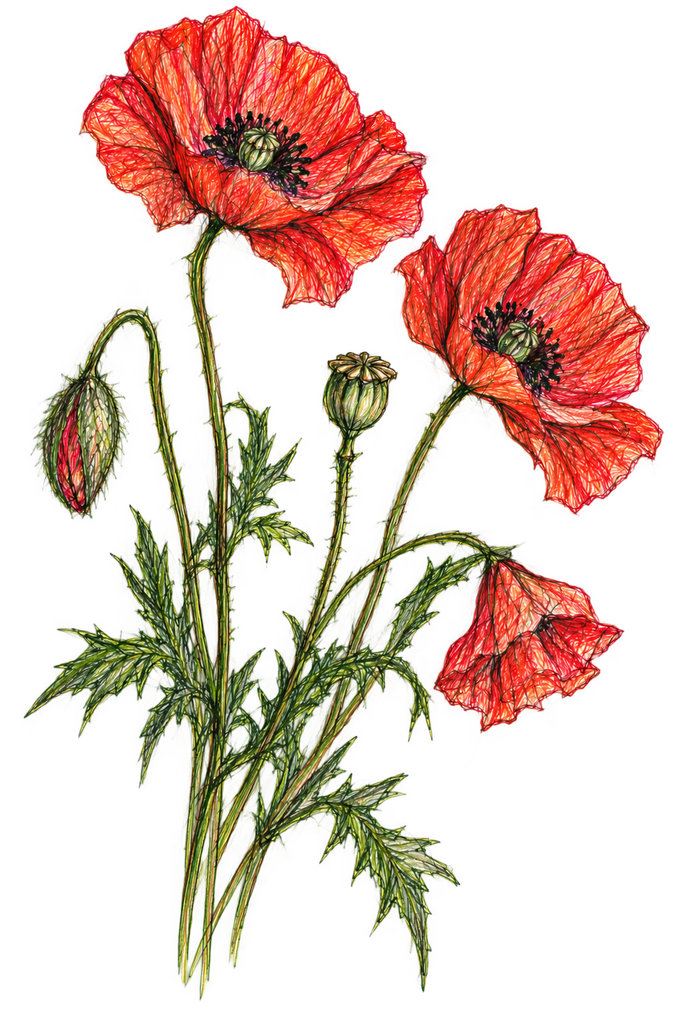
Poppies bring a different quality to the cutting garden: fleeting, papery and almost impossibly delicate.
Several hardy annual poppies can be autumn sown, including Shirley poppies, Papaver rhoeas, and opium or breadseed poppies, Papaver somniferum.
Their seed is extraordinarily fine. Rather than burying it deeply, sow sparingly onto finely prepared soil and cover only lightly. Poppies dislike root disturbance, so direct sowing where they are to flower is preferable.
For cutting, timing matters. Pick stems when the buds have developed good colour but before the flowers have fully opened. Their vase life is shorter than that of many cut flowers, but what they lack in longevity they make up for in character.
And the plant need not be finished when the petals fall.
The architectural seed heads of Papaver somniferum are superb in arrangements and can be dried for use long after summer has gone.
The familiar red field poppy has a particularly deep connection with the British landscape. Once abundant in disturbed agricultural ground, its scarlet flowers have also become an enduring symbol of remembrance.
Orlaya – Orlaya grandiflora
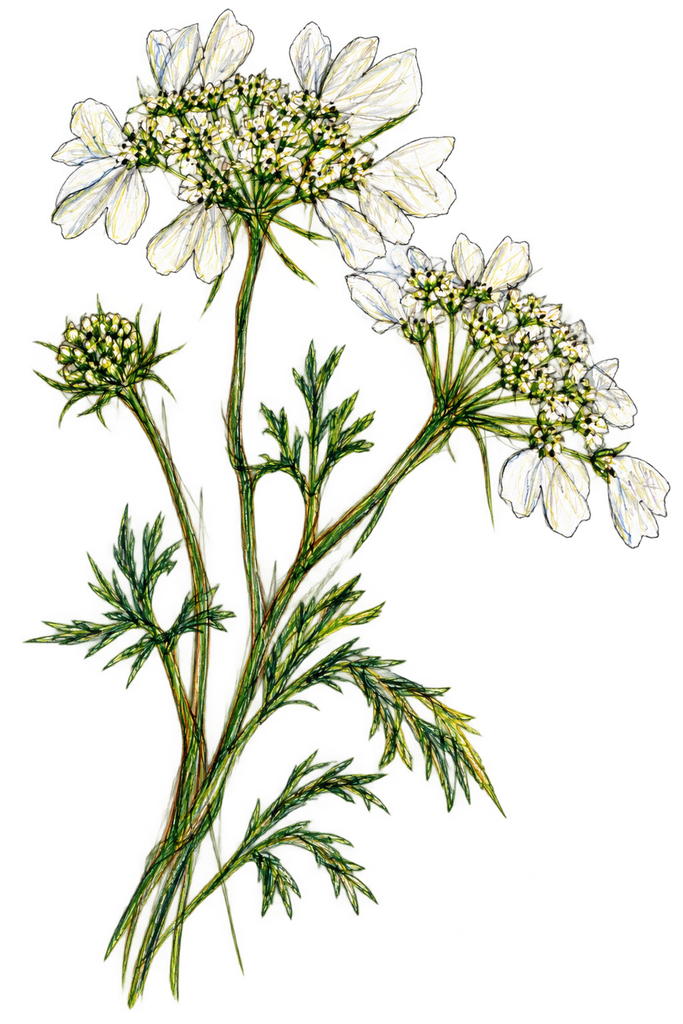
For those who love white flowers, Orlaya grandiflora deserves a place.
Its intricate white flower heads resemble exceptionally fine lace. Around the outside of each umbel sit enlarged outer petals, giving the flowers a more defined, ornamental appearance than the softer cloud produced by ammi.
Like ammi, orlaya belongs to the carrot family, Apiaceae.
It works beautifully as a supporting flower in arrangements, particularly alongside roses, sweet peas and other romantic early-summer flowers.
Orlaya can be autumn sown in well-drained ground, although in colder or wetter gardens it may be safer to sow into modules or pots and overwinter young plants somewhere sheltered.
Its natural distribution lies around the Mediterranean and parts of Europe, which helps explain its preference for sunshine and freely draining soil.
In the vase it has the appearance of something intricate and carefully made, although the plant itself is pleasingly natural.
Quaking grass – Briza maxima
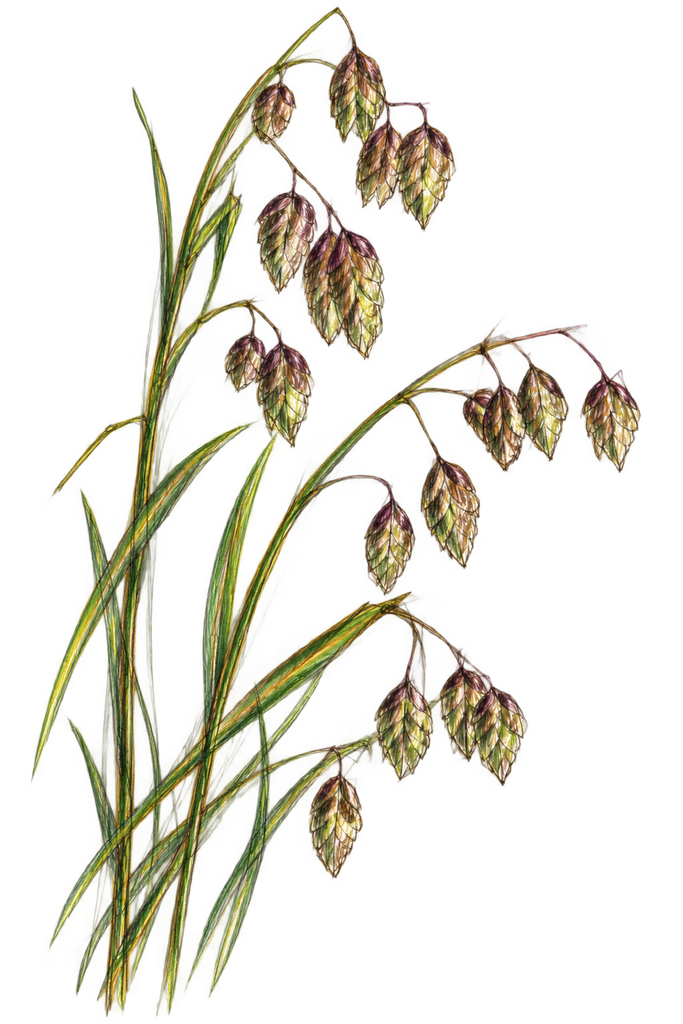
Flowers are only part of a good cutting patch.
Grasses introduce movement, texture and a looseness that is difficult to achieve with flowers alone, and Briza maxima, commonly called quaking grass, is one of the most charming.
Its slender stems carry flattened, heart-shaped spikelets that tremble in the slightest breeze – hence the common name.
Sow directly in autumn and allow the plants to develop into small clumps. By summer, the stems can be cut fresh or left to mature for drying.
They are particularly effective among more substantial flowers, where their dangling seed heads introduce movement without adding visual weight.
A few stems in a vase can make the whole arrangement seem lighter.
Honesty – Lunaria annua
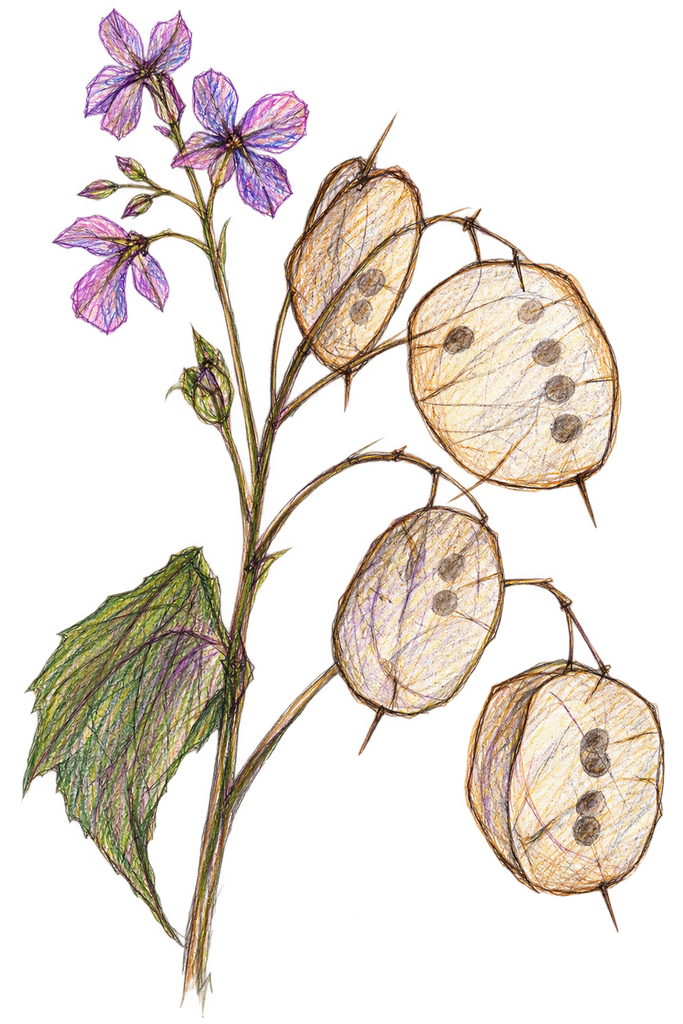
Honesty is familiar to many of us not for its flowers but for what comes afterwards.
The plant produces purple or white flowers, followed by flat, rounded seed pods. As these mature and their outer coverings fall away, a translucent silvery membrane remains – the ‘silver pennies’ that have been gathered for dried arrangements for generations.
Despite the botanical name Lunaria annua, honesty is often grown as a biennial in British gardens, making a leafy plant before flowering the following year.
It is particularly useful if your idea of a cutting garden extends beyond summer flowers. Its dried seed heads can remain beautiful through autumn and winter when little is available to cut outside.
The name Lunaria comes from the Latin luna, meaning moon, a reference to those distinctive round, silvery seed cases.
Sweet peas – Lathyrus odoratus
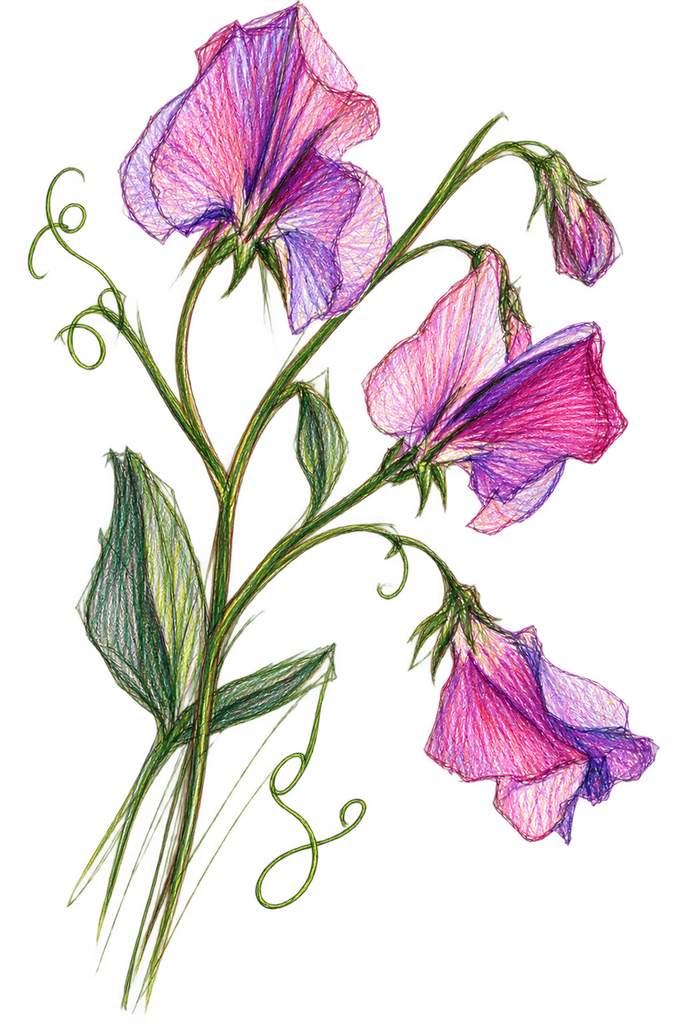
September also marks the beginning of sweet-pea season – although there is no need to rush.
Sweet peas, Lathyrus odoratus, can be sown in autumn for early flowers the following year. In colder or wetter gardens, October or November sowing under the protection of a cold frame or unheated greenhouse is often preferable to sowing directly into open ground.
Use deep pots or root trainers, as sweet peas quickly develop substantial roots.
The species name odoratus means fragrant or sweet-smelling, and scent remains one of the great pleasures of traditional sweet peas. Modern varieties offer an extraordinary range of colours, but for a cutting garden it is worth seeking varieties selected for both long stems and fragrance.
There is another reason to grow them: picking is positively encouraged.
The more sweet-pea flowers you cut, the less opportunity the plant has to make seed and the longer it is encouraged to continue flowering.
A small autumn sowing can therefore become armfuls of scented flowers by early summer.
Don’t forget the flowers already in your September garden
Sowing is only one September job.
Keep cutting dahlias and cosmos while they are still producing, and deadhead plants that you want to continue flowering. But consider leaving a few seed heads standing too.
Goldfinches and other seed-eating birds will appreciate them, while hollow stems and fading vegetation can provide shelter for insects. A cut flower garden need not be scrubbed clean simply because summer is ending.
There is room for both productivity and a little wildness.
Sow now, flower earlier
Perhaps the greatest advantage of September sowing is not simply stronger plants, but time.
While spring-sown seedlings are only beginning to establish themselves, autumn-sown cornflowers, nigella, calendula, ammi and larkspur already have roots in the ground. As the days lengthen, they are ready to grow.
Not every seedling will survive winter. That is gardening. Wet weather, hard frost, slugs and the occasional misplaced boot all take their share.
Sow again in spring and the two generations will follow one another into flower.
And that is really the secret of a productive cut flower garden: not one enormous sowing, but a succession of small beginnings.
September’s may be the quietest of them all. Beneath the cooling soil, however, next year’s cutting garden has already begun.
Further Reading: Grow Your Own Food: Save Money & Eat Well, How to Keep Your Vegetable Garden Productive into Autumn, What to Sow in September: Vegetables, Salads & Herbs, Runner Bean Chutney: A Taste of the September Garden, How to Store Potatoes for Winter
Follow us on Instagram, Threads, BlueSky, Twitter, Pinterest & Facebook
Not sure where to start? Take a look at our Grow Your Own Packs with detailed step by step instructions, seeds and 1 years online support.