What to sow in the cut flower garden in September

September can feel like the beginning of the end in the cut flower garden. Dahlias are still producing armfuls of flowers, cosmos is often at its best and the last sweet peas may be hanging on, but mornings are cooler, evenings are drawing in and the garden has begun its slow turn towards autumn.

Yet this is also a month for beginnings.

A little time spent sowing flower seeds in September can bring some of the earliest and strongest flowers to the cutting garden next year. Cornflowers, larkspur and love-in-a-mist can all be started now, along with the delicate white umbels of ammi and the cheerful flowers of calendula.

These are hardy annuals: plants capable of germinating in autumn, surviving the winter as young plants and bursting back into growth when warmth and light return in spring. Autumn-sown hardy annuals will often flower earlier than those sown in spring, extending the cutting season and providing flowers while later sowings are still gathering strength.

There is something rather pleasing about it. Just as this year’s garden begins to fade, next year’s flowers are already quietly under way.

Preparing a cut flower bed for autumn sowing

Choose a reasonably open, sunny part of the garden. Most annual cut flowers flower best with plenty of light, and good drainage becomes particularly important for seedlings that have a British winter ahead of them.

Begin by clearing away weeds and the remains of previous crops. Perennial weeds are worth removing thoroughly now; it is much easier than trying to disentangle them from young flower seedlings next spring.

Prepare the surface so that it is reasonably fine, level and crumbly. Break up large clods and rake the ground gently before firming it.

Resist the temptation to lavish fertiliser on the bed. Hardy annuals generally do not require especially rich ground and overly fertile soil can encourage plenty of lush foliage at the expense of flowers.

It is useful to mark out short rows with a cane and label each one as you sow. Straight rows may look rather regimented in autumn, but they make it considerably easier to distinguish your emerging flowers from weeds.

Make a shallow drill, sow the seed thinly and cover according to the instructions on the seed packet. Water gently with a watering can fitted with a fine rose if the ground is dry.

And then, largely, leave them to it.

The soil is still holding some of summer’s warmth, while September usually brings increasing moisture. Seeds germinate, put down roots and establish themselves before colder weather slows their growth.

In exposed gardens or during particularly severe weather, young seedlings can be given some protection with horticultural fleece or a cloche. The greatest enemy is often not cold, however, but prolonged wet. Good drainage matters.

It is also sensible not to sow every seed you own. Keep some in the packet for spring. A second sowing in March or April provides both insurance against winter losses and a later succession of flowers.

Cornflower – Centaurea cyanus
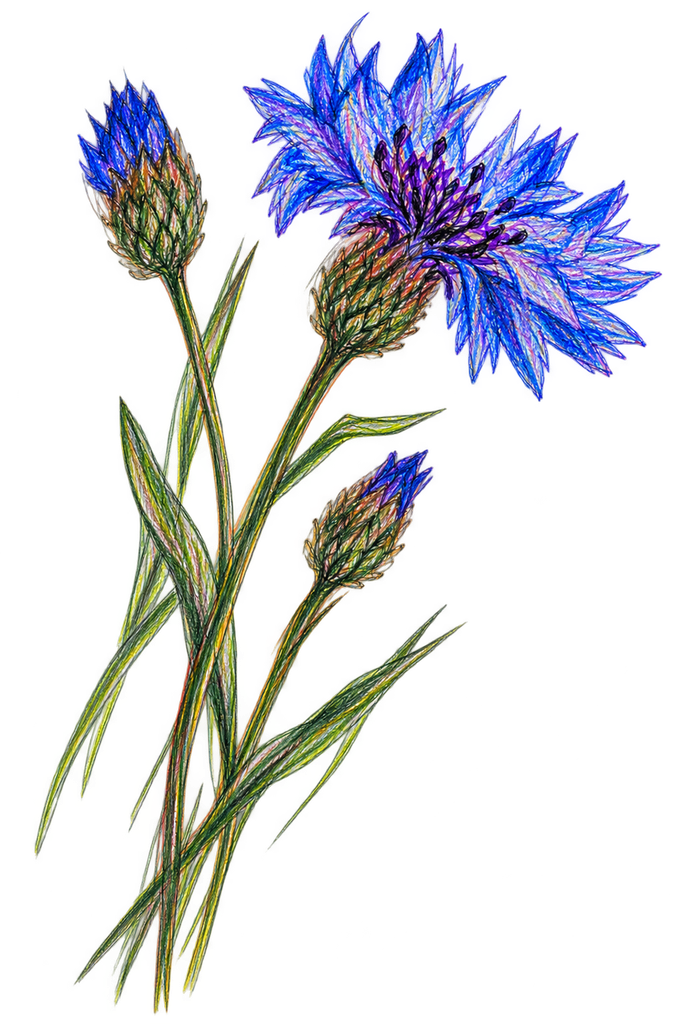
Colourful Sketch of Cornflower – Centaurea cyanus.
© sowitgrowitandfeast

Few flowers give a cutting garden quite such an unmistakable touch of early summer.

The cornflower is a slender hardy annual, traditionally bearing intensely blue flowers on fine branching stems. Garden varieties now extend through white, pink, mauve and very dark plum, but the clear blue remains difficult to resist.

Sow cornflowers directly into prepared ground in September, scattering the seed thinly along shallow drills. Once the seedlings are established, thin them so that individual plants have enough room to branch and develop.

Autumn-sown plants establish strong root systems and can produce wonderfully useful early stems for cutting.

Cornflowers also carry a fragment of Britain’s agricultural history. They were once familiar flowers of arable fields, growing among cereal crops alongside poppies and corn marigolds. Changes in farming greatly reduced their presence in the countryside, making their vivid blue flowers far less common in the wild than they once were.

In the cutting garden, however, they remain delightfully uncomplicated.

Cut them as the flowers are beginning to open and keep picking. The more regularly the plants are cut and deadheaded, the longer they tend to continue flowering.

Love-in-a-mist – Nigella damascena
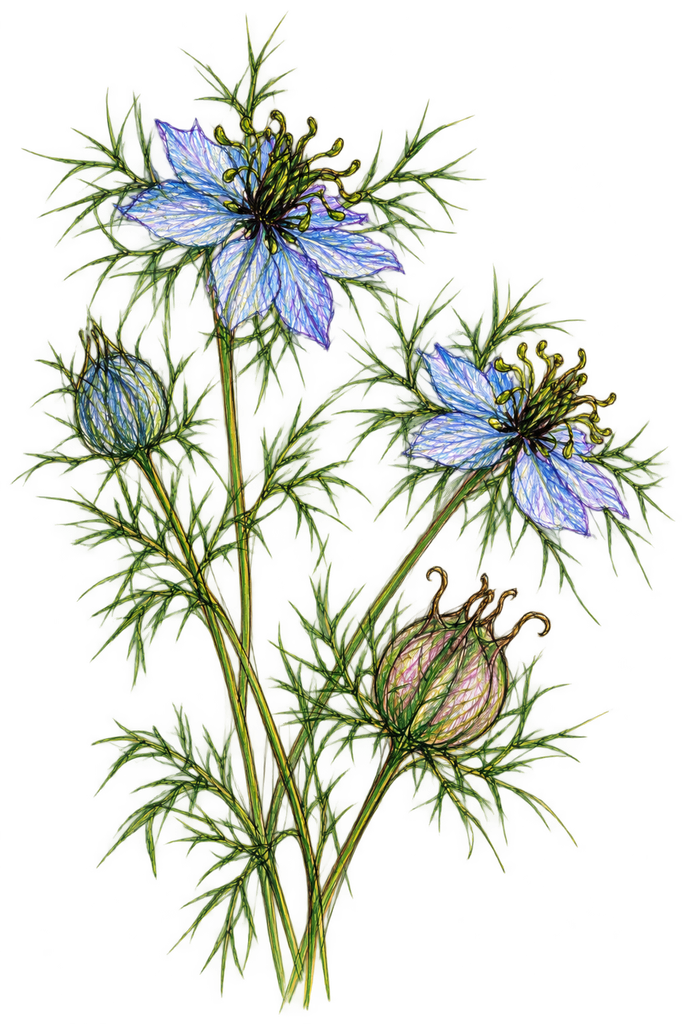
Love in a Mist - Nigella damascena.  
© sowitgrowitandfeast

If cornflowers bring colour, love-in-a-mist brings texture.

The wonderfully named Nigella damascena produces delicate flowers, most commonly blue or white, held among a haze of finely divided, almost feathery foliage. It is this soft green ruff surrounding the flowers that gives the plant its romantic common name.

Nigella is one of the easiest hardy annuals to grow. Sow it directly where it is to flower, as it is happier without too much disturbance.

It is also a flower with two lives in the cutting garden.

First come the flowers, beautifully airy among larger blooms. Leave some uncut, however, and they develop into distinctive inflated seed pods. These are excellent in fresh arrangements and can also be dried for winter use.

Nigella is an enthusiastic self-seeder, so once it has found a place it likes, you may discover seedlings appearing of their own accord in subsequent years.

For many gardeners, that is part of its charm.

Larkspur – Consolida species
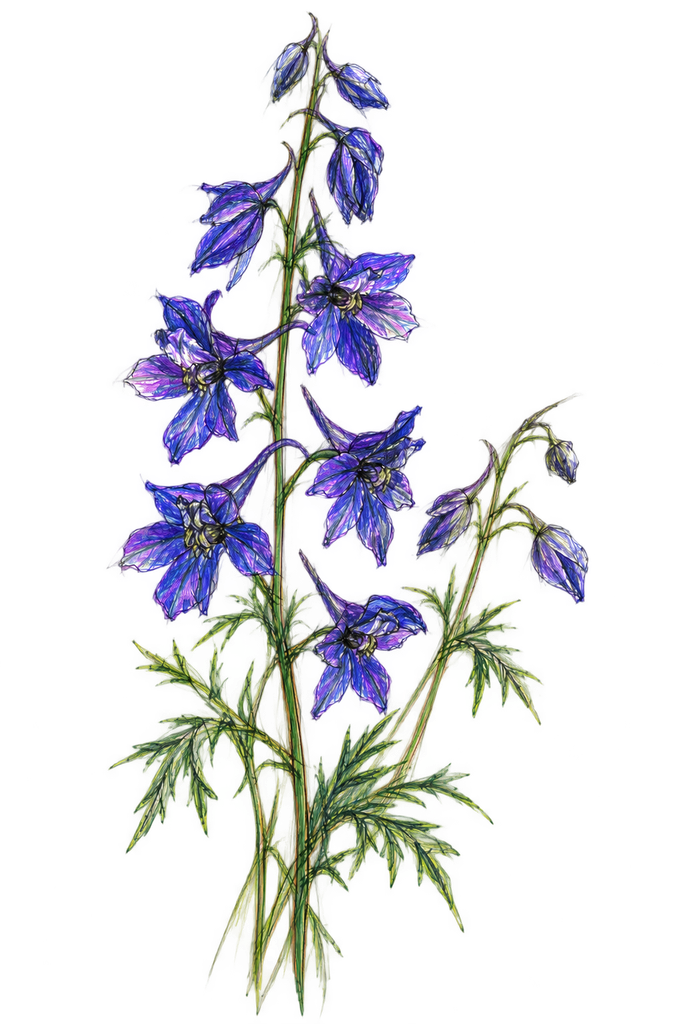
Colourful Sketch of Larkspur - Consolida species.
© sowitgrowitandfeast

For height and elegance, sow larkspur.

Closely resembling small annual delphiniums, larkspur produces tall stems lined with flowers in blue, violet, pink and white. Its vertical form makes it particularly useful in a mixed arrangement, where it provides the height that a vase of round, daisy-shaped flowers can otherwise lack.

September is an excellent opportunity to sow it.

Larkspur germinates readily in cooler conditions and can be sown directly into shallow drills in prepared soil. Avoid crowding the seedlings; plants given sufficient room tend to develop stronger, more useful stems.

The botanical relationship with delphiniums explains the family resemblance. Larkspur was once commonly included within the genus Delphinium, although annual larkspurs are now generally placed within Consolida.

The flowers can be used fresh, but they are also valuable for drying. Hang good stems upside down somewhere dry and airy and they can retain a surprising amount of their colour.

One note of caution: larkspur is poisonous if eaten, so it should not be confused with edible flowers or used to decorate food.

Bishop’s flower – Ammi majus
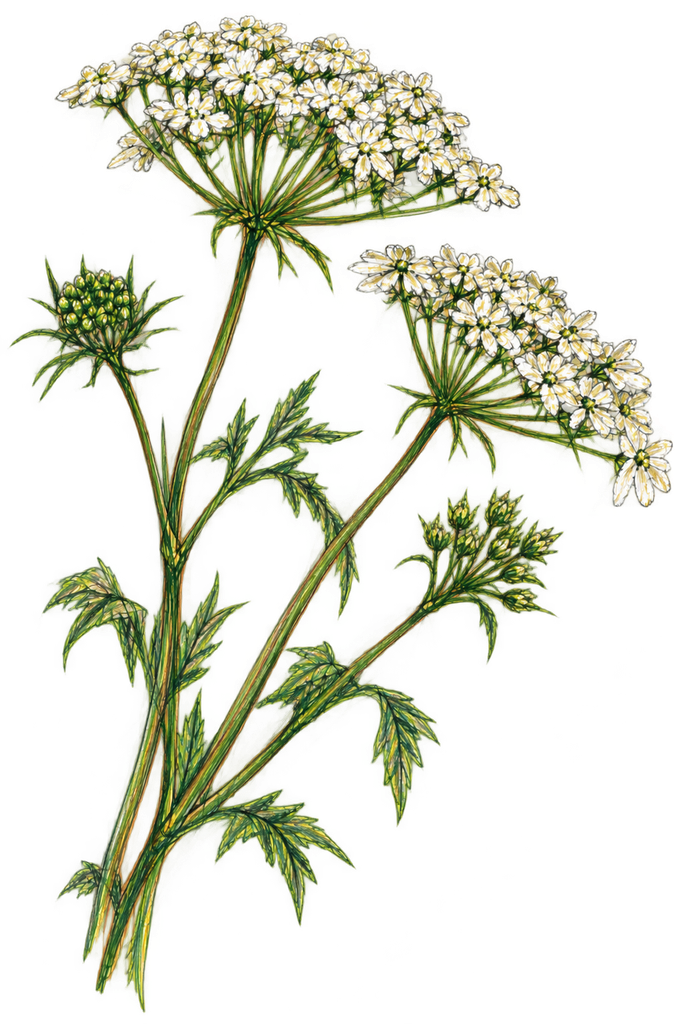
Colourful Sketch of Bishop's flower – Ammi majus.
© sowitgrowitandfeast

Every cutting garden needs flowers that do not demand to be the centre of attention.

Ammi majus is one of the best.

Tall, branching stems carry flat, lace-like heads made up of countless tiny white flowers. They have something of the appearance of cow parsley and bring the same lightness to a vase, weaving between roses, dahlias and other larger flowers without overwhelming them.

Florists often call these sorts of flowers ‘fillers’, but that rather understates their importance. A few stems of ammi can transform a bunch of individually beautiful flowers into something that feels like a proper arrangement.

Sow Ammi majus directly in September and thin the seedlings once established. Plants can become surprisingly substantial, so allow them space.

Botanically, ammi belongs to the carrot family, Apiaceae. The characteristic umbrella-shaped flower heads of this family are known as umbels – the same distinctive structure seen in cow parsley, fennel and wild carrot.

Left in the garden, the flowers are also attractive to a variety of visiting insects.

Pot marigold – Calendula officinalis
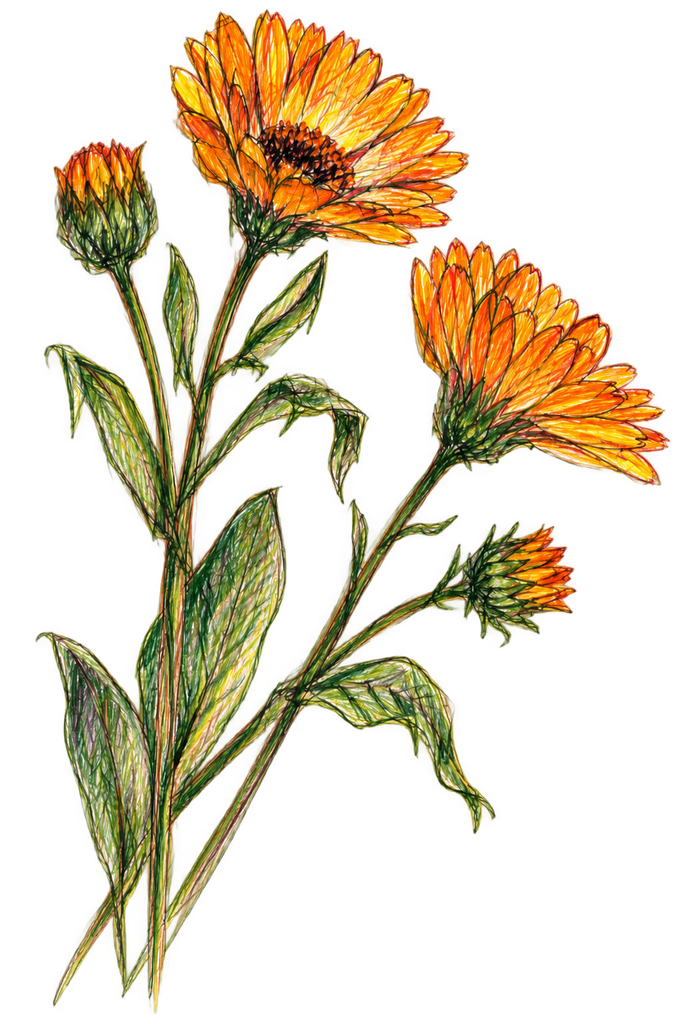
Colourful Sketch of Pot marigold – Calendula officinalis.
© sowitgrowitandfeast

Calendula is one of those plants that earns its place many times over.

Its yellow, gold and orange flowers bring warmth to the cutting garden and continue producing over a remarkably long season if regularly picked. There are also softer apricot, cream and bronze-flowered varieties for gardeners who prefer a more muted palette.

Sow Calendula officinalis directly into the soil in September. It germinates readily and is generally forgiving, making it an excellent flower for anyone trying autumn sowing for the first time.

Its common name, pot marigold, distinguishes it from the unrelated French and African marigolds belonging to the genus Tagetes.

Calendula has been grown in gardens for centuries and has a long history as both a useful and ornamental plant. The petals are edible and have traditionally been used to add colour to food, although flowers intended for eating should, of course, be grown and handled specifically for that purpose.

In the cutting patch, regular picking encourages further flowering.

Few flowers offer quite so much for so little trouble.

Poppies – Papaver species
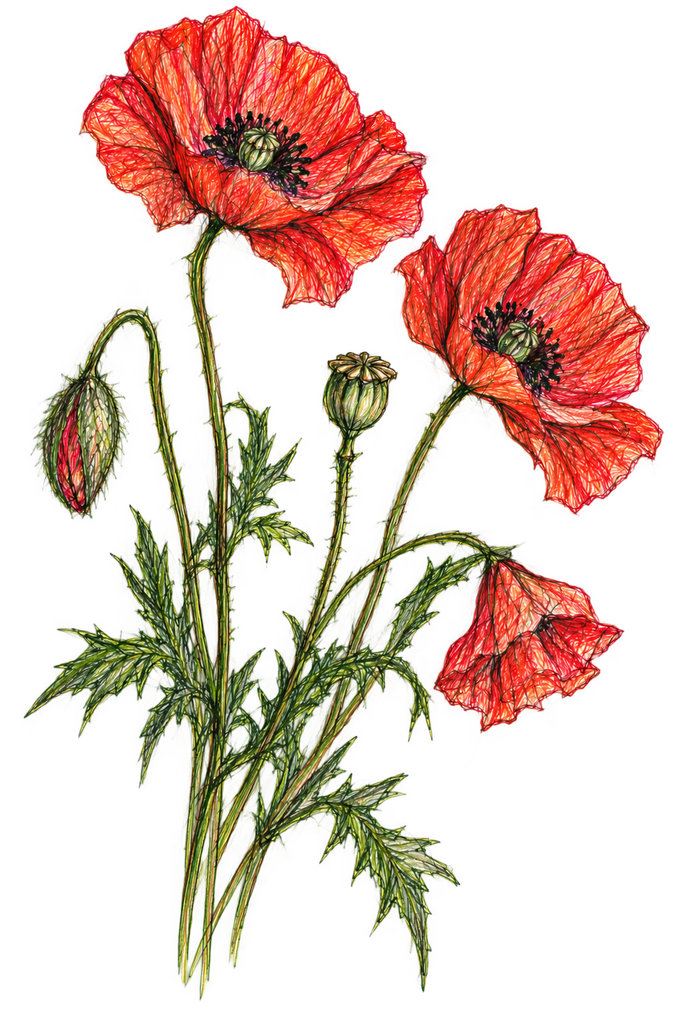
Colourful Sketch of Poppies, Papaver species

Poppies bring a different quality to the cutting garden: fleeting, papery and almost impossibly delicate.

Several hardy annual poppies can be autumn sown, including Shirley poppies, Papaver rhoeas, and opium or breadseed poppies, Papaver somniferum.

Their seed is extraordinarily fine. Rather than burying it deeply, sow sparingly onto finely prepared soil and cover only lightly. Poppies dislike root disturbance, so direct sowing where they are to flower is preferable.

For cutting, timing matters. Pick stems when the buds have developed good colour but before the flowers have fully opened. Their vase life is shorter than that of many cut flowers, but what they lack in longevity they make up for in character.

And the plant need not be finished when the petals fall.

The architectural seed heads of Papaver somniferum are superb in arrangements and can be dried for use long after summer has gone.

The familiar red field poppy has a particularly deep connection with the British landscape. Once abundant in disturbed agricultural ground, its scarlet flowers have also become an enduring symbol of remembrance.

Orlaya – Orlaya grandiflora
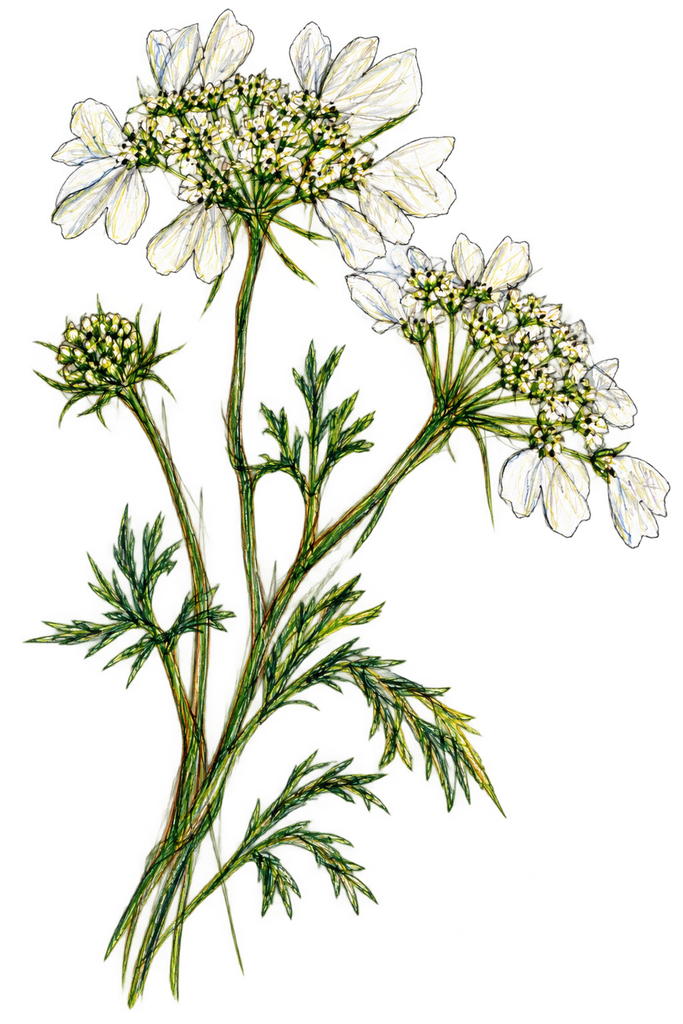
Colourful Sketch of Orlaya – Orlaya grandiflora.
© sowitgrowitandfeast

For those who love white flowers, Orlaya grandiflora deserves a place.

Its intricate white flower heads resemble exceptionally fine lace. Around the outside of each umbel sit enlarged outer petals, giving the flowers a more defined, ornamental appearance than the softer cloud produced by ammi.

Like ammi, orlaya belongs to the carrot family, Apiaceae.

It works beautifully as a supporting flower in arrangements, particularly alongside roses, sweet peas and other romantic early-summer flowers.

Orlaya can be autumn sown in well-drained ground, although in colder or wetter gardens it may be safer to sow into modules or pots and overwinter young plants somewhere sheltered.

Its natural distribution lies around the Mediterranean and parts of Europe, which helps explain its preference for sunshine and freely draining soil.

In the vase it has the appearance of something intricate and carefully made, although the plant itself is pleasingly natural.

Quaking grass – Briza maxima
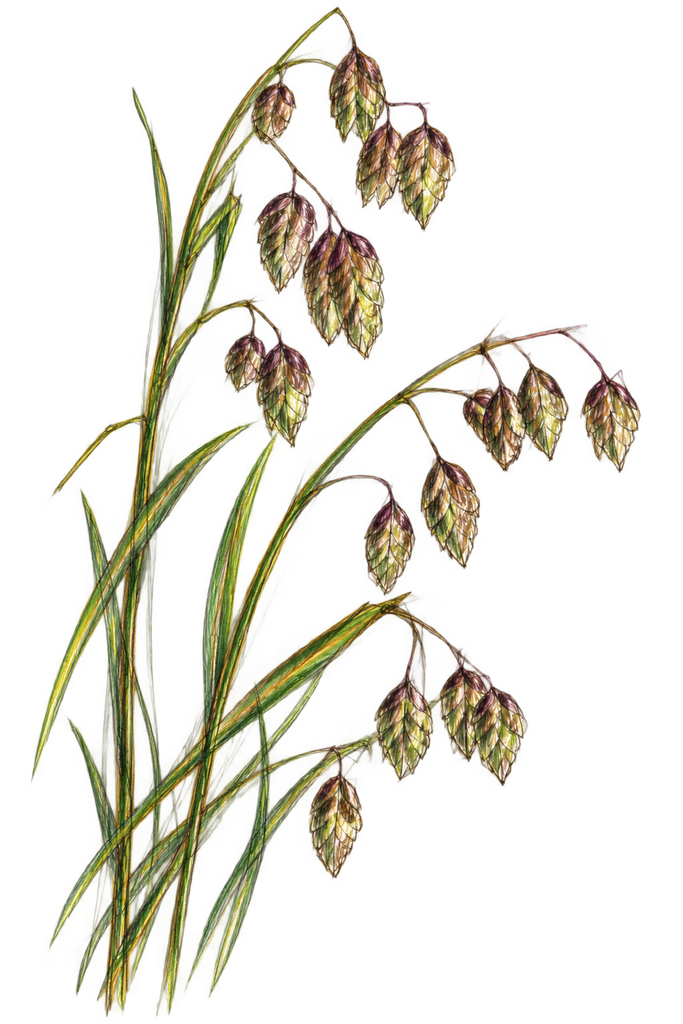
Colourful Sketch of Quaking grass – Briza maxima.
© sowitgrowitandfeast

Flowers are only part of a good cutting patch.

Grasses introduce movement, texture and a looseness that is difficult to achieve with flowers alone, and Briza maxima, commonly called quaking grass, is one of the most charming.

Its slender stems carry flattened, heart-shaped spikelets that tremble in the slightest breeze – hence the common name.

Sow directly in autumn and allow the plants to develop into small clumps. By summer, the stems can be cut fresh or left to mature for drying.

They are particularly effective among more substantial flowers, where their dangling seed heads introduce movement without adding visual weight.

A few stems in a vase can make the whole arrangement seem lighter.

Honesty – Lunaria annua
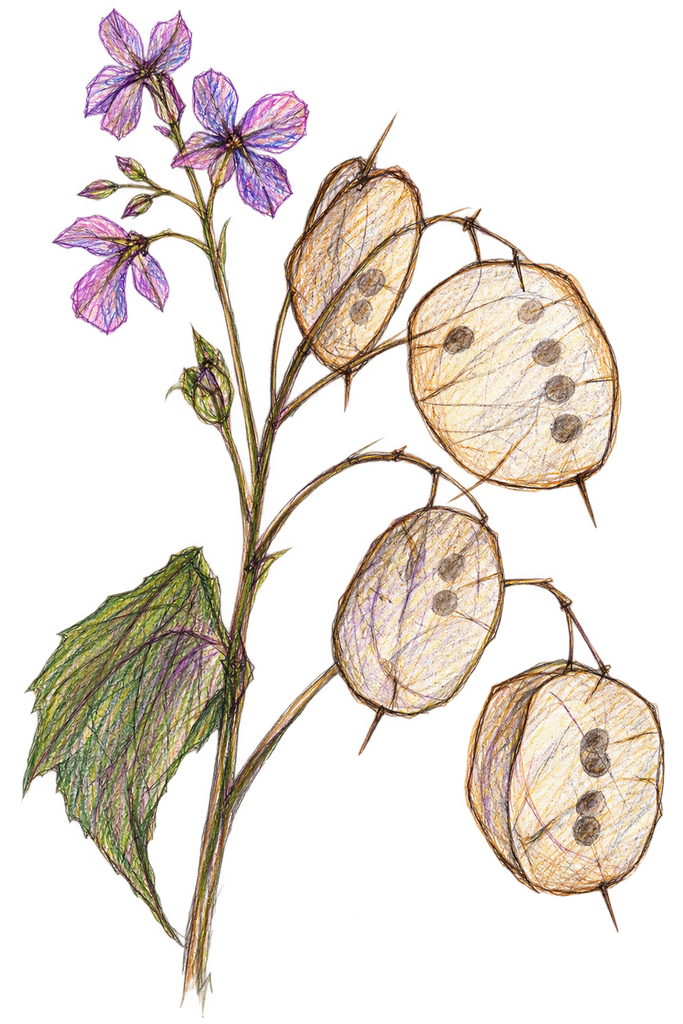
Colourful sketch of Honesty – Lunaria annua.
©sowitgrowitandfeast

Honesty is familiar to many of us not for its flowers but for what comes afterwards.

The plant produces purple or white flowers, followed by flat, rounded seed pods. As these mature and their outer coverings fall away, a translucent silvery membrane remains – the ‘silver pennies’ that have been gathered for dried arrangements for generations.

Despite the botanical name Lunaria annua, honesty is often grown as a biennial in British gardens, making a leafy plant before flowering the following year.

It is particularly useful if your idea of a cutting garden extends beyond summer flowers. Its dried seed heads can remain beautiful through autumn and winter when little is available to cut outside.

The name Lunaria comes from the Latin luna, meaning moon, a reference to those distinctive round, silvery seed cases.

Sweet peas – Lathyrus odoratus
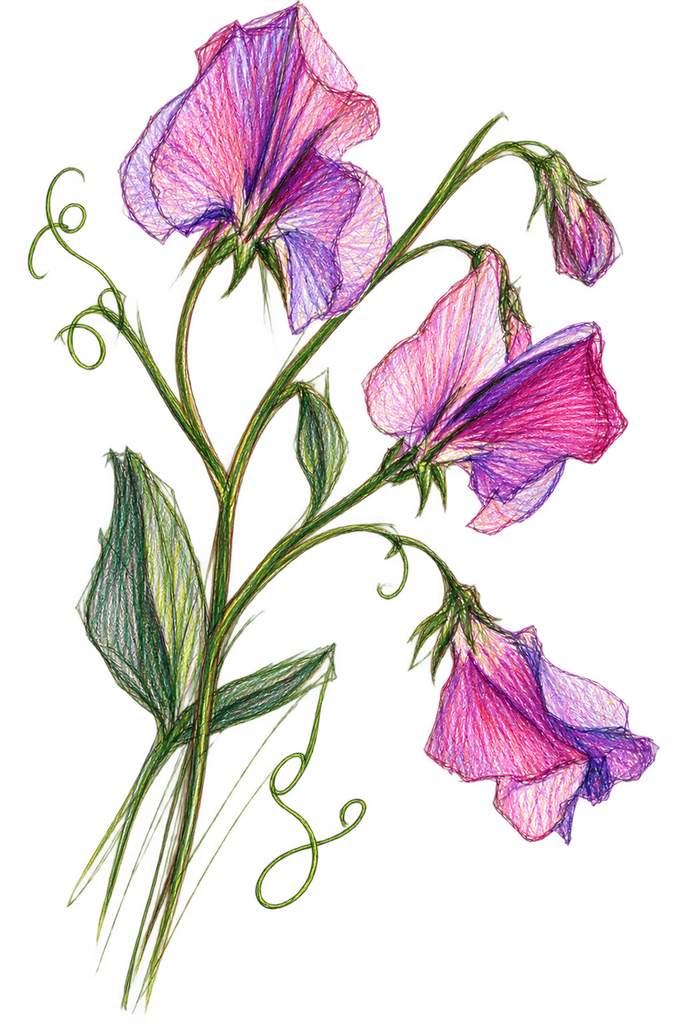
Colourful Sketch of Sweet peas – Lathyrus odoratus.
©sowitgrowitandfeast

September also marks the beginning of sweet-pea season – although there is no need to rush.

Sweet peas, Lathyrus odoratus, can be sown in autumn for early flowers the following year. In colder or wetter gardens, October or November sowing under the protection of a cold frame or unheated greenhouse is often preferable to sowing directly into open ground.

Use deep pots or root trainers, as sweet peas quickly develop substantial roots.

The species name odoratus means fragrant or sweet-smelling, and scent remains one of the great pleasures of traditional sweet peas. Modern varieties offer an extraordinary range of colours, but for a cutting garden it is worth seeking varieties selected for both long stems and fragrance.

There is another reason to grow them: picking is positively encouraged.

The more sweet-pea flowers you cut, the less opportunity the plant has to make seed and the longer it is encouraged to continue flowering.

A small autumn sowing can therefore become armfuls of scented flowers by early summer.

Don’t forget the flowers already in your September garden

Sowing is only one September job.

Keep cutting dahlias and cosmos while they are still producing, and deadhead plants that you want to continue flowering. But consider leaving a few seed heads standing too.

Goldfinches and other seed-eating birds will appreciate them, while hollow stems and fading vegetation can provide shelter for insects. A cut flower garden need not be scrubbed clean simply because summer is ending.

There is room for both productivity and a little wildness.

Sow now, flower earlier

Perhaps the greatest advantage of September sowing is not simply stronger plants, but time.

While spring-sown seedlings are only beginning to establish themselves, autumn-sown cornflowers, nigella, calendula, ammi and larkspur already have roots in the ground. As the days lengthen, they are ready to grow.

Not every seedling will survive winter. That is gardening. Wet weather, hard frost, slugs and the occasional misplaced boot all take their share.

Sow again in spring and the two generations will follow one another into flower.

And that is really the secret of a productive cut flower garden: not one enormous sowing, but a succession of small beginnings.

September’s may be the quietest of them all. Beneath the cooling soil, however, next year’s cutting garden has already begun.

Further Reading: Grow Your Own Food: Save Money & Eat WellHow to Keep Your Vegetable Garden Productive into AutumnWhat to Sow in September: Vegetables, Salads & HerbsRunner Bean Chutney: A Taste of the September GardenHow to Store Potatoes for Winter

Follow us on InstagramThreadsBlueSkyTwitterPinterest & Facebook

Not sure where to start? Take a look at our Grow Your Own Packs with detailed step by step instructions, seeds and 1 years online support.

How to Create a Stunning Hand-Tied Floral Bouquet

Nothing quite captures the essence of natural beauty like a hand-tied floral bouquet crafted with your own hands. Whether you’re celebrating a special occasion, brightening someone’s day or simply bringing the garden indoors, creating your own arrangement offers a deeply rewarding experience that connects you to nature’s artistry.

Hand-tied bouquets possess a charm that shop-bought arrangements often lack. They carry the personal touch of your selection, the story of your garden or local countryside, and the satisfaction that comes from creating something beautiful with your own hands. Each stem tells a story, each colour choice reflects your taste and every fragrant bloom adds to the sensory delight.

The art of hand-tying flowers dates back centuries, yet it remains one of the most accessible ways to express creativity whilst celebrating the natural world around us. With a few simple techniques and thoughtful consideration of your materials, you can craft arrangements that rival those of professional florists.

What Makes a Hand-Tied Bouquet Special

A hand-tied bouquet differs from traditional arrangements in its organic, flowing appearance. Rather than being inserted into foam or structured containers, the stems are gathered and secured by hand, creating a natural spiral that allows each flower to shine whilst contributing to the overall composition.

This technique produces arrangements that feel alive and movement-filled, as if the flowers have naturally grown together. The spiral method ensures even water distribution when placed in a vase, helping your bouquet last longer and maintain its beauty.

Selecting Your Flowers and Foliage

The foundation of any stunning hand-tied bouquet lies in thoughtful selection of materials. Consider these essential elements when gathering your blooms:

Seasonal Considerations

Choose flowers that are at their peak during the current season. Spring offers daffodils, tulips and cherry blossom branches. Summer brings roses, sweet peas, and lavender. Autumn provides dahlias, chrysanthemums and rosehips, whilst winter gifts us with holly, evergreen branches and winter jasmine.

Seasonal selection ensures your flowers are at their freshest and most vibrant, whilst also connecting your arrangement to the natural rhythm of the year.

Colour Harmony

Select a colour palette before you begin gathering materials. You might choose:

  • Monochromatic schemes using different shades of the same colour
  • Complementary colours that sit opposite each other on the colour wheel
  • Analogous colours that sit next to each other, such as blues, purples and pinks
  • Neutral palettes with whites, creams and greens for elegant simplicity

Size and Texture Variety

Include flowers of different sizes to create visual interest. Large focal flowers such as roses, peonies, or sunflowers draw the eye, whilst smaller blooms like gypsophila or waxflower add delicate detail. Medium-sized flowers such as stocks or lisianthus bridge the gap between these extremes.

Vary textures by combining smooth petals with spiky or feathery elements. Roses paired with lavender or dahlias with ornamental grasses create engaging contrasts that delight the senses.

Fragrance and Foliage

Don’t overlook scent when selecting your materials. Fragrant herbs like rosemary, mint, or eucalyptus add aromatic depth, whilst scented flowers such as sweet peas, stocks, or freesias create a multi-sensory experience.

Include various types of foliage to provide structure and backdrop for your flowers. Consider eucalyptus for silvery-grey tones, ferns for delicate texture or ivy trails for graceful movement.

Step-by-Step Instructions

Preparation

Begin by gathering your materials and preparing your workspace. You’ll need:

  • Fresh flowers and foliage
  • Sharp, clean secateurs or floral scissors
  • String, raffia or floral tape for securing
  • A bucket of fresh water
  • Clean vase for the finished arrangement

Cut all stems at an angle under running water, removing any foliage that would sit below the waterline. This prevents bacterial growth and ensures optimal water uptake.

The Spiral Technique

Start with your largest, most eye-catching flower as the central focal point. Hold it firmly but gently in your non-dominant hand, about two-thirds down the stem length.

Add the second stem to the right of your central flower, angling it slightly away from you. The third stem goes to the left, also angled away. Continue adding stems, always placing them in the same direction around your growing spiral.

As you build your bouquet, rotate it slightly after each addition. This creates the characteristic spiral pattern that gives hand-tied bouquets their professional appearance and ensures all stems radiate outward from the central point.

Building the Arrangement

Layer your materials thoughtfully. Place larger blooms first to establish your framework, then weave in medium-sized flowers and delicate details. Add foliage throughout the process, using it to separate colours and provide visual breathing space.

Step back periodically to assess your progress. Look for gaps that need filling or areas where colours might be too concentrated. The beauty of hand-tying lies in its organic nature, so don’t aim for perfect symmetry.

Securing Your Creation

Once you’re satisfied with your arrangement, secure it tightly just above where your hand has been holding it. Wind string or raffia several times around the stems, then tie securely with a double knot.

Trim all stems to the same length, cutting at an angle under running water for optimal water uptake. Your bouquet should be able to stand naturally when placed in an appropriate vase.

Caring for Your Hand-Tied Bouquet

Place your finished arrangement in a clean vase filled with fresh, lukewarm water. Add flower food if available, or create your own by adding a teaspoon of sugar and a few drops of bleach to the water.

Trim stems every few days and change the water regularly to extend your bouquet’s life. Remove any wilted flowers or foliage promptly to prevent affecting the remaining blooms.

Bringing Nature’s Beauty Into Your Life

Creating hand-tied floral bouquets connects you directly with the natural world whilst developing a skill that brings joy to yourself and others. Each arrangement becomes a unique expression of your creativity and appreciation for nature’s bounty.

Start with simple combinations and gradually experiment with more complex colour schemes and flower varieties. Visit your local countryside areas, gardens or flower markets to discover new materials and inspiration for your creations.

Pack your basket and secateurs, and explore what nature offers in your area.

Whether you gather from your own garden, local hedgerows or flower markets, each hand-tied bouquet you create celebrates the enduring beauty of the natural world whilst bringing that magic directly into your home.

Further Reading: Sow It, Grow It and Feast! Cut Flower Patch Seed Pack

Follow Us for Daily Grow Your Own Inspiration 😉

Grow your own Wedding Flowers

Planning your wedding day involves countless decisions, but few are as personal and rewarding as creating your own wedding flowers. Growing and arranging your own blooms transforms your special day into something truly unique whilst connecting you to the natural beauty of the seasons. Whether you’re drawn to cottage garden romance or contemporary elegance, creating your own wedding flowers offers an opportunity to craft something deeply meaningful for your celebration.

The journey of creating your own wedding flowers begins months before your big day, but the rewards extend far beyond the wedding itself. You’ll develop new gardening skills, create lasting memories during the growing process, and have beautiful blooms to enjoy throughout the seasons leading up to your wedding.

Sow It Grow it and Feast.
Create a Flower Patch

Why Create Your Own Wedding Flowers?

Personal Connection and Meaning
Creating your own wedding flowers establishes a deep personal connection to your special day. Every bloom tells the story of your journey together, from the seeds you planted to the flowers you’ll carry down the aisle. This process creates meaningful memories that extend beyond the wedding day itself.

Substantial Cost Savings
Professional wedding floristry can consume 8-10% of your total wedding budget. Growing your own flowers dramatically reduces these costs, with seed packets and plants costing a fraction of professional arrangements. The money saved can be redirected towards other wedding priorities or your future together.

Complete Creative Control
Designing your own wedding flowers means no compromise on vision. You choose every variety, colour and arrangement style without the constraints of seasonal availability from commercial suppliers. This creative freedom ensures your flowers perfectly reflect your personality and wedding theme.

Seasonal Authenticity
Growing your own flowers naturally aligns your wedding with the season, creating arrangements that feel fresh and appropriate. British gardens offer stunning options throughout the growing season, from spring tulips to autumn dahlias, ensuring your flowers capture the essence of your wedding date.

Planning Your Wedding Flower Garden

Assessing Your Growing Space
Start by evaluating your available growing space, whether that’s a full garden, allotment, or even containers on a balcony. Most wedding flowers can be successfully grown in containers if garden space is limited. Calculate how much growing area you’ll need based on your flower requirements.

Understanding Your Timeline
Wedding flower planning requires working backwards from your wedding date. Most annual flowers need 12-20 weeks from seed to bloom, whilst bulbs require planting 4-6 months beforehand. Create a planting calendar that ensures peak bloom times align with your wedding date.

Choosing Your Growing Method
Decide whether to grow from seed, purchase young plants, or use a combination approach. Seeds offer the widest variety and lowest cost but require more time and skill. Young plants provide greater certainty but cost more and offer fewer variety options.

Selecting Flowers for British Gardens

Theme-Based Flower Selection
Your wedding theme should guide flower selection. Cottage garden weddings suit sweet peas, delphiniums and roses, whilst contemporary celebrations might feature architectural flowers like alliums, gladioli, or ornamental grasses. Consider how your chosen flowers will photograph and complement your venue.

Working with Colour Palettes
Plan your colour scheme carefully, considering how different hues work together in arrangements. Monochromatic schemes using varying shades of one colour create elegant sophistication, whilst complementary colours add dramatic impact. Remember that flower colours can vary from catalogue descriptions.

Creating Visual Contrast and Texture
Successful wedding arrangements combine different flower shapes, sizes and textures. Pair spiky flowers like delphiniums with rounded blooms such as dahlias, and include delicate fillers like gypsophila or nigella. This variety creates visual interest and professional-looking arrangements.

Incorporating Scent
Scented flowers add another sensory dimension to your wedding day. Sweet peas, roses, stocks, and freesias offer beautiful fragrances that will enhance your ceremony and reception. Position scented flowers in your bridal bouquet and ceremony arrangements for maximum impact.

Timing Your Flower Production

Creating a Planting Schedule
Work backwards from your wedding date to create a detailed planting schedule. Account for germination time, growing period and desired bloom timing. Stagger plantings of the same variety every two weeks to extend the flowering period and ensure adequate blooms for your wedding date.

Managing Seasonal Variations
British weather can be unpredictable, so build flexibility into your timeline. Plant extra quantities of key flowers and have backup options ready. Consider succession planting to ensure continuous blooms and protect against weather-related crop failures.

Coordinating with Wedding Preparations
Balance flower care with intensive wedding preparation periods. Schedule major garden tasks like planting and initial care for less busy wedding planning periods. The final weeks before your wedding should focus on flower conditioning and arrangement creation rather than growing tasks.

Recommended Wedding Flowers for British Gardens

Classic Annual Flowers
Cosmos provide reliable, long-lasting blooms in soft colours perfect for romantic arrangements. These hardy annuals flower from July until the first frost and require minimal care once established. Their delicate, papery petals photograph beautifully and work well in both structured and loose arrangements.

Zinnias offer vibrant colours and excellent longevity as cut flowers. Available in numerous varieties from tiny pompoms to dinner-plate sized blooms, they provide versatility for different arrangement styles. Zinnias thrive in British summers and continue flowering prolifically until autumn.

Sweet peas bring romantic fragrance and delicate beauty to wedding arrangements. These climbing annuals require early sowing but reward gardeners with months of scented blooms. Their tendrils and varied colours make them perfect for natural, cottage-garden style arrangements.

Reliable Perennial Options
Delphiniums create dramatic vertical elements in arrangements with their tall spikes of blue, pink, or white flowers. These British garden classics require good soil preparation but provide stunning impact for church ceremonies and large venue arrangements.

Peonies offer luxurious, full blooms with incredible fragrance, though their short season requires careful timing. Plant herbaceous varieties for reliable annual displays, choosing early, mid and late-season cultivars to extend the flowering period.

Versatile Bulb Flowers
Gladioli provide architectural elegance with their sword-like foliage and tall flower spikes. Successive plantings every two weeks from April to June ensure continuous blooms throughout summer and early autumn. Their formal appearance suits contemporary wedding styles.

Alliums add sculptural interest with their spherical flower heads in shades of purple, white, and pink. These reliable bulbs work beautifully as focal points in arrangements and dry naturally for keepsake bouquets.

Essential Foliage Plants

Structural Greenery
Eucalyptus provides silvery-blue foliage that complements virtually any colour scheme whilst offering wonderful fragrance. Young eucalyptus plants can be grown in large containers and regularly harvested for foliage without harming the plant.

Hosta leaves offer bold, architectural shapes for modern arrangements. Their varied leaf patterns and sizes provide texture and substance to bouquets and centrepieces. Cut hosta leaves last well in arrangements when properly conditioned.

Delicate Filler Foliage
Asparagus fern creates delicate, feathery texture perfect for softening arrangement edges. Though not actually a fern, this tender plant grows easily in containers and provides abundant cutting material throughout the growing season.

Senecio creates cascading silver foliage ideal for bridal bouquets and romantic arrangements. This tender perennial requires protection from frost but produces abundant silvery-white foliage that photographs beautifully.

Benefits of DIY Wedding Flowers

Skill Development and Personal Growth
Growing your own wedding flowers teaches valuable gardening skills that last a lifetime. You’ll learn about plant care, seasonal timing and floral design techniques that can be applied to future gardening projects and home decoration.

Environmental Benefits
Locally grown flowers eliminate transportation emissions and reduce packaging waste associated with commercial floristry. You’ll know exactly how your flowers were grown, avoiding pesticides and supporting biodiversity in your garden space.

Lasting Memories and Keepsakes
The process of growing your wedding flowers creates wonderful memories and photo opportunities throughout your engagement. Pressed flowers from your arrangements become meaningful keepsakes, and you might even save seeds to grow anniversary flowers in future years.

Potential Challenges and Considerations

Weather Dependency
British weather presents the biggest challenge for DIY wedding flowers. Late frosts, excessive rain or drought can affect flower timing and quality. Develop contingency plans including greenhouse protection, backup flower sources, or flexible arrangement designs.

Time and Energy Investment
Growing wedding flowers requires consistent care and attention throughout the growing season. This commitment intensifies during the final weeks before your wedding when flowers need daily monitoring and care. Ensure you have adequate support from family or friends.

Limited Professional Backup
Unlike commercial florists, you won’t have professional backup if crops fail or arrangements don’t work as planned. Build redundancy into your planning with extra plantings and simplified arrangement designs that can be easily executed under pressure.

Storage and Conditioning Requirements
Fresh flowers require proper conditioning and cool storage before arrangement creation. Ensure you have adequate refrigeration space and flower care supplies. Consider timing challenges if your wedding venue doesn’t provide appropriate flower storage facilities.

Practical Logistics Management

Harvest and Conditioning Timeline
Create a detailed harvest schedule for the days before your wedding, considering each flower variety’s optimal cutting time. Most flowers should be cut in early morning when stems are fully hydrated. Plan conditioning treatments for maximum flower longevity.

Arrangement Creation Strategy
Develop a realistic timeline for creating your arrangements, considering your other pre-wedding commitments. Simple, loose arrangements require less time than complex, structured designs. Consider which arrangements can be created days in advance versus those requiring last-minute assembly.

Delegation and Support Systems
Identify family members or friends who can assist with flower care and arrangement creation. Provide clear instructions and backup plans so helpers can step in if needed. Consider hiring a local florist for arrangement guidance whilst using your home-grown flowers.

Making Your Dream Garden Wedding Reality

Creating your own wedding flowers represents more than just cost savings—it’s about crafting a deeply personal element for your special day whilst developing skills and memories that last far beyond the celebration itself. The journey from planting seeds to walking down the aisle with your hand-grown bouquet creates a unique connection between your love story and the natural world.

Success with DIY wedding flowers requires careful planning, realistic expectations, and flexibility to adapt when challenges arise. Start planning early, choose reliable flower varieties suited to British growing conditions, and build redundancy into your plans. Remember that handmade arrangements possess a natural beauty and authenticity that perfectly complements the personal nature of your wedding celebration.

Begin your wedding flower journey today by assessing your growing space and creating your planting timeline. Visit your local garden centre to explore seed and plant options, and consider connecting with other couples who’ve successfully grown their own wedding flowers. Your future garden and your wedding day will both bloom more beautifully for the effort you invest now.

Further Reading: The Power of Cut Flowers 

Follow Us On Instagram for Daily Grow Your Own Inspiration 💚

The Power of Cut Flowers 💐

Fresh blooms scattered throughout your living space do more than simply brighten a room. Scientific research reveals that cut flowers deliver measurable benefits to your mental health, productivity and overall wellbeing. From reducing stress levels to boosting morning energy, these natural decorations work as powerful mood enhancers that transform both your environment and your daily experience.

The Science Behind Flower Power

Research consistently demonstrates that flowers trigger positive psychological responses in humans. A landmark study conducted by Rutgers University found that flowers have an immediate impact on happiness, with all study participants expressing “true” or “excited” smiles upon receiving flowers. This wasn’t merely politeness—the emotional response was genuine and measurable.

The same research revealed three key findings about flowers and human behaviour:

  • Flowers trigger happy emotions and create lasting positive feelings
  • They increase intimate connections between people
  • Their presence leads to increased contact with family and friends

These findings suggest that flowers work on multiple levels, affecting not just individual mood but social connections as well.

Stress Relief That Actually Works

Your morning routine sets the tone for the entire day and flowers can play a surprisingly powerful role in stress reduction. Harvard Medical School research indicates that people who look at flowers first thing in the morning experience increased energy levels and reduced anxiety throughout the day.

The visual impact of fresh blooms activates the parasympathetic nervous system, which controls your body’s rest and digest functions. This biological response naturally lowers cortisol levels—your primary stress hormone—creating a calmer mental state that persists for hours.

Consider placing a small bouquet on your bedside table or kitchen worktop. The simple act of observing these natural beauties as you start your day can significantly improve your stress resilience and emotional balance.

Boosting Compassion and Kindness

One of the most remarkable benefits of cut flowers involves their ability to increase compassion and kindness towards others. The Rutgers study found that people surrounded by flowers demonstrated increased prosocial behaviour, showing more empathy and consideration in their interactions.

This effect appears to stem from flowers’ association with life, growth and natural beauty. When we’re surrounded by these positive symbols, our own capacity for positive emotions expands. We become more generous with our time, more patient with others, and more likely to engage in acts of kindness.

For families, this means that strategically placed flowers throughout the home can actually improve relationships and create a more harmonious living environment.

Long-Term Mood Enhancement

While the immediate joy of receiving or arranging flowers is obvious, the long-term psychological benefits prove equally impressive. Studies tracking mood changes over several weeks show that regular exposure to fresh flowers creates sustained improvements in emotional wellbeing.

Participants in these studies reported:

  • Decreased feelings of depression and anxiety
  • Improved sleep quality
  • Greater sense of life satisfaction
  • Increased motivation for daily activities

The key lies in consistency. Rather than occasional grand gestures, regular smaller arrangements deliver the most significant mental health benefits. Weekly trips to the flower market or subscriptions to flower delivery services can create a rhythm of positivity that compounds over time.

Memory and Cognitive Function in Seniors

Particularly encouraging research from Texas A&M University shows that flowers significantly improve memory performance in older adults. The study found that seniors who regularly interacted with flowers showed enhanced recall abilities and demonstrated improved cognitive flexibility.

The mechanism appears related to flowers’ ability to stimulate multiple senses simultaneously. The visual beauty, subtle fragrances and tactile experience of arranging flowers activate different brain regions, creating stronger neural pathways that support memory formation and retention.

For families caring for elderly relatives, incorporating fresh flowers into their living spaces offers a simple, enjoyable way to support cognitive health while brightening their environment.

Workplace Productivity and Creativity

The benefits of cut flowers extend beyond the home into professional environments. Research conducted by Kansas State University demonstrated that employees working in offices with floral displays showed increased creativity and productivity compared to those in flower-free environments.

The study measured specific outcomes including:

  • 15% increase in innovative ideas during brainstorming sessions
  • Improved problem-solving abilities
  • Greater job satisfaction
  • Reduced workplace stress

These findings suggest that flowers work by creating a more positive, inspiring atmosphere that encourages creative thinking and reduces mental fatigue. The natural beauty serves as a gentle mental break, allowing the mind to reset and approach challenges with renewed energy.

Practical Ways to Incorporate Flowers

Transform your living space with these simple strategies:

Morning Energy Boosters: Place small arrangements in bedrooms and kitchens where you’ll encounter them during your morning routine. Even a single stem in a small vase can provide the mood-lifting benefits research describes.

Workspace Enhancement: Add flowers to home offices or study areas to capture the productivity and creativity benefits. Choose low-maintenance options like chrysanthemums or alstroemeria that last longer with minimal care.

Social Spaces: Position larger arrangements in living rooms and dining areas to encourage the increased compassion and social connection that flowers promote.

Seasonal Rotation: Change your flower choices with the seasons to maintain novelty and interest. Spring daffodils, summer roses, autumn chrysanthemums, and winter evergreen arrangements keep your space feeling fresh and connected to nature’s rhythms.

Making Flowers Part of Your Lifestyle

The research is clear: cut flowers offer genuine, measurable benefits to mental health, relationships and cognitive function. They’re not merely decorative objects but powerful tools for creating positive change in your daily life.

Start small with a weekly bouquet from your local market or grocery shop. Notice how these natural beauties affect your mood, energy levels and interactions with others. Pay attention to the moments of joy they create and the stress relief they provide.

Your home deserves the positive power of fresh flowers and your wellbeing will thank you for making them a regular part of your environment. Take the first step today—bring home some blooms and experience the difference for yourself.

Further Reading: The Joy of Brewing Your Own Herbal Teas, The Benefits of Growing Your Own Food

Create your own Cut Flower Patch with Sow It Grow It and Feast 🌼