
There is something rather wonderful about bringing a basket into the vegetable garden and returning to the kitchen with the makings of supper. A handful of beans, a few carrots still carrying the scent of the earth, perhaps a courgette that has somehow doubled in size since yesterday. Growing vegetables is one pleasure. Knowing when to gather them, how to keep them fresh and how to make the harvest last is another.
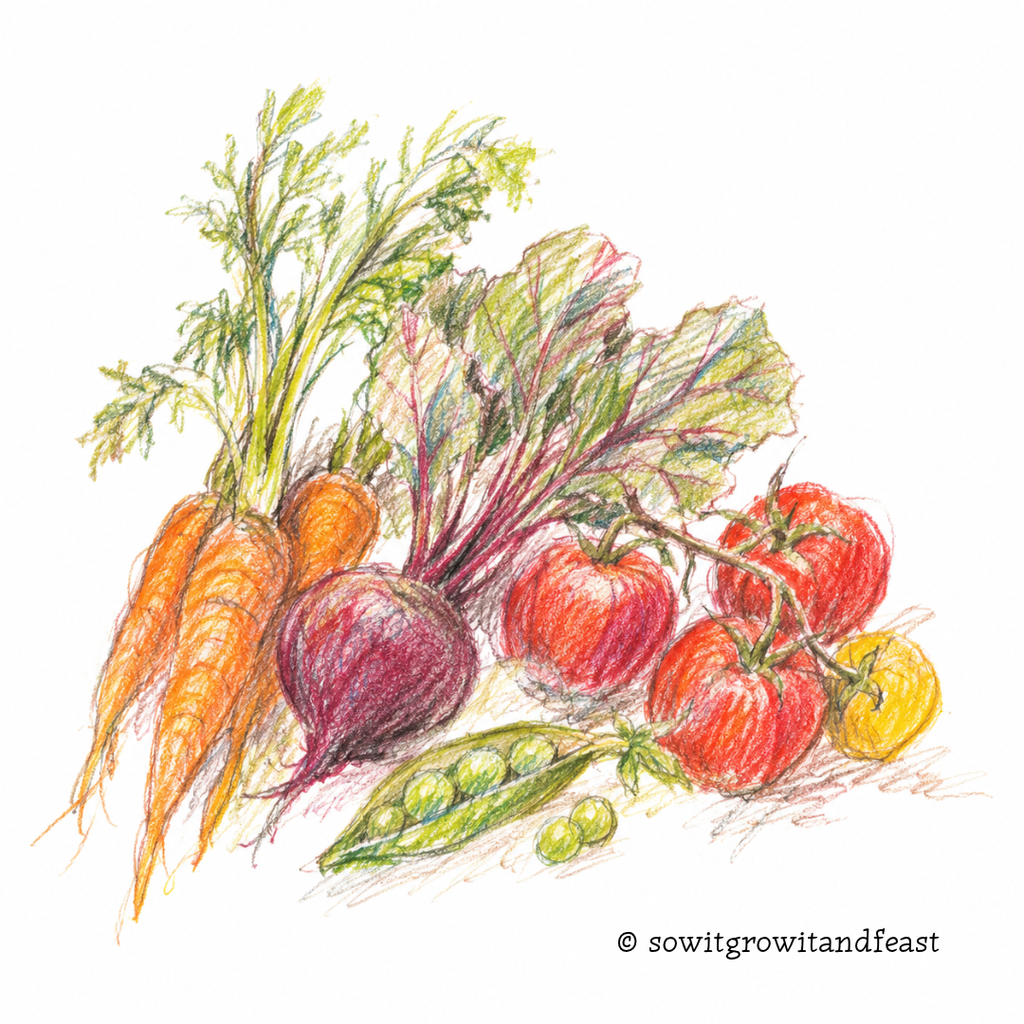
A productive vegetable garden rarely follows the neat timetable we have in mind for it. There are weeks when the first peas seem reluctant to appear, followed by days when the courgettes threaten to take over the kitchen. Tomatoes ripen together, lettuces suddenly bolt, and the runner beans produce more than even the most enthusiastic household can reasonably eat.
It is all part of the pleasure, and occasional mild chaos, of growing your own.
Yet a successful harvest is about more than filling a basket. Picking vegetables at the right moment can make a remarkable difference to their flavour and texture. Storing them thoughtfully can keep them in good condition for weeks or even months. And preserving the inevitable surplus allows us to enjoy a little of the summer garden long after the last flowers have faded.
There is a quiet satisfaction in opening a jar of homemade chutney in January or adding a handful of frozen garden peas to a winter supper. It is a reminder that the garden’s generosity need not end when the growing season does.
Knowing When to Harvest: Learning to Read Your Vegetables
One of the most useful gardening skills is learning to recognise when a vegetable is ready to be picked.
Seed packets offer a helpful indication of how long a crop takes to mature, but the weather, soil and growing conditions all have their say. A warm summer may bring a harvest forward, while a cool spring can leave everything rather behind schedule.
The vegetables themselves are often the best guides.
Carrots (Daucus carota subsp. sativus) can be lifted as tender young roots or left to grow larger. A little gentle investigation around the top of the root will reveal its size without disturbing the whole row.
Beetroot (Beta vulgaris) is particularly delicious when harvested young, although larger roots are excellent for roasting and preserving. Look for firm, well-developed roots rather than relying on colour alone, as different varieties range from deep purple to golden yellow.
Lettuce (Lactuca sativa) is generally at its sweetest and most tender before the plant begins to bolt. Once it starts producing a flower stem, the leaves can become bitter.
Tomatoes (Solanum lycopersicum) are usually ready when they have developed the characteristic colour of their variety and yield very slightly to gentle pressure. A ripe tomato should come away readily, although cutting the stalk is often kinder to the plant.
And then there are courgettes (Cucurbita pepo), which reward regular attention. Picked young, they are tender and full of flavour. Left for a few days too long, they may become enormous marrows, seemingly determined to prove that bigger is not always better.
The secret is to visit the vegetable garden often. A few minutes spent looking closely at what is growing will teach you more than any calendar.
The Best Time of Day to Gather Your Harvest
There is a particular pleasure in visiting the vegetable garden early in the morning.
The air is cool, the birds are busy, and the plants have not yet begun to lose moisture in the warmth of the day. Leafy vegetables, especially lettuce and spinach, are often at their freshest when gathered during these cooler hours.
Harvesting before the heat builds can help prevent delicate leaves from wilting. However, it is worth allowing surface dew to dry before picking crops intended for longer storage, particularly onions, garlic and potatoes.
Tomatoes and other fruiting crops can be harvested whenever they are ripe, preferably while temperatures are comfortable rather than during the hottest part of the afternoon.
If the morning passes without a visit to the garden, early evening is another good opportunity.
The important thing is to handle the harvest gently and move it somewhere cool and shaded rather than leaving it sitting in the sun.
When the Weather Has the Final Say
Gardeners soon discover that the weather is not especially interested in our plans.
An unexpected frost, a prolonged spell of rain or a sudden burst of heat can change the harvesting timetable almost overnight.
Some vegetables positively benefit from colder conditions.
Parsnips (Pastinaca sativa) often develop a sweeter flavour after exposure to cold weather, as starches are converted into sugars. Kale (Brassica oleracea Acephala Group) can also become sweeter during cooler periods.
Other crops are far less forgiving.
Tomatoes, courgettes and peppers should be gathered before damaging autumn frosts arrive. Potatoes intended for storage need to be lifted before prolonged wet conditions encourage disease or rotting.
Carrots and beetroot can tolerate some cold, but in heavy, wet soil they may deteriorate if left too long. In milder parts of Britain, carrots and parsnips can sometimes remain in the ground through winter, particularly with a protective covering of straw or other suitable mulch.
There is no universal rule that every root vegetable must be lifted before the first hard frost. Much depends on the crop, the soil and the severity of the weather.
A little local knowledge, combined with a watchful eye on the forecast, is invaluable.
Harvesting Without Harming the Plants
The way we gather vegetables matters almost as much as when we gather them.
A hurried tug can damage roots, break stems or disturb neighbouring plants. A little care, on the other hand, can encourage further growth and extend the harvest.
Root Vegetables: A Gentle Hand
Carrots, parsnips and beetroot are usually easiest to lift when the soil is slightly moist but not waterlogged.
Loosen the surrounding earth with a garden fork, keeping well away from the roots to avoid piercing them. Once the soil has been disturbed, the vegetables can be lifted carefully.
Remove excess soil gently, but avoid washing roots intended for long-term storage unless necessary. Moisture left on their surfaces can encourage deterioration.
Trim the leafy tops from carrots and beetroot, leaving a short length of stalk. This helps prevent the leaves from drawing moisture from the roots during storage.
Potatoes (Solanum tuberosum) require slightly different treatment. Those intended for storage should be lifted carefully, allowed to dry briefly on the surface if conditions permit, and kept out of prolonged sunlight, which can cause greening.
Never eat green potatoes or those showing significant signs of sprouting or deterioration.
Leafy Vegetables: Pick a Little, Often
One of the pleasures of growing leafy vegetables is that many can be harvested repeatedly.
With loose-leaf lettuce, spinach (Spinacia oleracea) and suitable varieties of kale, picking the outer leaves while leaving the central growing point intact allows the plant to continue producing.
Use clean scissors or a sharp knife, particularly when harvesting delicate leaves.
Not every leafy vegetable responds to the same treatment. Heading lettuces are usually harvested whole, while spinach may eventually bolt as temperatures rise or day length changes.
Regular harvesting can extend the useful life of many crops, but it cannot prevent the natural progression of the growing season.
Fruiting Vegetables: Encourage the Next Harvest
Runner beans (Phaseolus coccineus), French beans (Phaseolus vulgaris), courgettes and cucumbers (Cucumis sativus) often produce more when their fruits are picked regularly.
Allowing too many fruits to mature fully can encourage the plant to direct its energy towards seed production rather than continuing to flower.
Use secateurs or a sharp knife for crops with tougher stalks. This is particularly important with courgettes and cucumbers, where pulling can damage the plant.
Tomatoes that have begun to colour can continue ripening indoors. A warm room, away from strong direct sunlight, is generally more suitable than a cold windowsill.
As autumn approaches, this can be a useful way of rescuing the final fruits before temperatures fall.
Making the Harvest Last: Storing Vegetables Properly
There is little pleasure in growing a beautiful crop only to discover, a fortnight later, that half of it has spoiled.
Good storage begins with understanding that different vegetables have very different needs.
Some prefer cool, humid conditions. Others require somewhere dry and well ventilated. A few are best eaten almost immediately.
Potatoes, Carrots and Beetroot
Potatoes store best in a cool, dark, frost-free place with good ventilation. Paper sacks, hessian bags or suitable crates can work well, provided light is excluded.
Carrots, parsnips and beetroot prefer cooler, more humid conditions to prevent them from shrivelling. Traditionally, gardeners stored these roots in boxes of slightly damp sand or other suitable material, keeping them cool and protected from frost.
A garage, shed or outbuilding may be suitable if temperatures remain stable and the space is protected from rodents.
Onions and garlic are quite different. Once properly cured, they prefer dry, airy conditions rather than the damp environment favoured by many root vegetables.
Keeping these crops together in one poorly ventilated container is rarely a recipe for success.
Leafy Greens and Fresh Herbs
Lettuce, spinach and most freshly picked leafy vegetables are best refrigerated promptly.
Remove damaged leaves and store the remainder in a clean container or bag that helps retain moisture without allowing water to accumulate.
A lightly damp piece of kitchen paper can help prevent delicate leaves from drying out.
Most leafy greens benefit from being washed before use, although produce can also be washed before refrigeration if it is thoroughly drained and dried.
Fresh herbs vary in their storage needs. Parsley and coriander can often be kept in the fridge with their stems in a little water, while basil dislikes excessively cold conditions and is generally better kept at room temperature for short periods.
The aim is simple: keep the vegetables fresh without allowing them to become wet and slimy.
Freezing: Saving a Little Summer for Winter
Freezing is one of the easiest ways to preserve a generous harvest.
It is particularly useful for peas, beans, spinach and many other vegetables that might otherwise be wasted.
Most vegetables benefit from blanching before freezing. This involves briefly immersing them in boiling water, then cooling them rapidly in iced water to stop the cooking process.
Blanching helps slow the enzyme activity responsible for changes in flavour, colour and texture during frozen storage.
The exact blanching time depends on the vegetable and its size, so it is worth following reliable, crop-specific guidance.
Once cooled, drain thoroughly, pack into freezer-safe containers or bags, label and freeze promptly.
Courgettes can also be frozen, although their texture softens considerably once thawed. Grating them before freezing makes them particularly useful for soups, sauces and baking.
Tomatoes are another excellent candidate. They can be frozen whole or cooked into sauces before freezing.
There is something wonderfully reassuring about a freezer containing the makings of several meals, especially when much of it began as a handful of seeds.
Pickling and Fermenting: Traditional Ways to Preserve the Harvest
Long before domestic freezers became commonplace, households relied on salting, pickling, fermenting and drying to make seasonal produce last.
These methods remain useful today, not simply because they prevent waste, but because they transform ordinary vegetables into something quite different.
The Pleasure of Pickling
Pickled onions, beetroot, cucumbers and chutneys have long been familiar features of British kitchens.
A sharp, well-balanced pickle can bring brightness to winter meals, while homemade chutney offers a particularly satisfying destination for surplus tomatoes, apples and onions.
Vinegar pickling works by creating an acidic environment that inhibits the growth of many harmful microorganisms.
However, safe preservation requires more than simply pouring vinegar over vegetables and sealing a jar.
For pickles intended to be stored unopened at room temperature, use a properly tested preserving recipe with the correct vinegar acidity, proportions and processing method. The vinegar should not be diluted or reduced without guidance, and some recipes require heat processing.
Alternatively, refrigerator pickles can be made for shorter-term enjoyment, provided they are kept chilled and used within the recommended period.
The distinction matters. A decorative jar with a pretty label is lovely, but food safety must come first.
Fermenting: Letting Nature Do Some of the Work
Fermentation is another traditional way of transforming vegetables.
Sauerkraut, made from finely shredded cabbage (Brassica oleracea Capitata Group), is perhaps the best-known example.
During lactic acid fermentation, naturally occurring microorganisms convert sugars in the vegetables into acids. Under the correct conditions, this creates the distinctive sharp flavour associated with fermented foods.
Successful fermentation depends on the right salt concentration, suitable temperatures, clean equipment and keeping the vegetables submerged beneath the brine.
Use a reliable, tested recipe rather than estimating quantities.
Fermented vegetables may contain live microorganisms, although their presence and potential benefits depend on how the food has been prepared and stored. Not every fermented product is a proven probiotic, and claims about improving gut health should be treated with appropriate caution.
For those new to fermentation, a small batch of sauerkraut is an interesting place to begin.
There is something rather satisfying about allowing a humble cabbage to become the subject of a kitchen experiment that has been practised for generations.
Drying Vegetables and Herbs
Drying is one of the oldest methods of preserving food.
By removing moisture, it makes conditions less favourable for the microorganisms responsible for spoilage.
For gardeners with an abundance of herbs, it can be particularly useful.
Drying Garden Herbs
Thyme (Thymus vulgaris), oregano (Origanum vulgare) and rosemary (Salvia rosmarinus) are well suited to drying.
Gather healthy stems, preferably before flowering when the leaves are often at their most aromatic.
Small bunches can be hung in a warm, dry, well-ventilated place away from direct sunlight. Alternatively, use a food dehydrator set to an appropriate temperature.
Once completely dry, strip the leaves from the stems and store them in clean, airtight containers away from heat and light.
A jar of home-dried thyme may not look particularly remarkable, but opening it on a cold February evening can bring back the scent of the summer garden.
Drying Vegetables
Mushrooms, peppers and tomatoes can also be dried, although vegetables generally require more controlled conditions than herbs.
A food dehydrator is particularly useful because it provides consistent airflow and temperature.
Outdoor sun drying is unreliable in Britain’s often humid climate and can increase the risk of contamination or incomplete drying.
Follow established guidance for preparation, drying temperatures and times, and check that the finished vegetables are sufficiently dry before storing them.
Home-dried vegetables should be stored in suitable airtight containers and monitored for condensation or mould.
Dried vegetables are useful additions to soups, casseroles and stews, particularly during the colder months.
Home-dried tomatoes stored in oil require special care because of the risk of botulism. Do not treat them as shelf-stable unless following a specifically tested preservation method.
The Old-Fashioned Root Store: A Tradition Worth Revisiting
Before refrigeration, many rural households relied on cellars, clamps and other cool storage spaces to keep vegetables through winter.
The principle was beautifully straightforward: provide the right conditions, protect the harvest from frost and damp, and allow the vegetables to remain dormant for as long as possible.
A traditional root cellar was often partly underground, taking advantage of the earth’s relatively stable temperature.
Carrots, parsnips, turnips and beetroot could be stored in cool, humid conditions, while potatoes were kept dark and protected from frost.
For many root vegetables, temperatures close to 0–4°C and high relative humidity are beneficial, although the ideal conditions vary between crops.
Few modern homes have a purpose-built root cellar, but the principle can still be adapted.
A frost-free outbuilding, insulated storage box or suitably cool garage may offer useful space. However, temperatures need monitoring, especially during unusually mild autumns or severe winter cold.
Good ventilation matters, as does keeping stored produce away from pests.
Check vegetables regularly, removing anything that has begun to deteriorate.
A single rotting root can quickly spoil its neighbours, and discovering the problem early is considerably more pleasant than finding it several weeks later.
Extending the Harvest with Cold Frames and Cloches
Preserving vegetables is one way to enjoy the garden for longer. Keeping crops growing into the colder months is another.
Cold frames and cloches have been used by gardeners for generations to provide shelter from wind, rain and modest frosts.
They cannot turn November into June, but they can make a useful difference.
Cold Frames: A Little Shelter Goes a Long Way
A cold frame is essentially a low, enclosed structure with a transparent lid that allows sunlight to warm the space inside.
Traditionally made from timber and glass, it can also be constructed using other suitable materials, including reclaimed components.
Cold frames are useful for protecting hardy salad leaves, young plants and overwintering crops.
They can also help establish autumn-sown vegetables before winter slows their growth.
Ventilation is important, even during cooler weather. A closed cold frame can become surprisingly warm on a sunny day, encouraging overheating and excessive moisture.
Open the lid when conditions allow and close it again before temperatures fall.
Cloches: Protection Where It Is Needed
Cloches provide similar protection on a smaller scale.
They can be placed over individual plants or rows, shielding crops from cold winds and helping to warm the soil.
In autumn, they are particularly useful for hardy salads and young crops that benefit from a little additional shelter.
However, cloches are not a substitute for the warmth and daylight needed by summer vegetables. They may protect a tomato plant from a brief, light frost, but they will not sustain productive growth through a British winter.
Sometimes the most sensible approach is to accept that the tomatoes have finished and turn our attention to winter lettuce instead.
Eating with the Seasons: Rediscovering the Rhythm of the Garden
There is a particular pleasure in eating vegetables when they naturally come into their own.
The first asparagus of spring feels special precisely because it has been absent for so long. Summer brings tomatoes, peas and beans, while autumn offers pumpkins, squash and the comforting return of root vegetables.
Winter has its own generous selection: leeks, kale, Brussels sprouts, parsnips and cabbages, each suited to hearty meals when the days are short.
Eating seasonally encourages us to notice these changes.
It can also bring practical advantages.
Freshly harvested vegetables may retain more of certain nutrients than produce stored for long periods, although nutritional value depends on the crop, its handling, storage and preparation. Seasonal produce is not automatically more nutritious in every circumstance.
There can be environmental benefits too, particularly when food is grown locally in season without energy-intensive heated glasshouses. Yet the environmental impact of food also depends on production methods, transport and storage, rather than distance travelled alone.
And while seasonal abundance can make some vegetables more affordable, this varies with the weather, supply and growing conditions.
Perhaps the greatest benefit of seasonal eating is less easily measured.
It encourages us to enjoy what is available rather than expecting everything to be available all the time.
A bowl of freshly picked peas in June. Roasted beetroot in October. Leek and potato soup in January.
Each belongs to its season, and each is worth waiting for.
Making the Most of Every Harvest
A productive vegetable garden teaches us that abundance is not always convenient.
Sometimes everything ripens at once. Sometimes the crop we expected to be plentiful disappoints us, while something planted almost as an afterthought produces more than we know what to do with.
But these small surprises are part of gardening.
Learning to harvest carefully, store vegetables properly and preserve what we cannot immediately eat allows us to make better use of what the garden provides.
It also helps reduce waste, saves money and strengthens the connection between the food we grow and the meals we prepare.
Not every carrot needs to be perfectly straight. Not every tomato needs to be quite the same size. And not every harvest needs to become an ambitious weekend of preserving.
Sometimes success is simply a handful of fresh vegetables gathered for supper.
At other times, it is a shelf of chutneys, a freezer full of beans or a box of potatoes waiting patiently in the cool.
And when the garden is quiet in the depths of winter, there is something rather lovely about reaching for a jar or opening the freezer and finding a little reminder of warmer days.
The harvest may be seasonal, but with a little thought and care, its pleasures can last well beyond the growing year.
Follow us on Instagram, Threads, BlueSky, Twitter, Pinterest & Facebook
Not sure where to start? Take a look at our Grow Your Own Packs with detailed step by step instructions, seeds and 1 years online support.
Further Reading: How to Start Your Own Vegetable Patch, How to Plan and Design Your Dream Vegetable Patch, Why Choose Sow It Grow It and Feast for Your Garden?, How to Choose the Perfect Flower Pot for Your Crops, The Principles of Organic Gardening