
There is something rather satisfying about stepping into the garden and gathering a handful of fresh lettuce leaves for lunch. No plastic packaging, no forgotten bag of salad slowly wilting at the back of the fridge. Just crisp, tender leaves, picked moments before they reach your plate.
Lettuce (Lactuca sativa) is one of the simplest and most rewarding vegetables to grow. It asks for relatively little space, grows quickly and offers a remarkable variety of colours, flavours and textures. From delicate butterhead lettuces to crisp cos varieties and colourful loose-leaf mixtures, there is considerably more to lettuce than the familiar supermarket iceberg.
Better still, you don’t need an allotment or even a vegetable garden. A generous container beside the kitchen door can provide fresh salad leaves for weeks.
With a little planning, and an understanding of what lettuce enjoys, you can keep the salad bowl supplied through much of the year.
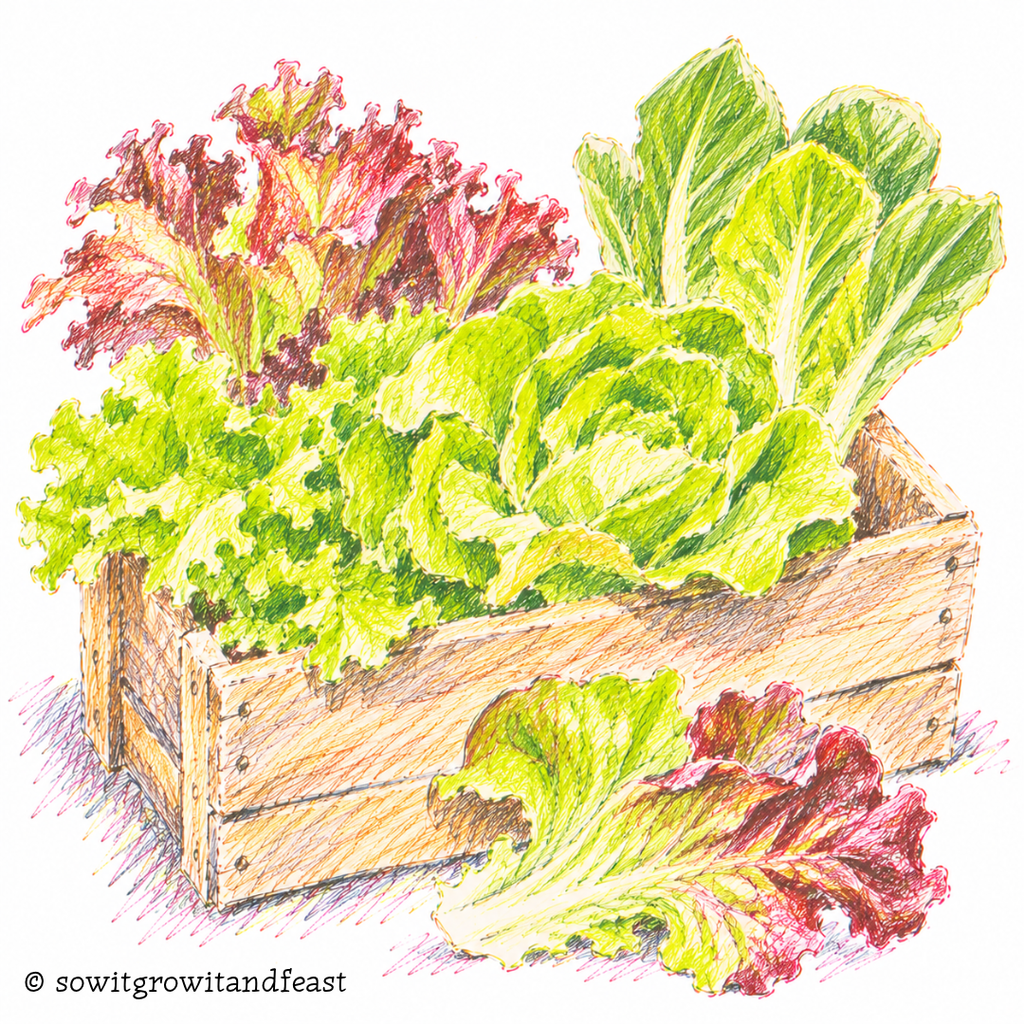
Getting to Know Your Lettuce
Before reaching for the seed packets, it is worth discovering just how varied lettuce can be.
Butterhead lettuce produces soft, tender leaves surrounding a loosely formed heart. Varieties such as ‘All Year Round’ are familiar favourites in British vegetable gardens, although the name shouldn’t be taken too literally. Even these lettuces need suitable growing conditions.
Cos lettuce, sometimes called romaine, develops upright heads with elongated, crisp leaves. ‘Little Gem’ is particularly popular, producing compact, sweet hearts that are ideal for smaller gardens.
Loose-leaf lettuce is wonderfully generous. Rather than waiting for an entire head to mature, you can pick individual outer leaves as required. Varieties such as ‘Salad Bowl’ and ‘Lollo Rossa’ are particularly useful for repeated harvesting.
Crisphead lettuce, including iceberg types, produces firm, crunchy heads. These generally need more space and a longer growing period than loose-leaf varieties.
There is no need to settle for just one. Growing several varieties together creates a more interesting salad, both in the garden and on the plate.
When Should You Sow Lettuce in the UK?
One of the great pleasures of growing lettuce is its flexibility. Unlike vegetables that demand months of warmth and sunshine, lettuce generally prefers the cooler conditions of spring and autumn.
In Britain, the main outdoor sowing season runs from March to September, although the precise timing depends on your location, the weather and the varieties you choose.
Spring: The First Tender Leaves
You can begin sowing lettuce under cover from February, provided you have somewhere bright and frost-free for the seedlings.
Outdoor sowing usually begins in March or April, once the soil is workable and conditions are suitable.
Early sowings benefit from protection with fleece, cloches or a cold frame, particularly when nights remain chilly.
Summer: Keeping the Harvest Coming
Rather than sowing an entire packet at once, try sowing a small quantity every two or three weeks.
This is known as successional sowing, and it is one of the simplest ways to avoid the familiar problem of having more lettuce than you can possibly eat one week and none at all the next.
During hot weather, choose varieties with good resistance to bolting and provide some afternoon shade.
Autumn: Making the Most of Cooler Days
Late summer is an excellent time to sow lettuce for autumn harvesting.
The gradually cooling temperatures suit many varieties, although growth slows as daylight hours shorten.
Hardier varieties, including ‘Winter Density’ and ‘Arctic King’, can be grown under suitable protection for late autumn and winter harvesting.
Winter: A Little Patience Required
Lettuce can survive and grow during the colder months, particularly in a greenhouse, polytunnel or cold frame.
However, winter growth is much slower, and plants may produce very little during the darkest weeks.
The secret is to establish winter lettuces during late summer or early autumn, while there is still sufficient warmth and daylight for them to develop.
Winter lettuce is less about abundance and more about appreciating those precious fresh leaves when the rest of the vegetable garden is taking a well-earned rest.
Choosing the Right Place to Grow Lettuce
Lettuce is not especially demanding, but it does have its preferences.
In spring and autumn, a sunny position is generally ideal. During summer, however, a little afternoon shade can make all the difference.
Lettuce dislikes prolonged heat. When temperatures rise, plants may bolt, producing a tall flowering stem as they move towards setting seed. The leaves often become increasingly bitter.
A position receiving morning sunshine and some protection from the strongest afternoon heat can be particularly useful during warmer months.
Avoid assuming that lettuce needs a permanently shaded, north-facing bed. Too little light can result in weak, slow-growing plants, particularly outside summer.
Preparing the Soil
Lettuce grows best in fertile, moisture-retentive soil that drains freely.
Before sowing, remove weeds and incorporate some well-rotted garden compost if your soil needs improving.
A generous addition of organic matter helps sandy soils retain moisture and can improve the structure of heavier clay soils.
There is no need for elaborate preparations. A fine, level seedbed, free from large stones and clods, provides an excellent starting point.
And if you have been making your own compost, this is another opportunity to put it to good use.
How to Sow Lettuce Seeds
Lettuce seeds are small, and it is surprisingly easy to sow far more than you intended.
A little restraint at this stage saves considerable thinning later.
Begin by making a shallow drill approximately 1cm deep in your prepared soil.
Water the drill if the soil is dry, allowing the moisture to soak in before sowing.
Scatter the seeds thinly along the row, cover lightly with fine soil and firm gently.
Keep the soil moist while the seeds germinate.
Depending on temperature and conditions, seedlings will often appear within one or two weeks, although germination may take longer in cooler weather.
Why Lettuce Sometimes Refuses to Germinate
Lettuce seed can struggle to germinate in high temperatures.
This can be particularly frustrating during summer, when you have carefully prepared a seedbed only to discover that nothing appears.
During hot spells, try sowing in the evening, using a cooler position or starting seeds in modules somewhere sheltered from excessive heat.
Lettuce generally germinates well in cool to moderately warm conditions, with temperatures around 15–20°C often proving favourable.
Thinning Your Seedlings
Once seedlings have developed their first true leaves and are large enough to handle, thin them to the spacing recommended for your chosen variety.
Loose-leaf lettuces grown for baby leaves can remain relatively close together.
Lettuces intended to develop full heads generally need approximately 20–30cm between plants, depending on the variety.
Thinning might feel wasteful, but overcrowding encourages competition for light, moisture and nutrients.
If the young leaves are healthy and suitable for eating, they can make a lovely addition to a salad.
Growing Lettuce in Pots and Containers
Not everyone has room for a vegetable patch, and fortunately, lettuce is perfectly content growing in containers.
A wide pot, window box or trough can provide an impressive quantity of leaves from a relatively small space.
Choose a container at least 15–20cm deep, with drainage holes to prevent waterlogging.
Fill it with good-quality peat-free multipurpose compost and sow seeds thinly across the surface, following the recommended sowing depth.
Loose-leaf varieties are particularly suitable because you can harvest individual leaves without removing the entire plant.
Keep containers well watered, especially during warm weather. Compost dries out considerably faster than garden soil.
Position pots somewhere bright, with some afternoon shade during the hottest part of summer.
A container beside the kitchen door is wonderfully convenient. There is something quite pleasing about being able to gather lunch without venturing further than the doorstep.
Caring for Your Lettuce
Lettuce is a relatively undemanding crop, but a little regular attention makes an enormous difference.
Watering
Consistent moisture is probably the most important part of successful lettuce growing.
Because lettuce has a relatively shallow root system, it can suffer quickly during dry weather.
Water thoroughly when necessary, aiming to keep the soil evenly moist rather than alternating between very dry and waterlogged conditions.
Irregular watering, particularly during hot weather, can encourage stress and premature bolting.
A light organic mulch around established plants can help conserve moisture and suppress weeds.
Feeding
Lettuce growing in fertile garden soil enriched with compost rarely needs heavy feeding.
Container-grown plants may benefit from an occasional balanced liquid feed, particularly when leaves are being harvested repeatedly.
Avoid excessive fertiliser. More is not always better, and healthy growth depends on the right balance of nutrients, moisture and light.
Making the Most of Space
Lettuce is an excellent crop for filling temporary gaps in the vegetable garden.
You can grow it between young brassicas before they spread, alongside slower-growing crops or in spaces that would otherwise remain empty for several weeks.
The trick is to ensure that neighbouring plants do not eventually overwhelm it.
In summer, taller crops may provide welcome light shade, helping protect lettuce from excessive heat.
How and When to Harvest Lettuce
Harvesting is where all that patience begins to pay off.
And with lettuce, there is more than one way to enjoy the results.
Cut-and-Come-Again Lettuce
Loose-leaf varieties are particularly generous.
Once the leaves are large enough to use, often around four to six weeks after sowing in favourable conditions, begin picking the outer leaves.
Leave the central growing point intact so the plant can continue producing fresh growth.
Alternatively, some salad-leaf mixtures can be cut a few centimetres above the base and allowed to regrow.
The number of harvests depends on the variety, weather and growing conditions.
Eventually, plants become tired or begin to bolt, but by then your next sowing should hopefully be ready.
Harvesting Whole Lettuces
Hearting varieties are generally ready approximately eight to twelve weeks after sowing, although this varies considerably.
Harvest when the head has reached a useful size and feels suitably developed.
Use a sharp knife to cut the stem near soil level, or lift the whole plant.
Don’t leave mature lettuces standing for too long in warm weather. Their quality can deteriorate quickly, particularly once bolting begins.
The Best Time of Day to Harvest
Early morning is often an excellent time to gather lettuce.
The leaves are usually well hydrated and crisp, particularly after a cool night.
During summer, avoid harvesting in the strongest midday heat if possible.
Wash the leaves thoroughly, dry them gently and refrigerate promptly if they are not being eaten straight away.
Common Lettuce Problems and How to Prevent Them
Unfortunately, the gardener is not the only creature who appreciates a tender lettuce leaf.
A few familiar visitors can cause trouble, particularly when plants are young.
Slugs and Snails
Few things are more disappointing than discovering that a promising row of seedlings has disappeared overnight.
Slugs and snails are particularly fond of tender young lettuce.
Check plants during damp evenings and early mornings, removing pests where practical.
Keep the immediate growing area reasonably clear of unnecessary hiding places, while retaining wildlife-friendly habitats elsewhere in the garden.
Physical protection and approved ferric phosphate slug pellets, used according to their instructions, can help where damage is persistent.
Aphids
Aphids sometimes gather on tender leaves and growing tips, particularly during warmer weather.
Small colonies can often be removed by hand or washed away with a gentle stream of water.
Encouraging ladybirds, hoverflies and lacewings helps support natural pest control.
A garden with plenty of flowering plants and varied habitats is often better equipped to support these useful predators.
Lettuce Root Aphid
Lettuce root aphids feed underground and can cause plants to wilt or become stunted, particularly during summer.
Infested plants may appear thirsty even when the soil is moist.
Rotating crops can help with general soil and pest management, although lettuce root aphids have a more complicated life cycle and rotation alone may not prevent them.
Where this pest is a recurring problem, consider growing lettuce in fresh container compost or choosing resistant varieties where available.
Downy Mildew
Downy mildew can produce pale or yellow patches on leaves, sometimes accompanied by whitish growth underneath.
It is more troublesome in cool, humid conditions.
Provide adequate spacing, improve ventilation under cover and remove badly affected leaves or plants.
Resistant varieties can be particularly useful where the disease regularly causes problems.
Grey Mould
Grey mould, caused by Botrytis fungi, is more likely to develop where conditions are damp and air circulation is poor.
Remove decaying foliage, avoid overcrowding and ventilate greenhouses and cold frames whenever conditions allow.
Bolting
Bolting is not a disease. It is the natural process of a lettuce plant beginning to flower and produce seed.
Heat, drought and other stresses can encourage it.
Choose varieties suited to the season, water consistently and provide shade during prolonged hot spells.
Once the flowering stem begins to develop, leaf quality often declines. Harvest promptly if the leaves are still pleasant to eat.
Growing Lettuce Through the Seasons
A little forward planning can keep fresh leaves available for far longer than you might expect.
Spring is the time for early sowings, preparing beds and establishing the first outdoor plants.
Summer calls for regular small sowings, careful watering and some protection from excessive heat.
Autumn offers an opportunity to enjoy cooler growing conditions and establish hardy varieties for the colder months.
Winter is about making the most of protected crops, harvesting sparingly and planning the next season’s sowings.
There may be pauses in production, particularly during prolonged cold or very hot weather, but thoughtful sowing can provide a remarkably long harvest season.
Frequently Asked Questions About Growing Lettuce
Can lettuce grow in shade?
Yes, lettuce tolerates partial shade, particularly during summer. However, it still needs sufficient light to grow well. In spring and autumn, a sunnier position is generally preferable.
Can I grow lettuce indoors?
Baby salad leaves can be grown indoors on a bright windowsill, although winter light levels in Britain may be insufficient for strong growth without supplementary lighting.
Why does my lettuce taste bitter?
Bitterness can increase as lettuce matures or begins to bolt, particularly following heat or drought stress. Some varieties are also naturally more bitter than others.
Can I grow lettuce all year round?
With suitable varieties, careful sowing and protection, lettuce can be harvested during much of the year in the UK. However, growth slows considerably in winter, and a continuous supply is not guaranteed.
How many lettuce plants should I grow?
That depends entirely on how much salad your household enjoys.
For a small household, a few loose-leaf plants combined with regular small sowings may be sufficient.
It is generally better to sow modest quantities frequently than to grow twenty lettuces that all mature together.
Can I save seeds from my lettuce?
Yes. Lettuce is generally self-pollinating, making seed saving relatively straightforward.
Allow a healthy plant to flower and produce mature seed, then collect it in dry weather.
Remember that seeds saved from F1 hybrid varieties may not produce plants identical to their parents.
From Garden to Table
Perhaps the greatest pleasure of growing lettuce is its simplicity.
There are no elaborate techniques to master, no expensive equipment required and no need to dedicate half the garden to the task.
A few seeds, some good soil, regular watering and a little patience can provide something genuinely worthwhile.
And while lettuce might never command the same excitement as the first ripe tomato or the arrival of a magnificent pumpkin, it has a quiet charm of its own.
It is dependable, generous and wonderfully useful. The sort of crop that earns its place in the garden without making too much fuss.
So whether you have a carefully planned vegetable patch, a raised bed or a single container outside the back door, make a little room for lettuce.
There is something rather lovely about growing the simplest ingredients yourself.
And somehow, a salad always tastes better when you’ve picked it from your own garden.
Further Reading: The Importance of Growing Your Own Food, Freshen Up Your Winter Diet with these Garden Salads, The Art of Companion Planting, Why Growing Food Makes You Feel Better, Take the Guesswork Out of Growing Veg, How to Create a Garden That Feeds Your Family, How to Start a Vegetable Garden Now Ready for Spring
Follow us on Instagram, Threads, BlueSky, Twitter, Pinterest & Facebook
Not sure where to start? Take a look at our Grow Your Own Packs with detailed step by step instructions, seeds and 1 years online support.