
There is something rather wonderful about a vegetable that doesn’t keep you waiting.
While carrots are taking their time, tomatoes are demanding attention and parsnips are still deciding whether to make an appearance, radishes are quietly getting on with the business of growing.
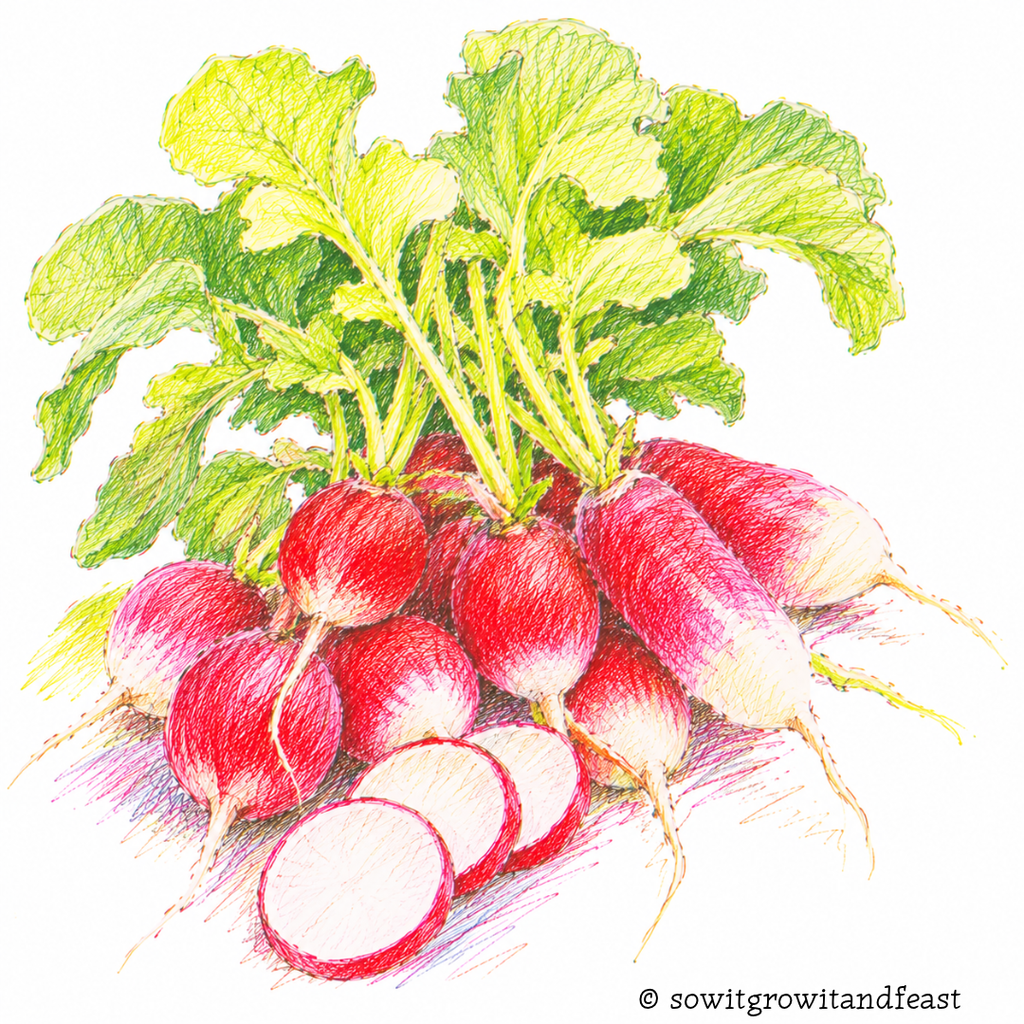
Sow a few seeds into the cool spring soil, keep them watered, and within a matter of weeks you could be pulling up your first harvest. Bright little globes of red, pink and purple, with crisp white flesh and a pleasantly peppery bite.
Radishes are among the most rewarding vegetables to grow, particularly if you are new to gardening or introducing children to the pleasures of growing their own food.
They need very little space, ask for relatively little attention and offer almost immediate encouragement. And in gardening, where patience is so often required, that feels like something worth celebrating.
Whether you have a vegetable patch, a raised bed or a few containers outside the kitchen door, radishes are a lovely place to begin.
Getting to Know the Humble Radish
Radishes (Raphanus sativus) belong to the brassica family, Brassicaceae, alongside cabbages, broccoli, turnips and mustard.
They have been cultivated for thousands of years and are enjoyed in cuisines across the world.
Although we tend to picture the familiar little round red radish, there is considerably more variety to discover.
Some are long and slender, others round and plump. Their skins can be scarlet, pink, purple, white or almost black, while their flavours range from mild and refreshing to distinctly fiery.
The familiar peppery flavour comes from naturally occurring compounds called isothiocyanates, which develop when the plant’s tissues are cut or chewed.
Growing conditions also influence their taste. Radishes grown quickly in cool, moist soil are often tender and pleasantly crisp, while those exposed to prolonged heat or drought can become tougher and more pungent.
It is a small vegetable with rather more character than its size might suggest.
Why Radishes Deserve a Place in the Kitchen Garden
If you are looking for a vegetable that offers plenty of satisfaction without demanding months of attention, radishes are difficult to beat.
Many traditional spring varieties are ready to harvest in approximately four to six weeks, sometimes sooner in favourable conditions.
This makes them particularly useful for filling gaps between slower-growing crops.
They are also wonderfully economical. A packet of seeds can produce several small harvests, and because radishes are usually sown directly where they will grow, there is no need for elaborate equipment or lengthy preparations.
For children, they provide a particularly satisfying introduction to gardening.
There is the excitement of sowing the seeds, the first appearance of tiny green seedlings and, not long afterwards, the pleasure of pulling something edible from the soil.
And unlike some vegetables, which require considerable persuasion before finding favour at the dinner table, a freshly picked radish has the advantage of being colourful, crunchy and rather fun to grow.
Are Radishes Good for You?
Radishes may be small, but they make a useful contribution to a varied, balanced diet.
They contain vitamin C, potassium and small amounts of dietary fibre, alongside naturally occurring plant compounds associated with the brassica family.
Their high water content gives them a refreshing crunch, while their relatively low energy content makes them an easy addition to salads, sandwiches and vegetable dishes.
Vitamin C contributes to normal immune function and helps protect cells from oxidative stress.
However, no single vegetable can provide everything we need for good health. The greatest nutritional benefits come from enjoying a wide variety of fruit and vegetables.
And one of the loveliest things about growing your own is how naturally that variety begins to appear on the plate.
When Should You Sow Radishes in the UK?
Radishes are happiest growing in cool to moderately warm conditions.
In much of the UK, the main sowing season for quick-growing summer radishes runs from March to August or September, depending on the weather and the variety.
Early sowings can begin under cloches or in a greenhouse before outdoor conditions are suitable.
Unlike many summer vegetables, radishes do not particularly enjoy prolonged hot weather. High temperatures, drought and increasing day length can encourage some varieties to bolt, producing flowers instead of developing good-quality roots.
For this reason, spring and early autumn are often the most successful times to grow them.
Spring Sowing
March and April are excellent months to begin sowing radishes outdoors once the soil is workable.
Seeds germinate readily in cool conditions, although growth will be slower when temperatures remain low.
As the days lengthen and the soil warms, radishes grow increasingly quickly.
Summer Sowing
Radishes can be grown through summer, but they need a little more attention.
Choose a position with some afternoon shade during particularly hot weather, and keep the soil consistently moist.
Some varieties are better suited to summer growing than others, so check the seed packet before sowing.
Autumn Sowing
Late summer and early autumn offer another excellent opportunity.
As temperatures begin to fall, radishes often develop particularly well, provided there is sufficient time for them to mature before growth slows.
Autumn is also the traditional sowing season for many larger winter radishes, which need considerably longer to develop than the familiar small salad varieties.
The Secret to a Continuous Harvest
Rather than sowing an entire packet at once, try sowing a short row every ten to fourteen days during suitable growing conditions.
This is known as successional sowing.
It helps ensure that fresh radishes are ready regularly, rather than producing an enormous quantity that all need eating at the same time.
After all, there are only so many radishes one household can reasonably add to a salad in a single week.
Choosing Which Radishes to Grow
One of the pleasures of growing radishes is discovering just how different they can be.
There are several varieties particularly worth trying in a British kitchen garden.
‘French Breakfast’ is a traditional favourite, producing elongated red roots with white tips. Its crisp texture and mild flavour make it excellent for eating fresh.
‘Cherry Belle’ produces attractive, round, bright red radishes with crisp white flesh. It is a reliable choice for quick spring and autumn crops.
‘Sparkler’ has round, scarlet roots with distinctive white tips and a pleasantly crisp texture.
‘Purple Plum’ offers beautiful purple-skinned roots that bring an unexpected splash of colour to the salad bowl.
‘Black Spanish Round’ is a winter radish with dark skin and white flesh. It has a stronger flavour and requires a longer growing season than small summer radishes.
‘Mooli’ or daikon types produce large, often elongated white roots. They need more space and a longer growing period, and many are best sown from midsummer onwards to reduce the risk of bolting.
If you are growing radishes for the first time, begin with a quick-maturing salad variety before experimenting with the larger winter types.
Preparing the Soil for Radishes
Radishes are not particularly demanding, but they do appreciate a well-prepared seedbed.
Choose a sunny position in spring or autumn. During summer, a little afternoon shade can help keep conditions cooler.
The soil should be reasonably fertile, free-draining and capable of retaining moisture.
Remove weeds and rake the surface to create a fine, crumbly texture.
If your soil is particularly heavy or compacted, gently loosen it before sowing.
A little well-rotted garden compost can improve soil structure, but avoid adding fresh manure immediately before planting. Excessive nitrogen can encourage leafy growth at the expense of the roots.
Radishes generally grow perfectly well in soil that has already been enriched for a previous crop.
There is no need to make things more complicated than necessary.
How to Sow Radish Seeds
Radish seeds are relatively easy to handle, making them ideal for anyone learning to sow vegetables.
They are best sown directly into the soil where they will grow.
Because their edible roots develop quickly, transplanting can interrupt growth and sometimes result in misshapen roots.
Step 1: Make a Shallow Drill
Using the edge of a hoe, a small stick or your finger, create a shallow drill approximately 1cm deep.
Leave around 15cm between rows, or follow the spacing recommended on the seed packet.
Step 2: Sow the Seeds Thinly
Place the seeds approximately 2–3cm apart along the drill.
Try not to scatter them too thickly. Overcrowding is one of the most common reasons radishes fail to develop good-sized roots.
Step 3: Cover and Water
Cover the seeds lightly with fine soil and firm gently.
Water carefully using a watering can fitted with a fine rose, taking care not to wash the seeds away.
Keep the soil moist while germination takes place.
Under favourable conditions, seedlings often appear within five to ten days, although cooler weather may delay them.
Step 4: Thin the Seedlings
Once the seedlings are large enough to handle, thin them to approximately 5cm apart for most small, round varieties.
Larger radishes may need considerably more space.
Thinning gives the developing roots room to swell and reduces competition for water and nutrients.
It can feel rather wasteful removing healthy seedlings, but a crowded row rarely produces the best harvest.
Healthy thinnings can sometimes be used as small salad leaves, provided they are clean and free from disease.
Growing Radishes in Pots and Containers
You do not need a traditional vegetable garden to grow radishes successfully.
A window box, trough or wide container can provide plenty of space for a useful little crop.
Choose a container at least 15cm deep for small salad varieties, with drainage holes to prevent waterlogging.
Larger winter radishes need deeper containers.
Fill with good-quality peat-free multipurpose compost, then sow the seeds directly into the surface at the recommended depth and spacing.
Keep the compost evenly moist and position the container somewhere bright.
During particularly hot weather, move pots away from the strongest afternoon sunshine if possible.
Because containers dry out more quickly than garden soil, regular watering is especially important.
A pot of radishes beside the kitchen door is a wonderfully practical arrangement. When lunch needs a little colour and crunch, the journey from garden to plate is pleasingly short.
Caring for Radishes as They Grow
One of the great attractions of radishes is how little fuss they require.
Once the seedlings are established, there are really only a few things to remember.
Keep the Soil Moist
Consistent moisture is particularly important.
If radishes experience prolonged drought, their roots may become woody, tough or excessively pungent.
Sudden changes in moisture can also contribute to splitting.
Water regularly during dry spells, aiming to keep the soil evenly moist without leaving it waterlogged.
Avoid Overfeeding
Radishes are quick-growing vegetables and rarely need additional fertiliser when grown in reasonably fertile soil.
Too much nitrogen can encourage an impressive display of leaves while leaving the roots disappointingly small.
A healthy, balanced soil is generally all they require.
Keep Weeds Under Control
Young radish seedlings can struggle when surrounded by vigorous weeds.
Remove competing plants carefully, taking care not to disturb the developing roots.
Once radishes begin growing strongly, their short growing season means they usually require very little further attention.
Common Problems When Growing Radishes
Although radishes are generally straightforward, a few problems can occasionally spoil the harvest.
Why Are My Radishes All Leaves and No Roots?
This is a familiar disappointment.
You pull up what appears to be a thriving plant, only to discover a thin, undeveloped root beneath the leaves.
Possible causes include overcrowding, excessive nitrogen, unsuitable temperatures or insufficient light.
Ensure seedlings have adequate space, avoid heavy feeding and sow during cooler conditions.
Why Are My Radishes Woody or Hollow?
Radishes that remain in the ground too long can become coarse, pithy or hollow.
Hot weather and inconsistent watering can make the problem worse.
The best solution is to harvest promptly once the roots reach their expected size.
Why Are My Radishes Splitting?
Splitting can occur when plants experience irregular moisture, particularly when dry soil is followed by heavy watering or rainfall.
Maintaining more consistent soil moisture can help reduce the problem.
Flea Beetles
Flea beetles are small insects that create tiny holes in radish leaves.
Although established plants can often tolerate some damage, young seedlings may suffer more severely.
Fine insect-proof mesh can provide useful protection, particularly during warm, dry weather when flea beetles are active.
Cabbage Root Fly
Because radishes belong to the brassica family, they can also be affected by cabbage root fly.
The larvae feed on roots, sometimes causing tunnelling and making the crop unsuitable for eating.
Growing radishes beneath fine insect-proof mesh from sowing can help prevent adult flies from laying eggs near the plants.
Slugs and Snails
Young seedlings may attract slugs and snails, particularly during damp weather.
Check regularly for damage and protect vulnerable plants where necessary.
A healthy garden with varied wildlife habitats can help support natural predators, although some additional protection may still be needed.
When Are Radishes Ready to Harvest?
This is where radishes really earn their place in the vegetable garden.
Many small salad varieties can be ready within approximately four to six weeks of sowing, sometimes sooner in ideal conditions.
The roots often begin to show at the soil surface, making it relatively easy to judge their size.
For most round salad radishes, harvest when the roots are around 2–3cm across, although the ideal size varies by variety.
Gently loosen the soil if necessary and pull the plant from the base of its leaves.
Try not to leave mature radishes in the ground for too long.
Unlike some root vegetables, which can remain in the soil for extended periods, quick-growing salad radishes are at their best when harvested young and tender.
Regular checking is worthwhile, particularly during warm weather when growth can be surprisingly rapid.
What to Do with Your Radish Harvest
Freshly picked radishes are delicious simply washed and eaten whole, perhaps with a little butter and sea salt.
But there are plenty of other ways to enjoy them.
Their crisp texture and peppery flavour make them excellent in salads, sandwiches and wraps.
Thin slices can bring colour and crunch to a bowl of new potatoes, while grated radishes work beautifully in fresh slaws.
Roasting produces something rather different. The sharpness mellows, the texture softens, and the roots develop a gentler, earthier flavour.
And don’t overlook the leaves.
Young, healthy radish leaves are edible and can be added to salads or cooked like other leafy greens. Older leaves may be rather coarse or hairy, but they can still be useful in soups or wilted dishes.
Quick-Pickled Garden Radishes
A simple way to enjoy a generous harvest.
Ingredients
- 200g fresh radishes
- 100ml white wine vinegar
- 100ml water
- 1 tablespoon caster sugar
- ½ teaspoon salt
- A few black peppercorns
Method
Wash the radishes and slice them thinly.
Place the vinegar, water, sugar and salt in a small saucepan and warm gently until the sugar dissolves.
Allow the mixture to cool slightly, then pour over the sliced radishes in a clean, heatproof jar.
Add the peppercorns, cover and refrigerate once cooled.
The radishes will begin to develop their pickled flavour after a few hours and are particularly good the following day.
Keep refrigerated and use within a week. This is a quick refrigerator pickle, not a shelf-stable preserve.
Roasted Radishes with Thyme
If you have only ever eaten radishes raw, this is worth trying.
Ingredients
- 300g radishes
- 1 tablespoon olive oil
- A few sprigs of fresh thyme
- Sea salt and black pepper
Method
Preheat the oven to 200°C, or 180°C fan.
Wash and trim the radishes, halving any larger ones.
Toss with olive oil, thyme and seasoning, then spread across a baking tray.
Roast for approximately 20–25 minutes, turning occasionally, until tender and lightly golden.
Serve alongside roasted vegetables, new potatoes or a simple spring supper.
The transformation from crisp and peppery to soft and mellow is rather lovely.
How to Store Fresh Radishes
Radishes are at their crispest shortly after harvesting.
If you are not eating them immediately, remove the leafy tops, as these continue to draw moisture from the roots and can cause them to soften.
Store the roots in a suitable container or bag in the vegetable drawer of the fridge.
They will generally keep well for around a week, sometimes longer under good conditions, although their texture is best when fresh.
The leaves are more perishable and should be used promptly.
For the finest flavour and texture, harvest only what you need whenever possible.
One of the advantages of growing your own is that the garden can act as a temporary larder, provided the radishes are not allowed to become overmature.
Can You Save Radish Seeds?
Yes, and it can be an interesting project if you would like to take your gardening a little further.
Radishes are biennial or annual depending on the type and growing conditions, but they will eventually produce flowering stems followed by seed pods.
Their flowers are attractive to pollinating insects, and the young seed pods of suitable varieties are also edible.
However, saving seed requires a little planning.
Radishes are largely insect-pollinated and can cross with other flowering radish varieties nearby. If you want to maintain a particular variety, isolation may be necessary.
Allow healthy plants to flower and develop mature seed pods, then collect the seeds once the pods have dried.
Store them somewhere cool and dry until the following growing season.
It is a lovely reminder that a vegetable garden is not simply about harvesting food. Every plant has a much longer story to tell.
A Small Crop with a Great Deal to Offer
There is something particularly encouraging about growing radishes.
They don’t demand a large garden, expensive equipment or months of patient attention.
A few seeds, a little soil and some regular watering are enough to begin.
For children, they offer the excitement of seeing something grow almost before their eyes. For beginners, they provide an early success. And for experienced gardeners, they remain one of the most useful ways to fill small gaps and keep the vegetable garden productive.
Perhaps that is why radishes have remained such a familiar sight in kitchen gardens for generations.
They are uncomplicated, generous and wonderfully cheerful.
And there is a certain pleasure in pulling a handful from the soil, brushing away the earth and carrying them into the kitchen, knowing that only a few weeks earlier they were nothing more than tiny seeds.
Not every gardening achievement needs to be grand.
Sometimes it is enough to grow something small, colourful and delicious.
And have it ready in time for lunch.
Further Reading: Why Growing Food Makes You Feel Better, Take the Guesswork Out of Growing Veg, How to Create a Garden That Feeds Your Family, How to Start a Vegetable Garden Now Ready for Spring
Follow us on Instagram, Threads, BlueSky, Twitter, Pinterest & Facebook
Not sure where to start? Take a look at our Grow Your Own Packs with detailed step by step instructions, seeds and 1 years online support.