
Carrots pulled from the soil. Pumpkins glowing in an autumn garden. Apricots, peaches, sweet potatoes and great wedges of butternut squash roasting in the oven.
Orange food is rather difficult to ignore.
And that’s a good thing.
Many orange fruits and vegetables get their colour from naturally occurring plant pigments called carotenoids. These include beta-carotene, which our bodies can convert into vitamin A.
But orange fruits and vegetables aren’t all nutritionally identical simply because they happen to share a colour. Between them they provide different combinations of fibre, vitamin C, potassium, folate and other vitamins, minerals and plant compounds.
That’s why I prefer to think about variety rather than miracle foods.
And, of course, quite a few of these orange foods are things we can grow ourselves.
So let’s leave the promises of detoxes, glowing skin and miraculous health transformations to one side and do something rather more interesting.
Let’s sow them, grow them and eat them.
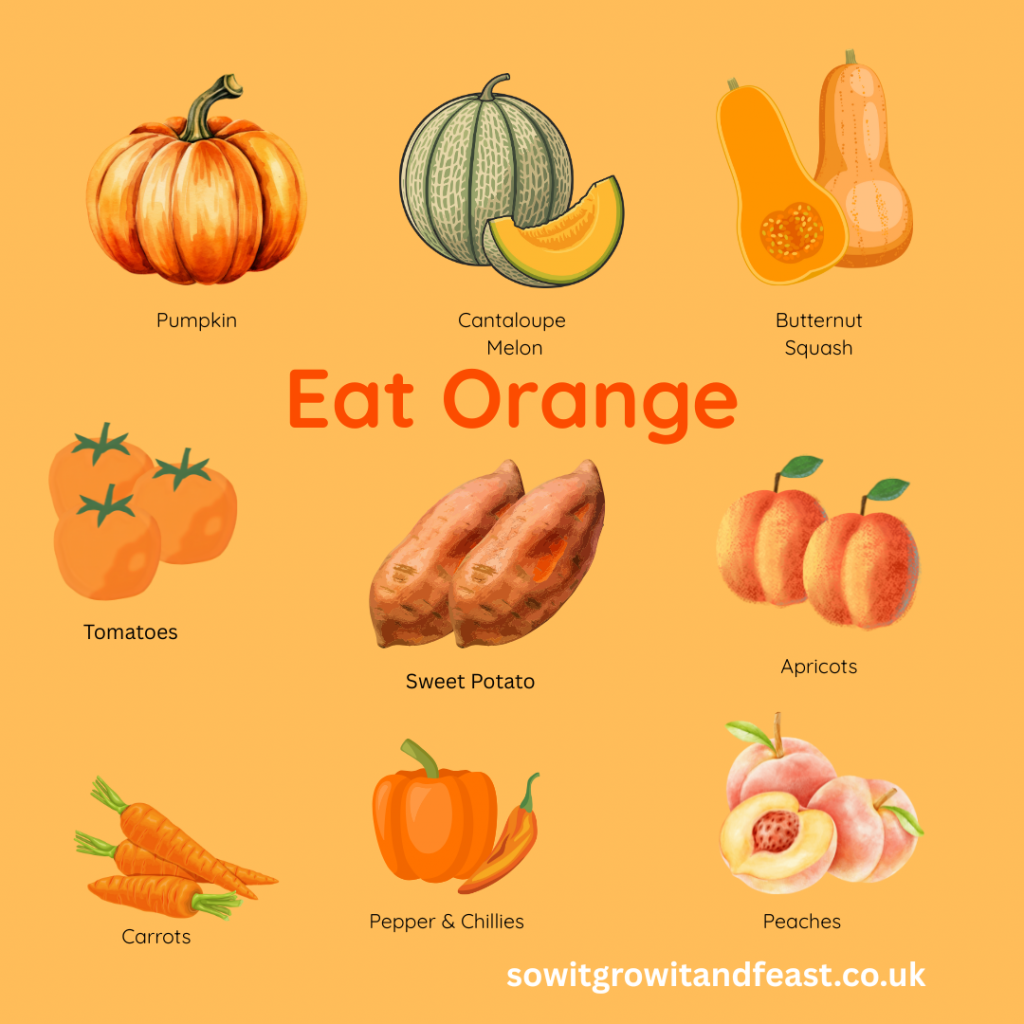
Why Are Some Fruits and Vegetables Orange?
That wonderful orange colour often comes from a family of plant pigments called carotenoids.
One of the best known is beta-carotene, found in foods including carrots, sweet potatoes, pumpkins and some squashes.
The body can convert beta-carotene into vitamin A, which has a number of normal functions in the body, including contributing to normal vision and immune function.
Other carotenoids include alpha-carotene, lutein and zeaxanthin.
But there’s no need to remember all their names before you’re allowed to eat a carrot.
The important thing is that different plants contain different mixtures of nutrients and plant compounds, which is one of the reasons eating plenty of different fruits and vegetables makes sense.
And growing different ones makes the vegetable garden considerably more interesting too.
Carrots
Let’s start with the obvious one.
Carrots are so closely associated with the colour orange that it’s easy to forget they also come in purple, yellow, red and white.
Orange carrots are particularly associated with beta-carotene. They also provide fibre and potassium, among other nutrients.
They’re also satisfying to grow.
Admittedly, pulling up a carrot can occasionally reveal something resembling a pair of trousers rather than a supermarket specimen.
But that’s part of the fun.
Sow it
Carrots are best sown directly into the soil because they don’t particularly enjoy being transplanted.
Sow little and often from spring onwards for a succession of roots rather than an enormous crop arriving all at once.
If your soil is heavy or stony, try growing carrots in containers filled with a finer growing medium.
Grow it
Keep the soil moist while seeds are germinating and avoid disturbing the foliage unnecessarily, as the scent can attract carrot root fly.
There are also resistant varieties and physical barriers available if carrot fly is a problem in your garden.
Feast
Eat young carrots raw, roast them, grate them into salads or add them to soups and stews.
Carrot tops can be used too, although their flavour is quite strong. Try a small amount chopped into a herby pesto rather than automatically putting all the foliage on the compost heap.
Pumpkins
Few vegetables announce the arrival of autumn quite like a pumpkin.
Technically a fruit, pumpkins are members of the squash family and range from enormous orange Halloween specimens to smaller varieties grown primarily for eating.
Their orange flesh contains carotenoids, including beta-carotene, as well as fibre and various vitamins and minerals.
But the best reason to grow an eating pumpkin is what happens when you bring it into the kitchen.
Sow it
Pumpkins need warmth, so sow seeds under cover in spring before planting outside after the risk of frost has passed.
Grow it
Give them fertile soil, plenty of water and room.
Lots of room.
A pumpkin plant can set off across a vegetable patch with the determination of someone who’s just remembered they’re late for a train.
Let the fruits mature fully on the plant and harvest them before the first serious frosts.
If properly cured, many varieties will store for months.
Feast
Roast pumpkin with herbs and garlic, make soup, add it to curries and risottos or turn it into purée.
Don’t automatically throw away the seeds either. Clean and roast them for a crunchy snack or topping.
One plant; plenty to eat.
Butternut Squash
Butternut squash has become such a familiar supermarket vegetable that it’s easy to forget you can grow it yourself.
Its deep golden-orange flesh contains beta-carotene as well as fibre, potassium and vitamin C.
It’s also an excellent crop for extending the home-grown season because properly ripened squash can be stored after harvesting.
Sow it
Start seeds somewhere warm in spring.
Grow it
Like pumpkins, butternut squash appreciate rich soil, warmth and plenty of water.
They also like to roam.
If space is limited, you can experiment with training some squash plants vertically over sturdy supports, although the developing fruits may need supporting.
Feast
Roast it, make soup, stir it through pasta or risotto, add it to curry or mash it with butter and black pepper.
A tray of roasted squash is also one of those useful things that can become several different meals over the following few days.
Orange Tomatoes
Tomatoes aren’t just red.
There are yellow, green, purple, almost black and beautifully orange varieties too.
Different tomato varieties contain different proportions of carotenoids and other plant compounds, alongside nutrients including vitamin C, potassium and folate.
But I grow unusual tomatoes primarily for something much simpler.
They taste good and look glorious together on a plate.
Sow it
Sow tomatoes indoors in late winter or early spring.
Grow it
Give them warmth, light, regular watering and feeding once the fruits begin developing.
Choose your variety according to where you’re going to grow it. Some tomatoes are happier in greenhouses while others perform well outdoors in a sunny, sheltered position.
Feast
Combine orange tomatoes with red and yellow varieties, tear over some basil and add olive oil.
That’s summer lunch sorted.
If you have a glut, roast them or turn them into sauce for the freezer.
Orange Peppers
Peppers begin green and many change colour as they ripen, depending on the variety.
Orange peppers are sweet, crisp and particularly useful in the kitchen. They’re a source of vitamin C and contain various carotenoids.
They’re also a lovely crop to grow if you have somewhere warm.
Sow it
Start peppers early indoors because they need a long growing season.
Germination is much better with warmth.
Grow it
A greenhouse is ideal, but peppers can also do well in pots in a sunny, sheltered spot.
Water consistently and feed plants once they’re fruiting.
Then be patient.
Watching a green pepper gradually turn orange is surprisingly satisfying.
Feast
Eat them raw, roast them, stuff them, add them to pasta sauces or chop them into salads.
Roasted peppers can also be frozen, which is handy when several decide to ripen at once.
Orange Chillies
Chillies are closely related to sweet peppers and come in an extraordinary range of shapes, colours and levels of heat.
Their heat comes from capsaicin, while orange varieties may also contain carotenoids responsible for their colour.
Sow it
Sow chillies early and give them warmth.
Some varieties can be slow to germinate, so don’t assume nothing is happening after a few days.
Grow it
Chillies grow beautifully in pots and can be surprisingly ornamental plants.
Give them sunshine and warmth and they’ll often keep producing well into autumn.
Feast
Use them fresh in curries, stir-fries and sauces.
If your plants produce more chillies than you know what to do with, freeze them whole or dry suitable varieties.
One productive chilli plant can supply a household for a surprisingly long time.
Especially if you accidentally chose a very hot one.
Sweet Potatoes
Sweet potatoes aren’t closely related to ordinary potatoes despite the name.
They’re a warm-climate crop and the orange-fleshed varieties are rich in beta-carotene. They also provide fibre, potassium and vitamin C.
Growing them in Britain is possible, although they need a long, warm growing season.
Grow it
Sweet potatoes are generally grown from young shoots called slips rather than from seed.
Give them your warmest, sunniest position. A greenhouse, polytunnel or large container in a sheltered spot can improve your chances.
Feast
Bake them, roast them, turn them into wedges, mash them or add them to soups and curries.
They’re naturally sweet, which also makes them surprisingly versatile.
Apricots
Apricots are one of those fruits that remind you just how much difference ripeness makes.
A ripe apricot picked from a tree is soft, fragrant and quite unlike many of the firm fruits we encounter in supermarkets.
Apricots contain carotenoids as well as fibre, potassium and vitamins including vitamin C.
Grow it
Growing apricots in Britain takes a little thought.
They flower early, which makes blossom vulnerable to frost, and they appreciate warmth and shelter.
A sunny south-facing wall can provide the sort of microclimate they enjoy.
If you’re gardening in a colder or exposed spot, they may be more of a challenge.
Feast
Eat perfectly ripe apricots fresh.
If you’re lucky enough to have a generous crop, they can also be poached, baked, turned into compote or made into jam.
Peaches
Peaches are another fruit that can be grown successfully in Britain if you give them the right conditions.
They contain fibre, vitamin C, potassium and various carotenoids and other plant compounds.
But again, flavour is the reason I’d make room for one.
Grow it
Peaches appreciate warmth and shelter, and training a tree against a sunny wall can work beautifully.
They flower early, so blossom may need protection from frost.
Growing under cover can also help with peach leaf curl, a common fungal problem.
Feast
A properly ripe peach needs very little assistance.
Eat it over the sink.
You’ll understand why.
If you’ve got more, grill them, poach them or add sliced peaches to salads and puddings.
Oranges and Mandarins
Oranges may be the most obvious orange food of all.
They provide vitamin C, folate, fibre and various plant compounds.
They’re not an obvious outdoor crop for most British gardens, but citrus trees can be grown in containers if they’re protected appropriately during colder weather.
Grow it
Citrus trees like plenty of light and will generally need winter protection in Britain.
Growing them in pots allows you to move plants between a sheltered outdoor summer position and suitable winter accommodation.
Don’t expect your home-grown oranges to replace supermarket bags any time soon.
That’s not really the point.
The first fruit you pick from your own citrus tree will feel ridiculously exciting anyway.
Feast
Eat oranges and mandarins as they are, add segments to salads or use the zest and juice in cooking and baking.
And use the zest before throwing away the peel.
There’s an extraordinary amount of flavour in it.
Melons
Orange-fleshed melons such as cantaloupe contain plenty of water as well as nutrients including vitamin C, potassium and carotenoids.
They like considerably more warmth than the average British summer reliably provides, but they’re certainly worth trying if you have a greenhouse or polytunnel.
Grow it
Start seeds in warmth and give plants the sunniest conditions you can.
Melons need consistent watering while growing, although conditions should not remain permanently soggy.
Feast
Chill them and eat them simply.
A ripe melon doesn’t require a recipe.
Turmeric and Ginger
These aren’t orange fruits or vegetables in quite the same sense as carrots and pumpkins, but they often find their way onto orange-food lists.
Turmeric contains the yellow-orange pigment curcumin, while ginger contains a range of aromatic compounds responsible for its characteristic flavour.
Both are used extensively in cooking.
They’ve also attracted enormous numbers of health claims online.
There’s interesting scientific research into compounds found in both plants, but that doesn’t mean adding a spoonful of turmeric to a smoothie will “detox” your liver or cure inflammation.
I prefer them for the reason cooks have valued them for centuries.
They taste good.
Both can also be fascinating plants to try growing somewhere warm, even if producing substantial rhizomes in the British climate can be challenging.
Grow an Orange Garden
If you’d like to grow some of the orange rainbow yourself, keep it simple.
You don’t need an allotment full of exotic crops.
Try:
Carrots + orange tomatoes + an orange pepper.
If you’ve got more room, add:
Pumpkin or butternut squash.
And if you have a greenhouse or particularly sheltered garden, perhaps experiment with:
Sweet potatoes, melons or even a citrus tree in a pot.
That’s the lovely thing about growing food.
There’s always something else to try.
Some things will thrive.
Some will sulk.
And occasionally something you’re absolutely convinced won’t work will surprise you.
What to Do With an Orange Harvest
Late summer and autumn can produce an impressive amount of orange food.
So think beyond tonight’s dinner.
Roast and freeze peppers.
Cure pumpkins and squash for winter storage.
Turn tomatoes into sauce.
Freeze chillies.
Make apricot or peach preserves.
Store suitable carrots.
And eat plenty while it’s fresh.
Preserving a harvest is satisfying, but don’t become so determined to save everything for later that you forget to enjoy it now.
Eat the Rainbow — But Grow It Too
There is good reason to eat a wide variety of fruit and vegetables.
Different plants provide different combinations of fibre, vitamins, minerals and naturally occurring plant compounds.
Orange fruits and vegetables are one colourful part of that bigger picture.
They don’t need to “detox” us.
They don’t need to transform our skin.
And we don’t need to assign each vegetable a particular health problem to solve.
A carrot can just be a carrot.
Preferably one you’ve pulled from the ground yourself, brushed off, taken into the kitchen and turned into something delicious.
Because that’s what Sow It Grow It and Feast is really about.
Grow good food. Enjoy growing it. And then feast on what you’ve grown.
Further Reading: Why You Should Eat More Purple, Why Eating Green Is Good For You, Eat the Rainbow: The Power of Red, Grow Your Own: Best Fruits for Your Garden, The Importance of Growing Your Own Food
Follow us on Instagram, Threads, BlueSky, Twitter, Pinterest & Facebook
Not sure where to start? Take a look at our Grow Your Own Packs with detailed step by step instructions, seeds and 1 years online support.