There comes a point every September when the tomato grower begins negotiating with the weather.
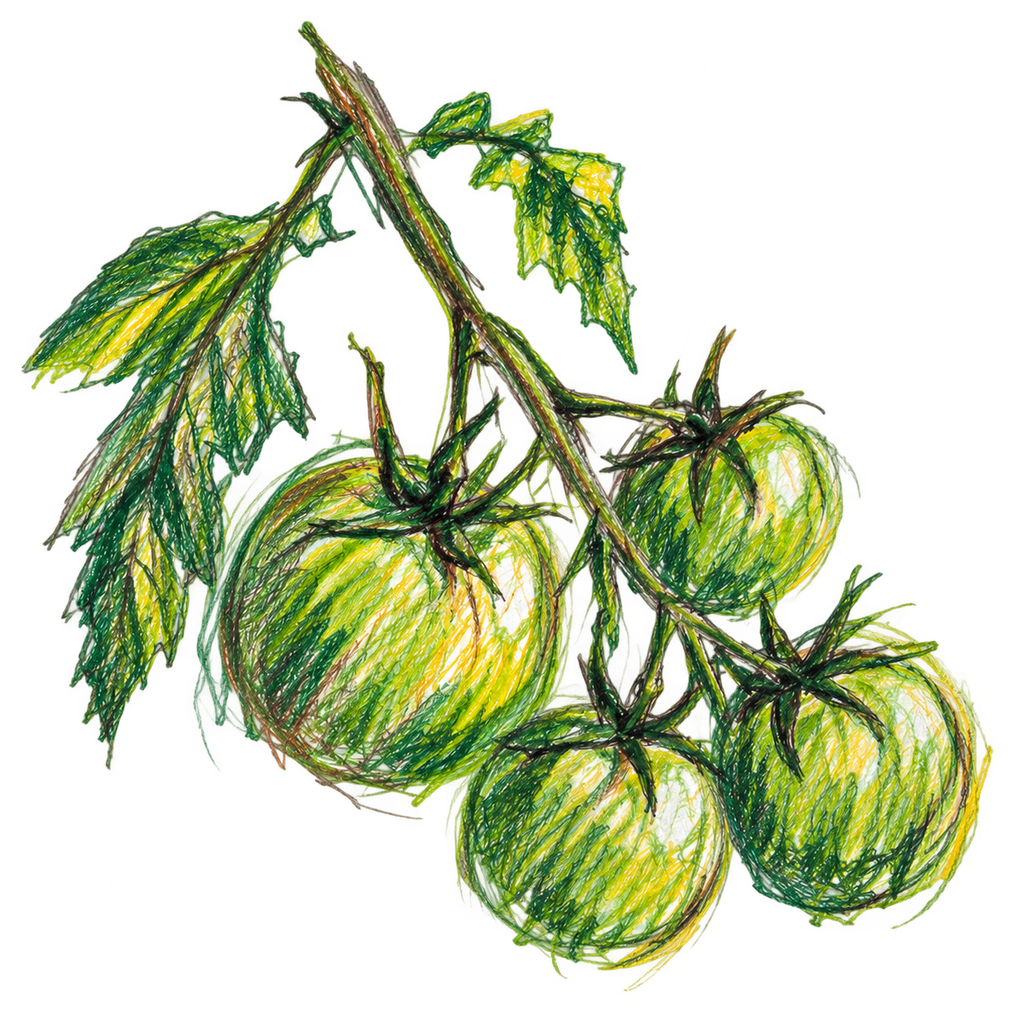
You stand beside the plants, lift a leaf or two and inspect the fruit beneath. There are plenty of tomatoes. Beautiful tomatoes, in fact. Plump, healthy and tantalisingly close to being ready.
There is just one problem.
They are green.
A few weeks earlier, this didn’t seem particularly worrying. August appeared to stretch endlessly ahead, the greenhouse was warm and the tomatoes had all the time in the world to ripen.
Then September arrived.
The mornings became cooler. The evenings began drawing in. The sun sat a little lower in the sky and suddenly those promising green fruits started looking rather less certain.
If this sounds familiar, don’t despair. A crop of green tomatoes at the end of summer is something most vegetable gardeners encounter sooner or later.
And it certainly doesn’t mean the crop has been wasted.
Why are my tomatoes not ripening?
Tomatoes are creatures of warmth.
During high summer, with long days and favourable temperatures, plants grow rapidly and fruit develops well. As we move towards autumn, cooler conditions and shorter days naturally begin to slow everything down.
Ripening isn’t simply about sunshine either. Temperature plays an important part, as does the maturity of the fruit itself.
That enormous beefsteak tomato may simply need considerably longer than the little cherry tomato growing beside it.
Watering and feeding can affect the quality and evenness of ripening too. Tomatoes dislike wildly fluctuating conditions, particularly being allowed to become very dry and then suddenly receiving a great deal of water.
By September, however, the main problem is often wonderfully simple.
Summer is running out before the tomatoes have finished.
Time to stop making more tomatoes
One of the stranger moments in the vegetable-growing year is when you deliberately stop encouraging a plant to grow.
All summer we nurture our tomatoes. We water them, feed them, support them and admire every new flower.
Then autumn approaches and we suddenly have to become rather more practical.
If a cordon tomato is still enthusiastically producing new growth and flowers late in the season, there comes a point when those flowers have very little chance of producing ripe fruit.
This is the moment to concentrate the plant’s efforts on the crop already there.
Remove new flowers that clearly have no realistic chance of producing a useful tomato before the end of the season. If necessary, pinch out the growing tip of cordon tomatoes too.
It can feel rather brutal.
But there is little advantage in asking a plant to produce another dozen tiny tomatoes when you already have twenty perfectly good ones waiting to ripen.
Sometimes good gardening is simply knowing when enough is enough.
Don’t strip away all the leaves
There is a temptation at this time of year to expose every tomato to the sun.
A leaf is in the way, so off it comes. Then another. Before long, what was once a tomato plant resembles a collection of stalks decorated with fruit.
A little tidying is useful.
Remove yellowing, damaged or diseased lower leaves, and foliage can be thinned where necessary to improve airflow and make the crop easier to manage.
But don’t go too far.
Leaves are still doing an important job for the plant, and excessive de-leafing can contribute to poor or uneven ripening.
Think of it as opening the curtains rather than taking the roof off.
Keep watering consistently
September can be deceptive.
There may be rain in the garden, while tomatoes growing beneath glass or in containers remain surprisingly dry.
Keep checking them.
Tomatoes carrying a crop still need water, but consistency matters. Allowing compost or soil to become very dry and then soaking it can encourage fruits to split.
And a split tomato in the damp conditions of early autumn can quickly become a rotten tomato.
Rather than watering automatically, put a finger into the compost or soil and see what is actually happening.
The plant will tell you far more than the calendar.
Should I leave green tomatoes on the plant?
If the plant is healthy and the weather remains reasonably warm, give them time.
September can still produce glorious spells of sunshine, and tomatoes may continue ripening perfectly happily, particularly in a greenhouse.
There is something immensely satisfying about watching the first hint of colour appear on a tomato you’ve been inspecting daily.
Green becomes pale yellow.
Pale yellow becomes orange.
And suddenly, after weeks of apparent inactivity, there is a ripe tomato waiting for breakfast.
But eventually patience turns into wishful thinking.
As temperatures fall and the risk of frost increases, it is better to harvest suitable green tomatoes and bring them indoors than risk losing the crop outside.
Which green tomatoes will ripen indoors?
This is where it helps to look carefully at the fruit.
Not every green tomato is at the same stage of development.
A tomato that has reached, or almost reached, its expected full size and has changed from a hard, dark green to a paler green has a much better chance of ripening successfully indoors.
Very small, hard, immature tomatoes are far less likely to ripen properly once picked.
So don’t judge them simply by colour.
Judge them by maturity.
If they look like proper tomatoes that simply haven’t changed colour yet, they are good candidates for bringing indoors.
How to ripen green tomatoes indoors
You don’t need a greenhouse, elaborate equipment or even a particularly sunny windowsill.
In fact, tomatoes don’t require sunlight to ripen once they have reached the appropriate stage of maturity.
What they need is suitable warmth.
Pick sound, mature green tomatoes and inspect them carefully. Any fruit that is split, bruised, damaged or showing signs of disease should be separated from the rest.
Then place the healthy tomatoes somewhere indoors at a comfortable room temperature.
A cardboard box, paper bag or tray can all work perfectly well.
Check them regularly.
Some will begin changing colour remarkably quickly. Others will take their time.
And inevitably there will be one that decides to rot while you’re not looking.
There always is.
Which is why regular inspection matters.
And yes, you can add a banana
It sounds like one of those gardening tales that ought to begin with somebody’s grandfather and end with a mysterious concoction involving washing-up liquid.
But putting a ripe banana alongside green tomatoes really can help.
The reason is ethylene.
Ethylene is a naturally occurring plant hormone involved in fruit ripening. Bananas release ethylene as they ripen, as do ripe tomatoes and several other fruits.
Put a ripe banana with mature green tomatoes in a paper bag or box and the increased concentration of ethylene can encourage the tomatoes to ripen.
You can use a ripe tomato instead if you have one.
Just remember to check everything regularly.
The aim is beautifully ripened tomatoes, not an interesting biology experiment at the back of the cupboard.
Don’t rely on the sunny windowsill
Generations of us have lined green tomatoes along windowsills in autumn.
It looks rather lovely.
And, given suitable temperatures, those tomatoes may well ripen.
But it isn’t the sunshine doing the important work.
Tomatoes can ripen perfectly well in the dark. Warmth and the fruit’s stage of maturity matter much more than placing it in direct sunlight.
So if every windowsill in the house is already occupied by houseplants, there is no need to start an eviction programme.
Your tomatoes can go somewhere else.
What about tomatoes affected by blight?
This is one occasion when a little more caution is needed.
Tomato blight thrives in warm, wet conditions and can spread rapidly through foliage, stems and fruit.
If a plant has become badly affected, green tomatoes that appear healthy may already be infected.
Bringing a large quantity indoors and storing them together in the hope that they will ripen can therefore result in disappointing losses as apparently healthy fruits begin to rot.
If blight has seriously affected your plants, inspect the crop very carefully and consider using suitable unripe fruits promptly rather than attempting to store them for long periods.
Green tomato chutney suddenly starts looking very appealing.
When green tomatoes should stay green
There is another solution to the problem of a tomato that refuses to turn red.
Stop asking it to.
We become so accustomed to thinking of a ripe tomato as red, orange or yellow that a green one can feel unfinished.
But green tomatoes have a character of their own.
They are firmer, sharper and less sweet than ripe tomatoes, which makes them particularly useful for preserving and cooking.
And this is where the final tomato harvest can become one of the most enjoyable parts of the season.
The annual green tomato chutney
There is something reassuringly traditional about green tomato chutney.
Perhaps it is because chutney belongs to a kind of kitchen gardening in which very little is wasted.
A basket of tomatoes that appeared stubbornly uncooperative outside can be transformed with onions, apples, vinegar, sugar and spices into jars destined for the winter pantry.
The smell fills the kitchen.
The windows steam.
And what looked like the final disappointment of the tomato season suddenly becomes something you’ll be rather pleased to find beside a good piece of cheese in January.
That is one of the great pleasures of growing food.
A harvest doesn’t have to look exactly as you expected for it to be useful.
Green tomatoes aren’t a failure
I think this is worth remembering.
Vegetable gardening has become rather dominated by photographs of perfection.
Perfectly straight carrots.
Enormous pumpkins.
Baskets overflowing with flawless tomatoes.
Real vegetable gardens aren’t quite like that.
There are carrots with two legs, courgettes that hide until they’re the size of cricket bats and tomatoes that remain stubbornly green while the gardener watches the weather forecast with increasing suspicion.
That’s part of it.
Growing your own food isn’t about recreating the supermarket in the back garden.
It’s about learning to work with seasons.
And seasons don’t always behave themselves.
What can this year’s tomatoes teach you?
Before pulling up the plants and putting the supports away, take a moment to think about the season.
Which varieties ripened first?
Which produced the best flavour?
Which struggled?
Did the tomatoes outside perform differently from those under cover?
Were the little cherry tomatoes producing bowls of fruit while your enormous beefsteaks were still considering whether to change colour?
These observations are enormously useful.
If outdoor tomatoes regularly struggle to ripen where you live, choosing earlier or smaller-fruited varieties next year may help. Cherry tomatoes often reach maturity more quickly than much larger-fruited types.
Perhaps you’ll grow fewer plants but give them more space.
Perhaps you’ll try another variety.
Perhaps you’ll finally put up that greenhouse you’ve been thinking about for the past five years.
Every vegetable-growing season leaves notes for the next one.
Sometimes literally, if you’re anything like me.
The last tomatoes of summer
There is something rather lovely about the final tomato harvest.
The vegetable garden has changed by then.
The exuberance of June and July has gone. Bean leaves are yellowing, courgettes have finally slowed down and pumpkins are sitting heavily amongst their fading foliage.
The light is softer.
The mornings smell different.
Autumn is quietly taking possession of the garden.
And amongst it all are those final tomatoes.
Some will ripen outside.
Some will come into the kitchen and gradually change colour in a box.
A few will sit beside a banana.
Others will become chutney, relish or sauce.
But none of them need feel like a disappointment.
Because perhaps the best lesson of the September vegetable garden is that growing food isn’t about forcing the garden to give us exactly what we expected.
It’s about noticing what it has given us – and making something delicious from it.
Even when it’s green.
Further Reading: Grow Your Own Food: Save Money & Eat Well, How to Keep Your Vegetable Garden Productive into Autumn, What to Sow in September: Vegetables, Salads & Herbs, Runner Bean Chutney: A Taste of the September Garden, How to Store Potatoes for Winter
Follow us on Instagram, Threads, BlueSky, Twitter, Pinterest & Facebook
Not sure where to start? Take a look at our Grow Your Own Packs with detailed step by step instructions, seeds and 1 years online support.