Eat the Rainbow: The Power of Red

Unlock the vibrant power of red fruits and vegetables. From juicy strawberries to earthy beetroots, these colourful foods are packed with nutrients that can boost your energy, support your health, and add a splash of colour to your plate. Discover the many benefits of eating red and learn how to easily add more of these delicious foods to your diet.

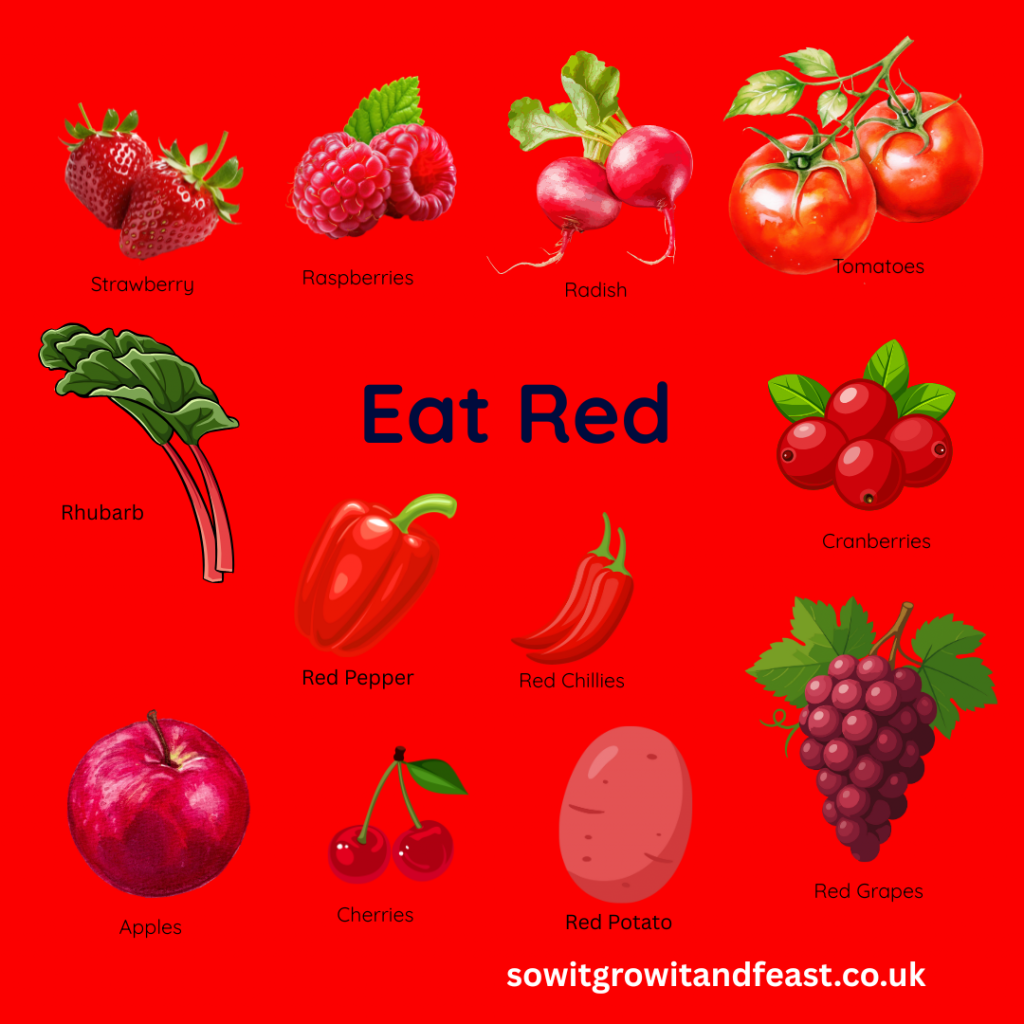
Eat Red.
Strawberries, raspberries, radish, tomatoes, rhubarb, red pepper. red chillies, cranberries, Apples, Cherries, Red potatoes, Red grapes.

Eating a variety of colourful fruits and vegetables is one of the simplest ways to support your overall health. Each colour group offers a unique set of vitamins, minerals, and powerful plant compounds called phytonutrients. Red foods, in particular, are celebrated for their rich concentration of antioxidants like lycopene and anthocyanins. These compounds are responsible for their brilliant red hues and offer a wide range of health benefits, from protecting your heart to keeping your skin glowing.

This guide will explore the specific advantages of incorporating red produce into your meals. We will look at which foods can help with everything from boosting your iron levels to supporting brain health. Get ready to explore the delicious and nutritious world of red fruits and vegetables.

Why You Should Eat Red

Red fruits and vegetables owe their colour to powerful antioxidants. These compounds help protect your body’s cells from damage caused by harmful molecules known as free radicals. By including more red in your diet, you are equipping your body with the tools it needs to thrive. Let’s look at the specific benefits these foods can offer.

For Energy and Iron

Feeling tired? Some red foods can provide a much-needed lift.

  • Beetroot: This earthy root vegetable is a great source of natural nitrates, which can improve blood flow and oxygen delivery throughout your body. The result is increased stamina and better energy levels. Beetroot also contains a good amount of iron, which is essential for carrying oxygen in the blood and preventing fatigue.
  • Red Peppers: A single red pepper contains more than 150% of your recommended daily intake of vitamin C. This vitamin is crucial for absorbing iron from plant-based sources, making red peppers a great partner for iron-rich foods like spinach and lentils.

For Liver Support and Detox

Your liver works hard to filter toxins from your body, and certain red foods can help it function optimally.

  • Cranberries: Known for supporting urinary tract health, cranberries are also packed with antioxidants called proanthocyanidins. These compounds can help protect the liver from damage and support its natural detoxification processes.
  • Radishes: These peppery vegetables help the liver and gallbladder cleanse and detoxify. They are also high in sulphur, which assists in bile production—a key component of digestion and detoxification.

For Brain Health

Keeping your mind sharp is essential at every stage of life, and the antioxidants in red fruits can play a supportive role.

  • Strawberries & Cherries: Both are rich in anthocyanins, which have been shown to improve cognitive function and may help delay age-related memory decline. These delicious fruits protect brain cells from oxidative stress, helping to keep your mind clear and focused.

For Healthy Skin

Want a natural glow? Look no further than your fruit bowl.

  • Tomatoes: A fantastic source of lycopene, tomatoes help protect your skin from sun damage. Cooking tomatoes actually increases the availability of lycopene, so enjoy them in sauces and soups.
  • Watermelon: Not only is it hydrating, but watermelon is also rich in lycopene and vitamin C. This combination helps protect skin cells and supports collagen production, keeping your skin firm and youthful.

For Inflammation Relief

Chronic inflammation is linked to many health issues. Red fruits and vegetables can help keep it in check.

  • Cherries: Both sweet and tart cherries are renowned for their anti-inflammatory properties. They can help reduce muscle soreness after exercise and may alleviate symptoms of arthritis and gout.
  • Pomegranates: The potent antioxidants in pomegranates, particularly punicalagins, have powerful anti-inflammatory effects throughout the body.

For Electrolyte Balance and Internal Cleansing

Staying hydrated and maintaining electrolyte balance is crucial, especially during exercise or hot weather.

  • Watermelon: As its name suggests, watermelon is over 90% water and is a great source of the electrolyte potassium, which helps regulate fluid balance.
  • Tomatoes: Also rich in potassium, tomatoes can help you stay hydrated and support proper nerve and muscle function. Their high water content also aids in flushing out toxins.

For Beating Bloat and Regulating Blood Sugar

Some red foods can aid digestion and help maintain stable energy levels.

  • Raspberries: High in fibre and low in sugar, raspberries help regulate digestion and prevent bloating. Their fibre content also slows sugar absorption, preventing sharp spikes and crashes in blood glucose.
  • Red Apples: The soluble fibre in apples, called pectin, acts as a prebiotic, feeding the good bacteria in your gut. A healthy gut microbiome is key to reducing bloating and improving overall digestive health.

For Calcium and Bone Health

While dairy is famous for calcium, some red plants offer support for strong bones too.

  • Rhubarb: This tart vegetable contains a good amount of vitamin K, which is essential for directing calcium to your bones and teeth. Just be sure to cook rhubarb and avoid the leaves, which are toxic.

Get Started with Red

Adding more red foods to your diet is simple and delicious. Start your day with a bowl of oatmeal topped with raspberries and strawberries, enjoy a tomato and red pepper salad for lunch, and finish with a hearty beetroot and lentil soup for dinner.

By making a conscious effort to eat a variety of red fruits and vegetables, you can enjoy a wealth of health benefits.

Further Reading: Why Orange Foods Deserve a Place on Your Plate, Why Eating Green Is Good For You, Why You Should Eat More Purple

Grow Your Own: Best Fruits for Your Garden, The Importance of Growing Your Own Food

Why Orange Foods Deserve a Place on Your Plate

Have you ever noticed how orange foods seem to radiate warmth and vitality? From the bright glow of carrots to the sunny sweetness of oranges, these vibrant foods do more than just brighten your plate. They’re packed with essential nutrients that can transform your health from the inside out.

Orange fruits and vegetables get their distinctive colour from powerful compounds called carotenoids, particularly beta-carotene. These natural pigments act as antioxidants in your body, protecting your cells from damage while providing a host of health benefits. When you add more orange to your meals, you’re giving your body access to vitamins, minerals and plant compounds that support everything from your immune system to your skin health.

Let’s explore the remarkable ways orange foods can boost your wellbeing and discover which varieties pack the biggest nutritional punch.

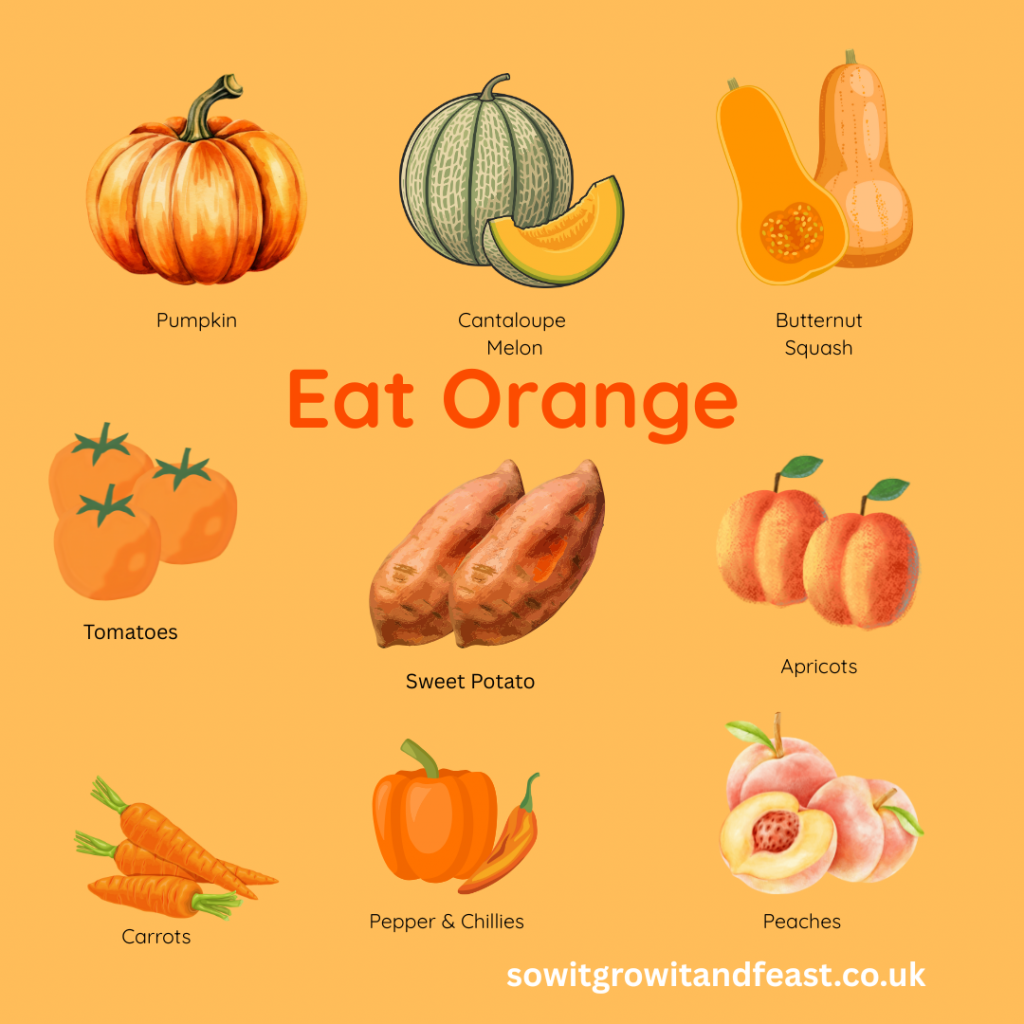
Eat Orange.
Pumpkin, Melon, Butternut Squash, Tomatoes, Sweet Potato, Apricots, Carrots, Pepper, Chillies, Peaches

The Science Behind Orange Foods

What makes orange produce so nutritionally valuable? The answer lies in their rich carotenoid content. Beta-carotene, the most well-known of these compounds, converts to vitamin A in your body—a nutrient essential for vision, immune function and cell growth.

Orange foods also tend to be excellent sources of vitamin C, folate, potassium, and dietary fibre. This combination of nutrients works together to support multiple body systems, making these colourful foods some of the most efficient ways to meet your daily nutritional needs.

Fuel Your Energy Naturally

Feeling sluggish by mid-afternoon? Orange foods can provide the sustained energy your body craves.

Sweet Potatoes are complex carbohydrate powerhouses that release energy slowly into your bloodstream. Unlike sugary snacks that cause energy spikes and crashes, a baked sweet potato provides steady fuel for hours. They’re also rich in B vitamins, which help your body convert food into usable energy.

Oranges and Mandarins offer natural sugars paired with fibre, creating a perfect energy-boosting snack. The vitamin C content also helps your body absorb iron more effectively, combating fatigue at its source.

Butternut Squash delivers complex carbohydrates alongside magnesium, a mineral that plays a crucial role in energy production within your cells.

Boost Your Iron Absorption

Iron deficiency is surprisingly common, especially among women. Orange foods can help your body make the most of the iron in your diet.

Peppers (particularly the orange and yellow varieties) are vitamin C champions. Just half a cup provides more vitamin C than you need in an entire day. Pair them with iron-rich foods like spinach or lentils to dramatically increase iron absorption.

Papaya contains both vitamin C and folate, nutrients that work together to support healthy red blood cell production and prevent anaemia.

Support Your Liver and Natural Detox

Your liver processes everything you eat and drink, working tirelessly to filter toxins from your system. Orange foods provide targeted support for this vital organ.

Carrots contain compounds that stimulate bile production, helping your liver break down fats more efficiently. The beta-carotene also protects liver cells from damage caused by toxins and free radicals.

Turmeric (fresh turmeric root has a beautiful orange colour) contains curcumin, a compound that supports liver detoxification pathways and may help protect against liver damage.

Orange-fleshed Melons like cantaloupe are high in water content and potassium, helping to flush toxins through your kidneys while supporting overall hydration.

Enhance Your Brain Health

Your brain needs specific nutrients to function at its best and orange foods deliver several brain-boosting compounds.

Sweet Potatoes provide steady glucose to fuel your brain, along with choline, which supports memory and cognitive function. The complex carbohydrates help maintain focus throughout the day without the mental fog that comes from blood sugar fluctuations.

Orange-coloured Squashes contain folate, which plays a crucial role in neurotransmitter production. Adequate folate intake is linked to better mood regulation and cognitive performance.

Persimmons (when in season) offer unique antioxidants that may help protect brain cells from age-related damage.

Achieve Radiant, Healthy Skin

Want to glow from within? Orange foods provide the building blocks for healthy, vibrant skin.

Carrots are perhaps the most famous skin-supporting food, and for good reason. Beta-carotene acts as a natural sunscreen from the inside out, helping protect your skin from UV damage. Regular consumption can give your skin a subtle, healthy-looking glow.

Apricots (fresh or dried) provide vitamin A, which promotes cell turnover and helps maintain smooth, youthful-looking skin. They also contain vitamin E, which works alongside vitamin A to protect skin from environmental damage.

Orange Bell Peppers deliver vitamin C essential for collagen production, keeping your skin firm and elastic.

Fight Inflammation Throughout Your Body

Chronic inflammation contributes to numerous health problems, from joint pain to heart disease. Orange foods provide natural anti-inflammatory compounds.

Pumpkin contains alpha and beta-carotene, which have been shown to reduce inflammatory markers in the body. The seeds are also rich in zinc, which supports immune function and wound healing.

Ginger (fresh ginger has orange undertones) contains gingerol, a powerful anti-inflammatory compound that may help reduce muscle soreness and joint pain.

Oranges themselves provide flavonoids like hesperidin, which has anti-inflammatory properties and may help lower blood pressure.

Support Electrolyte Balance

Proper hydration isn’t just about water—you need electrolytes to maintain fluid balance and support muscle function.

Cantaloupe is exceptionally high in potassium, an electrolyte that works with sodium to regulate fluid balance. It’s also about 90% water, making it an excellent choice for hydration.

Orange Juice (in moderation) provides potassium and natural sugars that can help replenish electrolytes after exercise. Choose fresh-squeezed varieties without added sugars.

Promote Internal Cleansing and Beat Bloating

Digestive comfort affects how you feel throughout the day. Several orange foods can help keep your digestive system running smoothly.

Papaya contains papain, an enzyme that helps break down proteins and may reduce bloating after meals. The high water and fibre content also promote regular bowel movements.

Sweet Potatoes provide both soluble and insoluble fibre, feeding beneficial gut bacteria while promoting regularity.

Carrots offer gentle fibre that supports healthy digestion without causing gas or discomfort for most people.

Help Regulate Blood Sugar

Maintaining stable blood sugar levels is crucial for sustained energy and overall health.

Pumpkin has a relatively low glycaemic index despite its natural sweetness. The fibre content helps slow sugar absorption, preventing blood sugar spikes.

Sweet Potatoes release their natural sugars slowly, thanks to their complex carbohydrate structure. This makes them a better choice than regular potatoes for blood sugar management.

Strengthen Your Bones with Natural Calcium

While not the highest sources, some orange foods contribute to your daily calcium needs.

Dried Apricots provide calcium along with other bone-supporting nutrients like potassium and magnesium. They’re also rich in vitamin K, which helps your body use calcium effectively.

Orange-coloured Leafy Greens like certain varieties of chard contain calcium, magnesium, and vitamin K—all essential for bone health.

Start Adding More Orange to Your Plate

Transform your health by embracing the vibrant world of orange foods. Start small by adding one new orange fruit or vegetable to your weekly shopping list. Try roasting butternut squash as a side dish, blending carrots into a smoothie, or snacking on fresh orange segments.

Consider preparing a colourful autumn salad with roasted sweet potato, or experiment with adding turmeric to your morning smoothie. Each orange food you include brings unique benefits, so variety is key to maximising your nutritional intake.

These sunshine-coloured gems and experience the energy, vitality, and wellness they can bring to your daily life. Your body will thank you for every vibrant, nutritious bite.

Further Reading: Why You Should Eat More Purple, Why Eating Green Is Good For You, Eat the Rainbow: The Power of Red

Grow Your Own: Best Fruits for Your Garden, The Importance of Growing Your Own Food

All About Onions

Onions are a true kitchen staple, adding a foundational flavour to countless dishes around the world. But have you ever experienced the crisp, pungent taste of one pulled straight from your own garden? Growing your own onions is a deeply rewarding process, and with a little guidance, it’s something any gardener can achieve.

A Brief History of the Humble Onion

The onion, known botanically as Allium cepa, is one of the oldest cultivated vegetables in the world. It belongs to the same plant family as garlic, leeks, chives and shallots. While its exact wild origins are uncertain, botanists believe it likely originated in Central Asia. Archaeological and written records suggest that onions were being cultivated in ancient Egypt as far back as 3500 BC. They were not just food; they were worshipped for their spherical shape and concentric rings, which were thought to symbolise eternal life.

From ancient civilisations to medieval kitchens and modern-day allotments, the onion has remained a constant. Its ability to be stored for long periods made it an essential crop, providing vital nutrition and flavour when other fresh produce was scarce. Today, it’s hard to imagine a cuisine that doesn’t rely on the onion’s unique ability to build a rich and savoury base.

Onion Varieties for Your Garden

When you decide to grow onions, you’ll find there are many varieties to choose from. They are typically categorised by colour—red, white and yellow (or brown)—and can be grown either from seeds or from “sets,” which are small, immature bulbs. For beginner gardeners, starting with sets is often the easiest and most reliable method.

Here are some excellent varieties that perform well in the UK climate:

Yellow/Brown Onions

These are the classic all-rounders, perfect for cooking. They have a strong flavour that mellows beautifully when sautéed, roasted, or caramelised.

  • ‘Sturon’: A very popular and reliable variety. It produces firm, globe-shaped bulbs with golden-brown skin and stores exceptionally well. It’s a great choice for a main crop.
  • ‘Setton’: An improved version of ‘Sturon’, offering even better yields and excellent storage potential. It has good resistance to bolting (flowering prematurely).
  • ‘Stuttgart Giant’: A traditional favourite that produces large, slightly flattened bulbs. It’s known for its mild flavour and is good for both cooking and slicing raw into salads.

Red Onions

Known for their vibrant colour and milder, sweeter taste, red onions are wonderful in salads, salsas, and sandwiches. They also add a lovely colour to cooked dishes.

  • ‘Red Baron’: This is one of the most reliable red onion varieties for the UK. It produces deep red, globe-shaped bulbs with a crisp texture and good flavour. It also stores well for a red onion.
  • ‘Electric’: A fast-maturing variety that produces flat-topped, vivid red bulbs. It’s best used relatively quickly after harvesting as it doesn’t store as long as other types.

White Onions

White onions have a sharper, more pungent flavour when raw but become sweet when cooked. They are a staple in many Mexican dishes.

  • ‘Snowball’: A classic white onion that produces round, pure-white bulbs. It has a mild flavour and is best used fresh from the garden, as it has a shorter storage life.

How to Grow Onions

Growing onions is a straightforward process. You can start them from seed for a cheaper but more labour-intensive option, or from sets for an easier, quicker crop. We’ll focus on growing from sets, as it’s the most common method in the UK.

When and Where to Plant

  • Autumn Planting: Some hardy varieties, like ‘Radar’ and ‘Electric’, can be planted in September or October. This gives them a head start, resulting in an earlier harvest the following summer.
  • Spring Planting: The main planting season for onion sets is from March to April, once the soil has warmed up and is workable.

Onions need a sunny, open spot with well-drained soil. They do not thrive in heavy, waterlogged clay. Before planting, prepare the bed by removing any weeds and stones. Dig in some well-rotted organic matter, like compost, to improve soil structure and fertility. A week or two before planting, rake in a general-purpose fertiliser. Onions prefer a soil pH between 6.0 and 7.0.

How to Plant Onion Sets

Planting your sets is simple. Follow these steps for success:

  1. Prepare the Sets: Gently separate the small bulbs.
  2. Mark Your Rows: Use a string line to create straight rows. This makes weeding much easier later on. Space your rows about 25-30cm (10-12 inches) apart.
  3. Plant the Bulbs: Push each set into the soil so that just the very tip is showing above the surface. If your soil is firm, you may need to use a trowel to make a small hole for each one.
  4. Spacing: Space the sets about 10-15cm (4-6 inches) apart within the row. This gives them enough room to swell into full-sized bulbs.

Birds can sometimes be a problem, as they may pull the newly planted sets out of the ground. Covering the bed with horticultural fleece or netting for a few weeks until the roots are established can prevent this.

Caring for Your Onion Crop

Once planted, onions are relatively low-maintenance, but a little care will ensure a healthy, heavy crop.

Watering

Water your onions regularly, especially during dry spells. The soil should be kept consistently moist but not waterlogged. When the bulbs start to swell, consistent watering is crucial. Stop watering completely once the onions are fully grown and the foliage starts to turn yellow and fall over, as this helps them to mature and prepare for storage.

Weeding

It is very important to keep your onion patch weed-free. Onions have shallow roots and do not compete well with weeds for water and nutrients. Weed carefully by hand or with a hoe, taking care not to damage the delicate onion bulbs just below the surface.

Feeding

If you prepared the soil well before planting, your onions may not need additional feeding. However, if growth seems slow, you can give them a boost in early summer with a high-nitrogen liquid feed, like a sulphate of ammonia fertiliser. Avoid feeding them after mid-summer, as this can encourage soft growth that won’t store well.

Pests and Diseases

Onions are generally robust, but there are a few issues to watch out for:

  • Onion White Rot: This is a serious fungal disease that causes the leaves to turn yellow and wilt, and a white, fluffy mould appears on the base of the bulb. There is no chemical cure, and the fungus can remain in the soil for many years. If you find it, you must remove and destroy affected plants and avoid growing onions, leeks, or garlic in that spot for at least eight years.
  • Leek Rust: This appears as bright orange pustules on the leaves. It’s more common in wet weather. While it looks alarming, it rarely affects the bulb’s development. Ensure good air circulation and avoid overcrowding to reduce the risk.
  • Onion Fly: The larvae of this fly burrow into the bulbs, causing them to rot. You can protect your crop by covering it with insect-proof mesh from May onwards.

Harvesting and Storing Your Onions

Your onions will tell you when they are ready for harvesting. The leafy tops will start to turn yellow and flop over. This usually happens in late summer, from August to September.

How to Harvest

On a dry day, gently lift the bulbs from the soil using a garden fork. Be careful not to spear them! You can leave them on the surface of the soil for a day or two to dry in the sun, but bring them under cover if rain is forecast.

How to Dry and Cure Onions

Properly drying, or “curing,” your onions is the secret to making them last for months.

  1. Find a Dry Space: Lay the onions out in a single layer on racks or trays. An airy greenhouse, a sunny conservatory, or a well-ventilated shed is ideal. Make sure they are not touching, as this allows air to circulate freely.
  2. Let Them Cure: Leave them to dry for two to three weeks, or until the foliage is dry and papery and the outer skins are crisp.
  3. Prepare for Storage: Once cured, you can trim the roots off the bottom of the bulb and shorten the dried tops. You can either cut the tops down to about 2.5cm (1 inch) or leave them long if you plan to create a traditional onion plait.

How to Store Onions

Store your cured onions in a cool, dry, and dark place. Net bags, old tights, or plaited strings hung from the ceiling are perfect as they allow for good air circulation. Avoid storing them in plastic bags, as this will cause them to rot. Do not store them with potatoes, as onions release ethylene gas which can cause potatoes to sprout prematurely.

Properly stored, maincrop varieties like ‘Sturon’ and ‘Red Baron’ can last well into the following spring.

Using Your Home-Grown Onions

There is nothing more satisfying than cooking with produce you have grown yourself. The flavour of a freshly harvested onion is often more intense and vibrant than anything you can buy. Here are a few simple recipe ideas to make the most of your crop:

  • Classic French Onion Soup: The ultimate celebration of the onion. Slowly caramelise thinly sliced onions for at least 40 minutes until they are deeply brown and sweet, then simmer in a rich beef broth. Top with a crusty slice of bread and melted Gruyère cheese.
  • Caramelised Onion Tart: A simple yet elegant dish. Spread deeply caramelised onions over a sheet of puff pastry, crumble over some goat’s cheese or feta, and bake until golden.
  • Simple Onion Bhajis: Mix thinly sliced onions with a spiced gram flour batter and fry in small spoonfuls until crisp and golden brown. A perfect snack or starter.
  • Roasted Onions: Peel and halve your onions, toss them with olive oil, salt, and a sprig of thyme, and roast them in a hot oven until tender and sweet.

Your Garden, Your Kitchen

Growing onions is a journey that connects you to the food you eat. From the simple act of pushing a small set into the soil to the satisfaction of plaiting your cured crop for winter storage, it’s a process that is both grounding and fulfilling. You can bring a fundamental ingredient from your garden straight to your plate, adding flavour and nourishment to your meals. We hope this guide has encouraged you to give it a try.

Further Reading: Your Complete Guide to Growing Garlic, All About Pumpkins, What to Do in Your Vegetable Garden in September

Why Growing Your Own Food Has Never Been More Important

With the rising cost of living, an unpredictable economy, and increasing awareness of our environmental impact, growing your own food has evolved from a pastoral pastime into a smart, forward-thinking lifestyle choice. Whether you live in a city flat or a suburban home with a garden, cultivating your own fruits, vegetables and herbs offers numerous benefits—not just for your wallet but also for your health, taste buds and the planet.

Here’s why taking up this simple yet rewarding activity has never been more crucial.

Ornate Picture Frame with  Family Growing their own food on balcony in urban setting

Trust the Source of Your Food

One of the most compelling reasons to grow your own food is knowing exactly where it comes from. No labels to scrutinise, no doubt about pesticides or farming practices—you are in complete control. With so many news stories about contaminated or mislabeled food, growing your own ensures safety and transparency.

Even more importantly, homegrown produce allows you to savour the satisfaction of nurturing something from soil to plate. It builds a direct connection between you and what you eat, fostering trust in the most fundamental way.


Save Money in Uncertain Times

Prices are soaring in supermarkets, and many families are struggling to keep fresh fruit and veg in their weekly shopping. Growing your own food isn’t just a joyful activity—it’s also incredibly economical.

An investment in Sow It, Grow It and Feast can yield a season’s worth of tomatoes, courgettes, or runner beans. Once you get going, you’ll be amazed at how much you can grow with minimal effort—and how much money you’ll save on less fresh store-bought produce. Plus, with the volatile economy, harvesting your own food offers stability against fluctuating prices.


Discover the Unmatched Taste of Fresh Produce

Have you ever bitten into a strawberry straight from the vine? Or pulled a carrot from the soil and eaten it less than an hour later? The difference in flavour is extraordinary. When food travels from your back garden to your kitchen in mere minutes instead of days or weeks, it’s packed with its natural aroma, taste and nutrients.

Supermarket produce, no matter how fresh it looks, often sacrifices flavour for durability and shelf life. By growing your own, you rediscover what vegetables and fruits are truly supposed to taste like—rich, vibrant and full of life.


A Healthy Hobby for Body and Mind

Gardening provides the perfect antidote to our increasingly sedentary, screen-heavy lives. The act of planting, tending, and harvesting your crops keeps you active and gets you outdoors, soaking up some much-needed vitamin D.

It’s also well-documented that gardening can improve mental health. The soothing act of working with soil, combined with the sense of achievement as your plants flourish, can reduce stress and anxiety while providing a deep sense of purpose. And when you involve the whole family, it’s a fun, healthy activity everyone can enjoy together.


Make a Sustainable Impact

Did you know that much of the fruit and vegetables in UK supermarkets travel thousands of miles to reach our shelves? Shipping food across the globe increases carbon emissions and contributes to climate change.

Growing your own food cuts out this environmental cost entirely. You’re producing seasonally appropriate, local food with zero packaging and minimal waste. By taking this small step, you’re contributing to a more sustainable future and fostering a positive relationship with the planet.


Take Control During an Unpredictable Economy

With the economy in flux, food supply chains have been disrupted globally, pushing prices even higher. Growing even a small portion of your own food not only offsets these rising costs but also gives you a sense of control in turbulent times.

Stock your garden with essentials like lettuce, spinach and potatoes, or try window-box gardening in urban settings. Regardless of where you live, every little bit helps in creating a safety net against volatile prices.


Get Started Today

Growing your own food isn’t just an activity—it’s a lifestyle change that promotes sustainability, health, and financial wellbeing. It’s a simple yet powerful way to take control of your food supply while enjoying the satisfaction of something you’ve created with your own hands.

Whether you’re a family looking to reduce costs, a home cook eager to elevate your meals, or a health enthusiast craving fresh and nutritious ingredients, there’s no better time to start. All it takes is a little bit of space, and plenty of love.

Why not grab a trowel and order your first pack today? You’re not just growing food—you’re cultivating a better future. 🌱

Look at our range of Grow Your Own Food Sets which includes access to our online support portal.

Further reading: Sky News – Food Price Rises, Food Prices Rose 28% in Five Years – Nerdwallet, RHS Gardening is Good for your Health