Warming Autumn Soups to Soothe the Soul

As the days grow shorter and a crisp chill fills the air, there’s nothing quite like a bowl of warm, comforting soup. Autumn offers a wonderful harvest of flavourful vegetables, perfect for creating hearty and nourishing meals. Making soup from seasonal produce is not only a delicious way to celebrate the flavours of the season, but it’s also a fantastic way to create healthy, filling, and deeply satisfying dishes.

This guide will walk you through the best vegetables autumn has to offer for soup-making. We’ll explore why using seasonal ingredients is so beneficial and provide you with some wonderful recipe ideas to get you started. Get ready to fill your kitchen with the rich aromas of autumn and discover the simple joy of a homemade seasonal soup.

The Beauty of Autumn’s Bounty

Why choose seasonal vegetables for your soups? When you cook with produce that’s in season, you’re using ingredients at their peak. They are fresher, more flavourful, and packed with a higher concentration of nutrients. Seasonal vegetables are often more affordable and widely available at local farmers’ markets and grocery stores.

This autumn, look for these wonderful vegetables, each ready to bring its unique character to your soup pot:

  • Squashes (Butternut, Acorn, Kabocha): With their sweet, nutty flavours and vibrant orange flesh, winter squashes are the stars of autumn. They are rich in vitamins A and C, potassium and fibre.
  • Root Vegetables (Carrots, Parsnips, Swede): These earthy, sweet vegetables form the flavourful base of many classic soups. Carrots are an excellent source of beta-carotene, while parsnips offer a unique sweet and slightly spicy note.
  • Pumpkins: Beyond Halloween decorations, pumpkins are a versatile and delicious ingredient for soups. Their mild, sweet flesh is packed with vitamin A and antioxidants.
  • Leeks: A member of the onion family, leeks have a milder, sweeter flavour than their pungent cousins. They add a delicate, savoury depth to soups and pair beautifully with potatoes.
  • Mushrooms: Autumn is the prime season for wild mushrooms. Their earthy, umami-rich flavour can transform a simple soup into a gourmet experience. They are also a good source of B vitamins and selenium.
  • Celeriac: This unsung hero of the vegetable world has a subtle, nutty flavour reminiscent of celery and parsley. It adds a wonderful creaminess to soups when puréed.

Embracing these ingredients allows you to connect with the rhythm of the seasons and create meals that are both comforting and incredibly fresh.

Warming Autumn Soup Recipes

Ready to start cooking? Here are three recipes that celebrate the best of autumn’s produce. Each one is designed to be simple, nutritious, and full of comforting flavour.

Classic Butternut Squash and Sage Soup

This soup is the essence of autumn in a bowl. It’s velvety, rich, and wonderfully aromatic, with the sweet flavour of butternut squash perfectly complemented by the earthy notes of fresh sage.

Ingredients:

  • 1 large butternut squash (about 1.2kg), peeled, deseeded, and chopped
  • 2 tbsp olive oil
  • 1 large onion, chopped
  • 2 carrots, chopped
  • 2 celery stalks, chopped
  • 4 cloves garlic, minced
  • 1.5 litres vegetable or chicken stock
  • A small bunch of fresh sage leaves (about 10-12 leaves)
  • 150ml double cream or coconut milk (for a vegan option)
  • Salt and freshly ground black pepper to taste
  • Toasted pumpkin seeds and a swirl of cream, to serve

Method:

  1. Preheat your oven to 200°C (180°C fan). Toss the chopped butternut squash with 1 tablespoon of olive oil, salt, and pepper on a baking tray. Roast for 25-30 minutes, or until tender and lightly caramelised. This step deepens the squash’s natural sweetness.
  2. While the squash is roasting, heat the remaining tablespoon of olive oil in a large pot or Dutch oven over medium heat. Add the chopped onion, carrots, and celery. Cook for 8-10 minutes, stirring occasionally, until softened.
  3. Add the minced garlic and most of the sage leaves (reserving a few for garnish) to the pot. Cook for another minute until fragrant.
  4. Once the squash is roasted, add it to the pot with the other vegetables. Pour in the vegetable stock and bring the mixture to a boil. Then, reduce the heat, cover, and let it simmer for 15-20 minutes to allow the flavours to meld together.
  5. Remove the pot from the heat. Use an immersion blender to blend the soup until it is completely smooth and velvety. Alternatively, you can carefully transfer the soup in batches to a stand blender.
  6. Return the soup to the pot over low heat. Stir in the double cream or coconut milk and season with salt and pepper to your liking. Gently heat through, but do not let it boil.
  7. To serve, ladle the soup into bowls. Garnish with a swirl of cream, a sprinkle of toasted pumpkin seeds, and the remaining fresh sage leaves.

Nutritional Insight: Butternut squash is a fantastic source of Vitamin A, crucial for vision and immune health. It also provides a significant amount of Vitamin C and dietary fibre, which aids digestion. Sage contains antioxidants and has anti-inflammatory properties.

Hearty Lentil, Mushroom and Swede Soup

This soup is a wonderfully rustic and filling meal, perfect for a chilly evening. The earthy mushrooms, sweet swede, and protein-packed lentils create a robust and deeply savoury flavour profile. It’s a true one-pot wonder.

Ingredients:

  • 2 tbsp olive oil
  • 1 large onion, finely chopped
  • 2 cloves garlic, crushed
  • 250g mushrooms (chestnut or mixed wild), sliced
  • 1 medium swede (about 400g), peeled and diced
  • 2 large carrots, diced
  • 200g brown or green lentils, rinsed
  • 2 litres vegetable stock
  • 1 tsp dried thyme
  • 2 bay leaves
  • A splash of soy sauce or tamari (optional, for extra umami)
  • A large handful of fresh parsley, chopped
  • Salt and freshly ground black pepper to taste

Method:

  1. Heat the olive oil in a large, heavy-bottomed pot over medium heat. Add the onion and cook for 5-7 minutes until soft and translucent. Add the garlic and cook for another minute.
  2. Increase the heat slightly and add the sliced mushrooms. Cook for 5-8 minutes, stirring occasionally, until they have released their liquid and started to brown. This process develops their rich, earthy flavour.
  3. Add the diced swede and carrots to the pot and cook for another 5 minutes, stirring to combine everything.
  4. Stir in the rinsed lentils, vegetable stock, dried thyme, and bay leaves. Bring the soup to a boil.
  5. Once boiling, reduce the heat to low, cover the pot, and let it simmer gently for 45-50 minutes, or until the lentils and vegetables are tender. Stir occasionally to prevent sticking.
  6. Remove the bay leaves. If you like, you can blend a small portion of the soup (about a quarter) and stir it back in to create a thicker, creamier consistency.
  7. Stir in the splash of soy sauce (if using) and the chopped fresh parsley. Season generously with salt and pepper.
  8. Serve hot with a slice of crusty wholemeal bread for a complete and satisfying meal.

Nutritional Insight: Lentils are an excellent source of plant-based protein, dietary fibre, and iron, making this soup incredibly sustaining. Mushrooms provide B vitamins, while swede and carrots are rich in vitamins C and A.

Creamy Leek and Celeriac Soup with a Hint of Nutmeg

This elegant soup is creamy, comforting, and surprisingly light. The delicate sweetness of the leeks combines beautifully with the nutty, celery-like flavour of the celeriac. A touch of nutmeg adds a warm, aromatic finish.

Ingredients:

  • 3 large leeks (about 500g), white and light green parts only, washed and sliced
  • 1 medium celeriac (about 600g), peeled and chopped
  • 2 tbsp butter or olive oil
  • 1 onion, chopped
  • 1.2 litres vegetable stock
  • 100ml single cream or oat cream
  • A pinch of freshly grated nutmeg
  • Salt and white pepper to taste
  • Chopped chives or parsley, for garnish

Method:

  1. Melt the butter or heat the olive oil in a large saucepan over medium-low heat. Add the chopped onion and sliced leeks. Cook gently for 10-12 minutes, stirring often, until they are very soft but not browned. This slow cooking method is called ‘sweating’ and it brings out their natural sweetness.
  2. Add the chopped celeriac to the pan and stir to combine. Cook for another 5 minutes.
  3. Pour in the vegetable stock, bring to a simmer, then cover and cook for 20-25 minutes, or until the celeriac is completely tender when pierced with a knife.
  4. Remove the pan from the heat. Use an immersion blender to purée the soup until it’s silky smooth. For an even finer texture, pass it through a sieve.
  5. Return the soup to the pan over a very low heat. Stir in the cream and the pinch of freshly grated nutmeg.
  6. Season carefully with salt and white pepper. White pepper is ideal here as it won’t leave black flecks in the pale soup.
  7. Warm the soup gently, being careful not to let it boil after adding the cream.
  8. Ladle into warm bowls and garnish with a sprinkle of chopped chives or fresh parsley before serving.

Nutritional Insight: Leeks are a great source of flavonoids and vitamins A, C, and K. Celeriac is low in calories but high in fibre, vitamin K, and phosphorus. It supports bone health and digestion.

Plan Your Autumn Cooking

Making a simple pot of soup is one of the most rewarding ways to enjoy the autumn season. It’s a chance to slow down, connect with the food you eat, and create something truly nourishing for yourself and your loved ones. With a few fresh ingredients and a little time, you can create a bowl of comfort that will warm you from the inside out.

Further Reading: What to Do in Your Vegetable Garden in September, The Incredible Benefits of Growing Your Own Food


Eat Yellow: What to Grow, Pick and Eat from the Sunny Side of the Rainbow

There is something inherently cheerful about yellow food.

A bowl of lemons on the kitchen table. Sweetcorn dripping with butter. Golden tomatoes warm from the greenhouse. A perfectly ripe banana. Yellow peppers, squash, courgettes and those little yellow raspberries that look as though someone forgot to colour them in.

Yellow might not get quite as much attention as green when we’re talking about vegetables, but there’s plenty to explore at the sunny end of the fruit and vegetable rainbow.

And quite a lot of it can be grown at home.

Some yellow foods contain plant pigments called carotenoids, although not every yellow fruit or vegetable gets its colour in the same way. They also provide varying amounts of vitamin C, vitamin A precursors, potassium, fibre, folate and other nutrients.

But rather than treating individual foods as remedies for particular health problems, I think there’s a much more enjoyable way to look at them.

Grow a variety. Eat a variety. And enjoy what’s in season.

So, let’s explore some of the yellow foods we can grow, pick and eat — along with a few we might have to leave to growers in rather warmer parts of the world.

Eat Yellow. Bananas, Pineapple, lemons, Peppers, Star Fruit, Mango, Yellow Carrots, Corn on the Cob, Yellow Dragon Fruit, Yellow Chillies, Yellow Tomato, Grapefruit

Why Are Some Fruits and Vegetables Yellow?

The colour in fruit and vegetables comes from naturally occurring plant pigments.

One group you’ll often encounter in yellow and orange produce is the carotenoids.

These include beta-carotene, lutein and zeaxanthin. Beta-carotene can be converted by the body into vitamin A, while lutein and zeaxanthin are found in high concentrations in parts of the eye.

But colour isn’t a precise guide to what’s inside a particular fruit or vegetable.

A yellow pepper doesn’t contain exactly the same nutrients as a banana simply because they’re the same colour.

That’s really the point of eating the rainbow.

Different fruits and vegetables give us different combinations of fibre, vitamins, minerals and plant compounds.

And they make dinner considerably more interesting.

Yellow Peppers

If you’ve ever left a green pepper on the plant and watched it gradually change colour, you’ll know that peppers don’t necessarily start life yellow, orange or red.

The colour develops as the fruit ripens.

Yellow peppers provide plenty of vitamin C, along with carotenoids and other plant compounds.

They’re also sweet, crunchy and incredibly versatile in the kitchen.

Sow it

Peppers need a long growing season, so sow the seeds indoors early in the year somewhere warm.

They can be a little slow to get going.

Don’t give up on them.

Grow it

Peppers love warmth and sunshine. A greenhouse is ideal, but they can also grow well in pots in a sunny, sheltered position.

Keep them watered and feed regularly once fruits begin forming.

Then comes the difficult part.

Waiting for them to turn yellow.

Feast

Eat them raw in salads, roast them until soft and sweet, add them to pasta sauces or stuff them and bake them.

If you’ve grown several plants and they all decide to ripen simultaneously, roasted peppers can also be frozen for later.

Yellow Tomatoes

Red tomatoes may be the familiar choice, but tomatoes come in a glorious range of colours.

Yellow varieties can be particularly beautiful.

You can grow tiny golden cherry tomatoes, plum varieties and enormous beefsteak tomatoes in shades ranging from pale lemon to deep gold.

Their nutritional profile varies by variety, but tomatoes generally provide vitamin C, potassium, folate and a range of carotenoids.

For me, though, the main reason to grow yellow tomatoes is flavour.

Sow it

Sow tomatoes indoors in late winter or early spring.

Grow it

Give them plenty of light and warmth, then gradually acclimatise plants to outdoor conditions before putting them outside once the danger of frost has passed.

Depending on the variety, they’ll grow happily in greenhouse borders, growbags, pots and sunny outdoor beds.

Feast

Mix yellow tomatoes with red ones for one of the easiest beautiful summer salads imaginable.

Add olive oil, basil, a little salt and perhaps some mozzarella.

When you’ve grown something that tastes that good, there’s really no need to interfere with it very much.

Yellow Courgettes

I have a particular fondness for yellow courgettes.

They’re grown in much the same way as green ones, but their bright colour makes them wonderfully easy to spot beneath the leaves.

Anyone who has discovered a green courgette approximately the size of a marrow hiding under a plant will appreciate this advantage.

Courgettes provide fibre, vitamin C and potassium, among other nutrients.

Sow it

Sow courgettes indoors in spring or directly outside once conditions are warm enough.

One or two healthy plants can produce an impressive amount of food.

Possibly too impressive by August.

Grow it

Give courgettes rich soil, plenty of water and enough room to spread.

Pick them regularly while they’re relatively small and the plant should continue producing.

Feast

Slice them into pasta, grill them, roast them, grate them into fritters or turn them into courgette cake.

And when everyone in the household says, “Not courgettes again”, start making chutney.

It’s practically a gardening tradition.

Sweetcorn

There are few things more satisfying than growing your own sweetcorn.

Partly because the plants become so magnificently tall, and partly because freshly picked sweetcorn can be extraordinarily sweet.

Sweetcorn provides carbohydrate and fibre as well as folate and some B vitamins. Yellow varieties also contain carotenoids including lutein and zeaxanthin.

Sow it

Sweetcorn likes warmth, so sow indoors in spring or directly outside once the soil has warmed.

Grow it

Plant sweetcorn in a block rather than a long single row.

It’s wind-pollinated, so growing plants together improves the chances of the pollen reaching neighbouring plants and producing well-filled cobs.

Feast

The sooner you eat sweetcorn after picking, the better.

Boil or grill the cobs and add butter.

That’s it.

Sometimes the feast part really doesn’t need to be complicated.

Yellow Carrots

Carrots weren’t always orange.

They come in purple, white, red and yellow varieties too, and growing a mixture is an easy way to make an ordinary crop more interesting.

Yellow carrots provide fibre and contain carotenoids, although the amounts and types vary between different varieties.

Sow it

Carrots are best sown directly where they’re going to grow because they dislike root disturbance.

Sow thinly into fine soil and keep the area watered while the seeds germinate.

Grow it

Carrot root fly can be troublesome, so avoid crushing the foliage unnecessarily when thinning and consider growing resistant varieties or using a physical barrier.

Carrots also grow surprisingly well in deep containers.

Feast

Roast them, grate them into salads, add them to soups and stews or simply steam them and add butter.

Home-grown carrots also have the advantage of coming in shapes never encountered in a supermarket.

Some require a little imagination.

Butternut Squash

Technically a fruit, although firmly treated as a vegetable in the kitchen, butternut squash is one of autumn’s great comfort foods.

Its golden flesh contains beta-carotene, which the body can convert into vitamin A, along with fibre, potassium and vitamin C.

Sow it

Start squash seeds somewhere warm in spring.

Grow it

Give the plants space.

Then give them a little more space.

Squashes have an impressive ability to head off across the vegetable garden in whatever direction you least expected.

They like fertile soil, sunshine and regular watering.

Allow the fruits to ripen fully and cure them properly after harvesting and many squash varieties will store for months.

Feast

Roast butternut squash with herbs, make soup, stir it into risotto or add it to curries.

Growing food that stores well is particularly satisfying because you’re still eating from the garden long after the growing season has slowed down.

Golden Raspberries

Yes, raspberries come in yellow.

Golden raspberries are varieties of raspberry that produce pale yellow or golden fruit rather than the familiar red.

They’re beautiful, delicious and just unusual enough to make people ask what on earth you’re growing.

Like red raspberries, they provide fibre, vitamin C and a range of plant compounds.

Grow it

Autumn-fruiting golden raspberries can be particularly straightforward to manage.

Give them sunshine, decent soil and support where necessary.

Once established, raspberry plants can produce fruit for years.

Feast

Eat them straight from the cane.

If sufficient quantities actually reach the kitchen, they’re lovely with yoghurt, porridge or puddings and can be frozen for later.

That’s quite a big “if”.

Lemons

Now we reach something a little more ambitious for the British gardener.

Lemons are rich in vitamin C and contain several plant compounds, including flavonoids.

They’re useful in almost everything from salad dressings and marinades to cakes, puddings and drinks.

But despite what you may have read online, you don’t need lemon water to “detox” your body.

That’s a job your liver and kidneys are already rather good at.

What lemons are very good at is making food taste wonderful.

Grow it

Lemon trees can be grown in Britain, but they need protection.

A pot is usually the most practical option because the plant can spend warmer months outside and be moved somewhere bright and frost-free during winter.

Growing your own lemon isn’t necessarily the easiest route to self-sufficiency.

But picking a lemon from your own tree in Britain feels disproportionately exciting.

Feast

Squeeze them over salads and vegetables, use the zest in baking, make lemon curd or add them to marinades.

And if life gives you lemons…

Well, you know the rest.

Bananas

You can grow a banana plant in Britain.

Producing a useful crop of edible bananas is another matter entirely.

Bananas provide carbohydrate, fibre, potassium and vitamin B6, among other nutrients.

They’re convenient, inexpensive and easy to eat, which is probably reason enough for their enduring popularity.

For most of us, however, bananas belong firmly in the feast rather than grow category.

Slice them over porridge, freeze ripe bananas for smoothies or use those alarmingly brown ones in banana bread.

A brown banana is not necessarily a failed banana.

Sometimes it’s simply cake waiting to happen.

Pineapple

Pineapple provides vitamin C and manganese and contains an enzyme mixture called bromelain.

You’ll sometimes see sweeping claims made about bromelain and digestion or inflammation. It’s more sensible to regard pineapple as what it is: a nutritious fruit that can form part of a varied diet, rather than a treatment for anything.

You can actually grow a pineapple plant from the leafy crown of a shop-bought fruit.

Whether you’ll eventually harvest a pineapple from it in Britain is considerably less certain.

But gardening would be rather dull if we only grew things guaranteed to succeed.

Grapefruit

Grapefruit provides vitamin C, fibre and several plant compounds.

It has also acquired a long-standing reputation as a “weight-loss food”, but no individual fruit has magical fat-burning properties.

There’s another important reason grapefruit deserves a little caution.

Grapefruit can interact with some medicines, changing the amount of medication that enters the bloodstream. Anyone taking medication that’s affected by grapefruit should follow the advice provided with it or speak to a pharmacist or healthcare professional.

For the rest of us, it’s simply a beautifully sharp citrus fruit.

Sometimes breakfast is enough of a job for a grapefruit.

Star Fruit

Star fruit — or carambola — is a tropical fruit that looks particularly impressive when sliced crossways into little stars.

It provides vitamin C, fibre and various plant compounds.

It’s unlikely to become a productive garden crop in Britain, but it’s an interesting addition to the yellow rainbow when you come across it.

There is, however, an important caveat: people with kidney disease may be advised to avoid star fruit because it contains substances their kidneys may not clear effectively.

This is a good reminder that “natural” doesn’t automatically mean suitable for everyone.

Grow a Little Patch of Sunshine

If you’d like to grow some yellow food yourself, don’t try to grow everything.

Start with what suits your space.

For a small garden or patio, try:

Yellow tomatoes + yellow courgettes + yellow peppers.

Have a little more room?

Add sweetcorn and a squash.

Fancy something permanent?

Plant a golden raspberry.

Suddenly you’ve got an edible patch producing yellow food from summer well into autumn.

And that’s where eating seasonally becomes much more interesting.

You aren’t choosing yellow tomatoes because somebody told you they’re a “superfood”.

You’re eating them because there are twenty-seven ripe ones in the greenhouse.

What to Do With a Yellow Harvest

Growing food has a habit of producing either absolutely nothing or far more than any reasonable household could possibly eat.

Rarely does the vegetable garden provide exactly three courgettes at convenient weekly intervals.

So when the yellow harvest arrives, make the most of it.

Roast peppers and freeze them.

Turn courgettes into fritters, pasta sauces and chutney.

Freeze tomatoes whole for cooking later.

Cure and store squash.

Freeze raspberries.

Enjoy sweetcorn as soon as you pick it.

And give some away.

One of the loveliest things about growing food is being able to knock on someone’s door and say:

“Would you like some of these?”

Eat the Rainbow — But Grow It Too

Eating a varied selection of fruit and vegetables gives us a broad mixture of fibre, vitamins, minerals and naturally occurring plant compounds.

Yellow foods are simply one part of that bigger picture.

You don’t need lemon water to detox your liver.

You don’t need grapefruit to boost your metabolism.

And no single pepper, pineapple or banana is going to transform your health.

Food doesn’t need those sorts of promises to be worthwhile.

Grow what you can.

Buy what you can’t.

Eat plenty of different plants.

And when you pick a yellow tomato you’ve grown from a seed, slice it open while it’s still warm from the sun and eat it standing in the garden.

You’ll understand exactly why I think we should eat more yellow.

Not because it’s miraculous.

Because it’s delicious.

Further reading: Why You Should Eat More Purple, Why Eating Green Is Good For You, Eat the Rainbow: The Power of Red, Why Orange Foods Deserve a Place on Your Plate, The Incredible Benefits of Growing Your Own Food

Follow us on Instagram, Threads, BlueSky, Twitter, Pinterest & Facebook

Not sure where to start? Take a look at our Grow Your Own Packs with detailed step by step instructions, seeds and 1 years online support.

Eat Purple: What to Grow, Pick and Eat from the Purple End of the Rainbow

Purple carrots pulled from the soil. Shiny aubergines hanging from the plant. Blackberries staining your fingers. Great ruffled red cabbages, purple sprouting broccoli and bowls of dark, sweet plums.

Purple fruit and vegetables are certainly good at getting noticed.

And they aren’t purple simply for our benefit.

Many get their extraordinary colour from naturally occurring plant pigments called anthocyanins. These belong to a larger family of plant compounds called flavonoids and can produce colours ranging from red and purple through to deep blue.

Purple foods also provide different combinations of fibre, vitamins, minerals and other plant compounds.

But there’s no need to turn them into miracle foods.

Rather than eating blueberries because they’re going to “boost your brain” or beetroot because it’s going to “detox your liver”, there’s a much simpler reason to put more colour on our plates.

Different plants give us different nutrients. Variety is a good thing.

And from a gardener’s point of view, purple crops are enormous fun to grow.

So let’s look at what we can sow, what we can grow and — the important bit — what we can feast on afterwards.

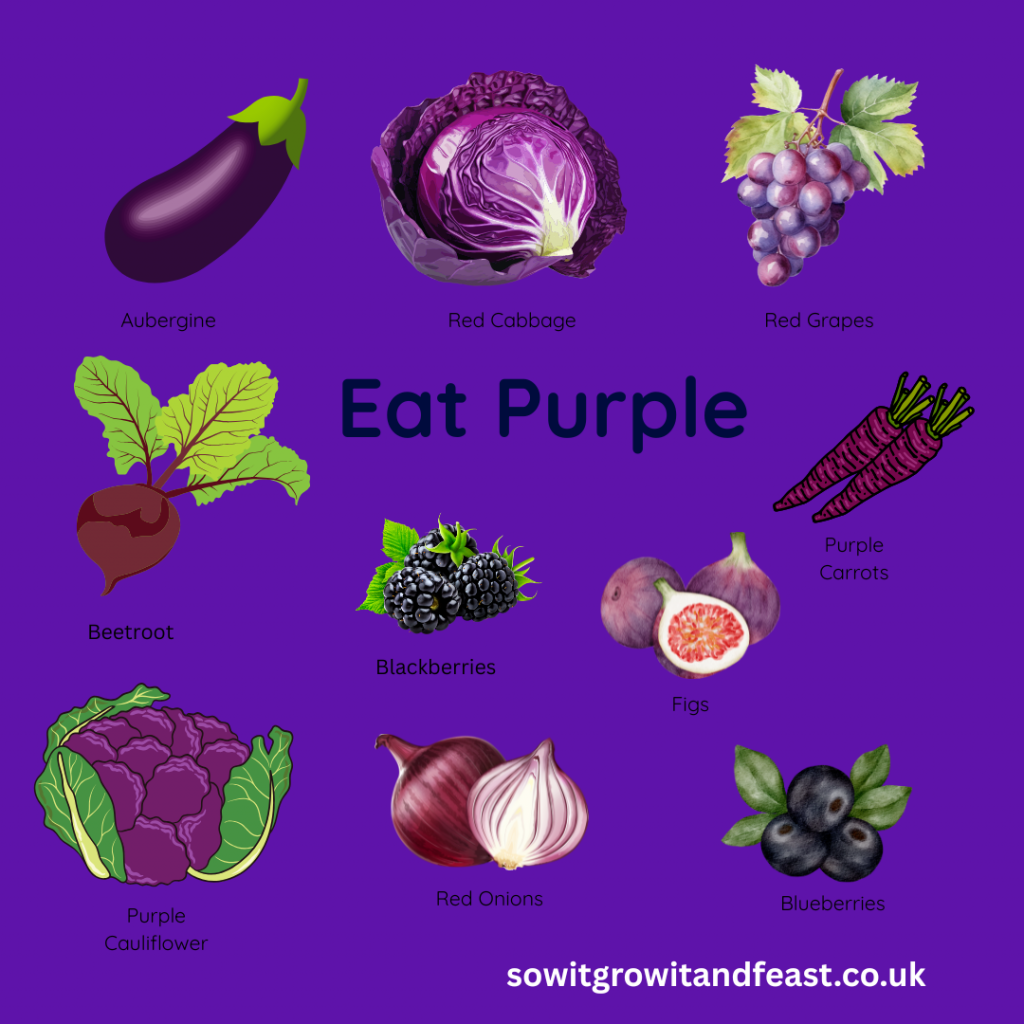
Eat Purple. Aubergine, red cabbage, red grapes, beetroot, purple cauliflower, red onions, figs, purple carrots, blackberries, blueberries

Why Are Some Fruits and Vegetables Purple?

That deep purple, blue or almost black colour often comes from anthocyanins.

Anthocyanins are naturally occurring pigments found in plants. They’re responsible for the colour of foods including blackberries, blueberries, blackcurrants, red cabbage and many purple varieties of vegetables.

They’re also antioxidants, which means they can interact with processes involving oxidation in the body.

There’s a growing body of research looking at anthocyanins and other plant compounds, but that doesn’t mean we need to assign every purple vegetable a particular illness to prevent or health problem to solve.

Food is much more complicated than that.

And so are we.

The useful message is wonderfully simple:

Eat lots of different plants.

If some of them happen to be purple, all the better.

Aubergines

Few vegetables look quite as glamorous in the garden as an aubergine.

Those glossy purple fruits hanging beneath large leaves look almost too perfect to be real.

Almost.

Aubergines provide fibre and small amounts of various vitamins and minerals. Their purple skin contains anthocyanins, including a pigment called nasunin.

But the main reason to grow aubergines is culinary.

A freshly picked aubergine can become an extraordinary number of good things.

Sow it

Aubergines need a long growing season, so sow them early indoors somewhere warm.

They’re not a crop to rush.

Grow it

A greenhouse or polytunnel gives you the best chance of a good harvest in much of Britain, although they can also grow outside in particularly warm, sunny and sheltered positions.

They’re also very happy in large pots.

Give them warmth, sunshine, regular watering and feeding once the fruits begin developing.

Feast

Roast them, grill them, add them to curries or make ratatouille, parmigiana or baba ganoush.

Aubergines absorb flavours beautifully, particularly olive oil, garlic, tomatoes, herbs and spices.

Suddenly growing three plants doesn’t seem excessive at all.

Purple Carrots

Carrots haven’t always been orange.

Purple carrots have a very long history, and growing them is an easy way to make an everyday vegetable feel rather more exciting.

Depending on the variety, they may be purple all the way through or have a purple exterior surrounding an orange, yellow or white centre.

Purple carrots provide fibre and various carotenoids, while purple varieties can also contain anthocyanins.

Sow it

Sow carrots directly where they’re going to grow.

They dislike having their roots disturbed, so transplanting isn’t generally worth the trouble.

If you have heavy or stony soil, try growing them in a deep container instead.

Grow it

Keep the soil moist while the seeds germinate.

Carrot root fly can be troublesome, so consider resistant varieties, fine mesh or other physical barriers if it’s a problem where you garden.

Then comes the good bit.

Pull one up.

You never quite know what shape is going to emerge.

Feast

Roast purple carrots, grate them into salads, add them to soups or simply steam them.

One warning: some purple varieties are enthusiastic about sharing their colour with everything else in the pan.

Consider yourself warned.

Beetroot

Is beetroot red?

Is it purple?

Burgundy?

I’m not sure it matters.

It certainly belongs at this end of the rainbow.

Beetroot provides folate, manganese and potassium and naturally contains dietary nitrates. Its intense colour comes from pigments called betalains, rather than anthocyanins.

That’s a useful reminder that foods of similar colours aren’t necessarily nutritionally identical.

Sow it

Beetroot is wonderfully straightforward to grow from seed.

Sow directly outside from spring onwards and make smaller sowings every few weeks if you’d like a succession of roots rather than thirty-seven beetroot becoming ready simultaneously.

Grow it

Keep plants watered during dry spells and harvest some while the roots are still young and tender.

Don’t forget the leaves.

Young beetroot leaves are edible and can be used in salads or cooked similarly to chard.

Feast

Roast beetroot, pickle it, grate young roots into salads or pair it with feta, goat’s cheese, walnuts or horseradish.

Just don’t prepare it immediately before going somewhere important wearing white.

Red Cabbage

It is called red cabbage.

It is quite clearly purple.

Gardening is full of these little mysteries.

Red cabbage contains fibre, vitamin C and vitamin K, among other nutrients, and its colour comes from anthocyanins.

It’s also an excellent vegetable for the cooler months.

Sow it

Depending on the variety, cabbage can be sown at different points during the year.

Choose a variety suited to when you want to harvest it rather than assuming all cabbages behave in the same way.

Grow it

Cabbages like fertile, firm soil.

Protect young plants from pigeons and keep an eye out for cabbage white butterflies, whose caterpillars can turn a beautiful cabbage into lace with remarkable efficiency.

Feast

Shred red cabbage into winter salads and slaws or cook it slowly with apple and spices.

Pickling is another excellent option if you’ve got more than you can use immediately.

A jar of jewel-coloured pickled cabbage is a rather good thing to have waiting in the fridge.

Purple Sprouting Broccoli

Purple sprouting broccoli is one of my favourite crops because it arrives when the vegetable garden can otherwise feel rather quiet.

After months of waiting, those purple shoots begin appearing in late winter and spring.

Suddenly the garden is feeding you again.

It provides fibre, vitamin C, vitamin K and folate, along with a variety of naturally occurring plant compounds.

Sow it

Purple sprouting broccoli requires patience.

It’s usually sown months before you expect to harvest it, which means you’re giving valuable vegetable-garden space to something that appears to be doing very little for quite a long time.

Trust the process.

Grow it

Give plants fertile soil and enough room to develop.

Protect them from pigeons and caterpillars where necessary and support tall plants in exposed gardens.

Feast

Pick the shoots regularly and more should follow.

Steam them, roast them or sauté briefly with garlic and olive oil.

Don’t overcomplicate it.

One of the great pleasures of seasonal growing is waiting months for something and then eating it as simply as possible.

Blackberries

Blackberries are the fruit that prove you don’t always have to sow something to enjoy a harvest.

Come late summer, Britain’s hedgerows can be full of them.

Their dark colour comes from anthocyanins, and blackberries provide fibre, vitamin C and vitamin K among other nutrients.

You can also grow cultivated varieties at home, including thornless types that are considerably kinder to your arms.

Grow it

Blackberries and hybrid berries generally appreciate sunshine and some support.

Cultivated varieties can produce larger fruits than their wild relatives and can be trained neatly against wires or fences.

If you’re picking wild blackberries, make sure you’re somewhere you’re permitted to forage and that you can confidently identify what you’re collecting.

Feast

Eat them with yoghurt, make crumble, turn them into jam or freeze them.

To freeze berries individually, spread them on a tray first and transfer them to a container once frozen.

This prevents the entire harvest becoming one enormous blackberry iceberg.

Blackcurrants

Blackcurrants have one of those flavours that instantly tastes of summer.

They’re particularly rich in vitamin C and contain fibre and anthocyanins.

They’re also a very useful fruit to grow because an established bush can provide crops for years.

Grow it

Blackcurrants prefer reasonably fertile, moisture-retentive soil and will crop best with a decent amount of sun.

Once established, pruning out some of the older wood encourages fresh productive growth.

Feast

Fresh blackcurrants can be quite sharp, which is exactly what makes them so good for cooking.

Turn them into compote, jam, cordial, puddings or sauces.

They also freeze beautifully.

Blueberries

Despite having blue in the name, I’m claiming blueberries for the purple end of our edible rainbow.

Their blue-purple colour comes largely from anthocyanins.

Blueberries also provide fibre, vitamin C, vitamin K and manganese.

The important thing to know if you want to grow them is that blueberries are acid-loving plants.

Grow it

If your garden soil isn’t acidic, don’t try to persuade it otherwise.

Grow blueberries in containers filled with an ericaceous growing medium.

Rainwater is preferable for watering where possible, particularly in hard-water areas.

Growing more than one compatible variety can also improve pollination and extend the harvest.

Feast

Eat blueberries straight from the bush, scatter them over breakfast, bake them into muffins or freeze them.

Like strawberries, they have a mysterious habit of disappearing between garden and kitchen.

Purple Potatoes

Cutting open a purple potato for the first time is quite a surprise.

Some varieties have coloured skins but ordinary pale flesh. Others are spectacularly purple all the way through.

Purple-fleshed potatoes contain anthocyanins alongside the carbohydrate, fibre, potassium and vitamin C associated with potatoes more generally.

Grow it

Purple potatoes are grown in much the same way as other potatoes.

Plant seed potatoes in the ground, large containers or potato bags and earth up the plants as they grow.

Choose varieties according to whether you want first earlies, second earlies or maincrop potatoes.

Feast

Roast them, boil them or turn them into mash.

Some retain their colour better than others during cooking.

Purple mashed potato may take the family by surprise.

I consider that an advantage.

Purple Cauliflower

If you think cauliflower is boring, grow a purple one.

Purple cauliflower gets its colour from anthocyanins and provides fibre, vitamin C, folate and other nutrients.

It’s grown in much the same way as more familiar white varieties.

Grow it

Cauliflowers appreciate fertile soil and consistent growing conditions.

They can be slightly demanding, particularly if growth is interrupted by drought or other stresses.

But producing a perfect purple cauliflower from your own garden is enormously satisfying.

Feast

Roast it.

Cauliflower transformed by a hot oven, olive oil and seasoning is a completely different proposition from the over-boiled cauliflower some of us remember from childhood.

It also works beautifully in curries, salads and vegetable bakes.

Purple Asparagus

Purple asparagus is one for the patient gardener.

Like green asparagus, it is a perennial crop. Establish a bed successfully and it can produce spears for many years.

The purple colouring comes from anthocyanins, and the spears provide fibre, folate and other vitamins and minerals.

Grow it

Asparagus wants a permanent home in well-drained soil.

Prepare the ground carefully because this isn’t a crop you’ll want to move next year.

And don’t expect an immediate feast.

Young asparagus beds need time to establish before being harvested heavily.

Feast

When those first proper harvests finally arrive, keep things simple.

Steam, roast or griddle the spears and add butter, olive oil or a squeeze of lemon.

You’ve waited years for them.

They deserve centre stage.

Plums

A plum tree can be one of the great pleasures of a productive garden.

Depending on the variety, the fruit might be red, yellow, green or deep purple.

Purple-skinned plums provide fibre and contain a range of plant compounds, including anthocyanins in the coloured skin.

Grow it

Choose the variety and rootstock according to the space you have available.

Some plums are self-fertile, while others crop better with a suitable pollination partner nearby, so check before buying.

Then hope the tree doesn’t decide to produce its entire annual crop during the one week you’ve gone on holiday.

Feast

Eat ripe plums straight from the tree, bake them, poach them or turn them into jam and chutney.

A plum crumble is also an excellent answer to most autumn questions.

Figs

Figs aren’t always obviously purple, but many familiar varieties ripen to beautiful shades of deep purple or burgundy.

They provide fibre, potassium and other nutrients.

They’re also a fascinating fruit to grow in Britain.

Grow it

Figs often crop particularly well when their roots are restricted.

That’s why you’ll frequently see them grown against sunny walls with their roots contained or planted in large pots.

Give them the warmest, sunniest position you can.

Feast

A perfectly ripe fig needs very little interference.

Eat it fresh, add it to salads or serve with yoghurt or cheese.

If you’re lucky enough to have too many, make jam or chutney.

Red Onions

Yes, another supposedly red vegetable that’s actually purple.

Red onions contain various sulphur compounds and flavonoids, including the flavonoid quercetin, and provide some fibre and vitamin C.

More importantly for the kitchen, they’re wonderfully versatile.

Sow it

You can grow onions from seed or sets.

Sets are particularly straightforward if you’re new to growing onions.

Grow it

Give them a sunny position and reasonably well-drained soil.

Once the foliage begins to die back and the bulbs are mature, harvest and dry them properly if you want to store them.

Feast

Slice them raw into salads, roast them, pickle them or slowly cook them until soft and sweet.

Quick-pickled red onions are one of those ridiculously simple things that make almost everything else on the plate look more impressive.

Grow a Purple Patch

One of the pleasures of growing your own food is discovering that vegetables don’t have to look like the versions we’re accustomed to seeing in supermarkets.

Carrots can be purple.

Cauliflowers can be purple.

Potatoes can be purple.

Asparagus can be purple.

Even Brussels sprouts can be purple.

If you’re new to growing food, though, don’t attempt everything at once.

Try:

Purple carrots + beetroot + blackberries.

Have a little more room?

Add:

Red cabbage + purple potatoes + blackcurrants.

And if you’re prepared to play the long game:

Plant some purple asparagus.

That’s a wonderfully colourful little edible garden.

What to Do With a Purple Harvest

Eventually, every productive gardener encounters the same problem.

You wanted home-grown food.

You now have rather a lot of home-grown food.

This is when the feast part of Sow It Grow It and Feast earns its keep.

Freeze blackberries, blueberries and blackcurrants.

Pickle red onions and cabbage.

Turn plums into jam or chutney.

Roast beetroot.

Store suitable potatoes.

Make blackberry crumble.

And give some away.

A bag of home-grown produce handed over the garden fence is one of life’s small pleasures.

Eat the Rainbow — But Grow It Too

There’s good sense behind the familiar advice to eat a wide variety of fruit and vegetables.

Different plants give us different combinations of fibre, vitamins, minerals and naturally occurring plant compounds.

Purple foods are one interesting part of that bigger picture.

They don’t need to detox our liver.

They don’t need to give us younger-looking skin.

And we don’t need to eat a handful of berries expecting them to transform our memory, blood sugar or energy levels.

Food doesn’t have to behave like medicine to be worth growing and eating.

So plant the purple carrot.

Grow the blackberry.

Wait patiently for the plum tree.

And when something is finally ready, pick it and take it into the kitchen.

Because the really lovely thing about eating the rainbow is discovering that you can grow quite a lot of it yourself.

Sow it. Grow it. And then feast.

Keeping your blood sugar levels stable is vital for your overall health. The fibre and compounds in purple foods can help.

Further Reading: Why You Should Eat More Purple, Why Eating Green Is Good For You, Eat the Rainbow: The Power of Red, Why Orange Foods Deserve a Place on Your Plate, The Incredible Benefits of Growing Your Own Food
Follow us on Instagram, Threads, BlueSky, Twitter, Pinterest & Facebook

Not sure where to start? Take a look at our Grow Your Own Packs with detailed step by step instructions, seeds and 1 years online support.

Eat Red: What to Grow, Pick and Eat from the Red End of the Rainbow

Strawberries warm from the sun. A bowl of raspberries that somehow never quite makes it back to the kitchen. Shiny red peppers, handfuls of cherries, rosy apples and tomatoes in every imaginable shade of scarlet.

And then there’s beetroot.

Anyone who has ever prepared beetroot while wearing a white top will already know that red fruit and vegetables aren’t shy about announcing themselves.

But those wonderful colours aren’t there simply to make our dinner look pretty.

The reds, pinks and deep purples we see in fruit and vegetables come from naturally occurring plant pigments and compounds, including lycopene and anthocyanins. Different red foods also provide varying amounts of fibre, vitamin C, folate, potassium and other nutrients.

That’s one reason we’re encouraged to eat a varied diet containing plenty of fruit and vegetables.

But there’s another reason I particularly like red foods.

Many of them are remarkably easy to grow.

From a pot of strawberries by the back door to radishes squeezed into a spare patch of soil, raspberries along a fence or tomatoes ripening in the greenhouse, you don’t need an enormous vegetable garden to put something home-grown and red on your plate.

So rather than thinking of red foods as something we should eat, let’s look at what makes them interesting, what we can grow ourselves and — most importantly — what we can do with them when they’re ready to pick.

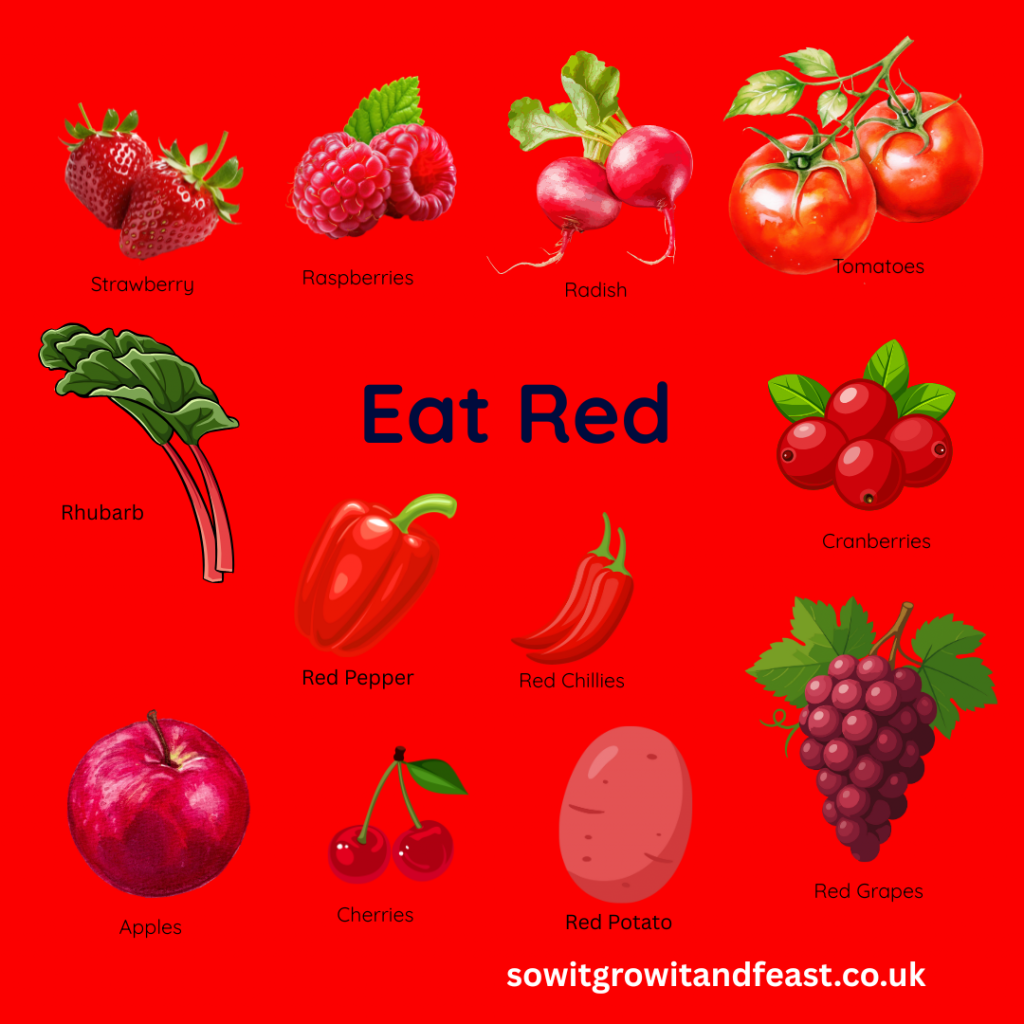
Eat Red. Strawberries, toomatoes, radish, raspberries, rhubarb, apples, cherries, red potato, red grapes, red chillies, cranberries, red pepper

Why Are Red Fruits and Vegetables Red?

The colour of fruit and vegetables comes from naturally occurring plant pigments.

Two you’ll often hear mentioned in connection with red produce are lycopene and anthocyanins.

Lycopene is a carotenoid responsible for the red and pink colour of foods such as tomatoes and watermelon.

Anthocyanins are another group of plant pigments. Depending on the food and its chemistry, they can produce shades ranging from red and pink through to purple and blue. You’ll find them in foods including berries, cherries and some varieties of apple.

These compounds are often described as antioxidants because of the way they interact with oxidation in the body.

But there’s no need to turn every tomato into a medicine.

Fruit and vegetables contain complicated mixtures of nutrients and plant compounds, and eating a wide variety of them is much more useful than pinning miraculous properties on one particular ingredient.

And frankly, there are plenty of good reasons to eat a ripe home-grown strawberry without asking it to improve anything at all.

Tomatoes

If I could persuade someone to grow just one edible plant, tomatoes would be high on the list.

A tomato picked warm from the plant tastes completely different from one that’s travelled halfway across Europe in a refrigerated lorry.

Tomatoes contain lycopene, the pigment responsible for much of their red colour, as well as vitamin C, potassium and folate.

Interestingly, processing and cooking tomatoes can make lycopene easier for our bodies to absorb, so fresh tomatoes aren’t the only ones worth eating. Tomato sauces, soups and roasted tomatoes all have a place at the table.

Sow it

Tomatoes are usually sown indoors in late winter or early spring in Britain because they need a long growing season.

Grow it

Give them warmth, plenty of light, regular watering and feeding once the fruits begin to develop.

You don’t need a greenhouse. Many varieties grow happily in a sunny sheltered spot outside, and compact varieties can be grown in pots.

Feast

When they’re coming faster than you can eat them, roast a tray with garlic and herbs, make tomato sauce for the freezer or turn them into soup.

And the very best ones?

Eat them immediately.

Strawberries

There are few gardening pleasures quite like spotting the first properly red strawberry of summer.

Strawberries provide vitamin C, fibre and folate and contain anthocyanins and other naturally occurring plant compounds.

They’re also one of the easiest fruits to grow when space is limited.

Grow it

Strawberries will grow in the ground, pots, containers and hanging baskets, making them ideal for smaller gardens and patios.

Keep an eye on them as the fruit ripens because birds and slugs are remarkably good at identifying the perfect strawberry approximately five minutes before you do.

Feast

Eat them straight from the plant, add them to breakfast, make strawberry compote or freeze extras for smoothies and puddings later in the year.

Although I have yet to experience the mythical phenomenon known as “too many strawberries”.

Raspberries

Raspberries are another excellent fruit to grow at home because they’re expensive to buy and spectacular when freshly picked.

They’re naturally high in fibre and provide vitamin C and manganese, as well as anthocyanins and other polyphenols.

Summer-fruiting and autumn-fruiting varieties mean it’s possible to enjoy home-grown raspberries over a surprisingly long season.

Grow it

Give raspberries a sunny position and reasonably fertile soil. Most varieties will need some support, although once established they can reward you with fruit for years.

Feast

Eat them fresh, scatter them over porridge or yoghurt, make jam or freeze them individually on a tray before transferring them to a bag.

They’re excellent straight from the freezer too.

Not that I would know anything about standing in front of an open freezer eating frozen raspberries.

Beetroot

Beetroot deserves far more attention in the vegetable garden.

It’s easy to grow, doesn’t require enormous amounts of space and gives you two things to eat: the roots and the young leaves.

Beetroot provides folate, manganese and potassium and is naturally rich in compounds called dietary nitrates.

And then, of course, there’s that extraordinary colour.

Sow it

Beetroot can be sown directly outside from spring onwards. Sow small amounts every few weeks rather than the entire packet at once and you’ll have a steadier supply.

Grow it

Thin seedlings if necessary and keep them watered during dry weather. Don’t wait for every root to become enormous — smaller beetroot can be beautifully tender.

Feast

Roast it, pickle it, grate young beetroot raw into salads or combine roasted beetroot with feta, walnuts and leaves.

And remember that the young leaves are edible too.

Red Peppers and Chillies

A green pepper and a red pepper can actually be the same fruit at different stages of ripeness.

As many peppers mature, their colour changes and their flavour becomes sweeter.

Red peppers are particularly rich in vitamin C and also contain carotenoids. Chillies contain capsaicin, the compound responsible for their heat.

Sow it

Peppers and chillies need a long growing season, so start them indoors early in the year.

Grow it

They like warmth and sunshine and grow very well in pots, greenhouses and sunny sheltered positions.

Feast

Roast red peppers until sweet and soft, add them to salads, soups and pasta sauces or preserve a glut.

Chillies can be used fresh, dried or frozen — which is useful because one enthusiastic chilli plant can produce a rather alarming amount of fruit.

Radishes

If patience isn’t your greatest gardening virtue, grow radishes.

Some varieties can be ready to harvest only a few weeks after sowing, making them particularly satisfying for new gardeners and children.

Radishes provide vitamin C and fibre, along with a range of naturally occurring plant compounds.

Sow it

Sow little and often from spring onwards.

Grow it

Keep them watered. Dry conditions can make the roots woody or excessively peppery.

Because they’re quick-growing and don’t need much room, they’re brilliant for filling little gaps between slower-growing vegetables.

Feast

Slice them into salads, add them to sandwiches or try roasting them.

And don’t automatically throw away the leaves. Young radish leaves can be eaten too.

Cherries

Unlike radishes, cherries require rather more patience.

But a cherry tree in blossom is beautiful before it has produced a single fruit.

Cherries contain fibre, vitamin C and potassium, as well as anthocyanins and other plant compounds.

If space is limited, look for trees grown on dwarfing rootstocks, which can make growing fruit trees in smaller gardens much more practical.

Just remember that birds adore cherries every bit as much as we do.

Possibly more.

Red Apples

Not every apple is red, of course, but rosy-skinned varieties certainly earn their place here.

Apples provide fibre and vitamin C, and much of their fibre and many of their plant compounds are found in or close to the skin.

They’re also one of the great seasonal pleasures of the British garden.

An apple eaten straight from the tree on an autumn afternoon is a completely different experience from one that’s spent months in storage.

If you have room for a tree, choose carefully. The right rootstock can make the difference between a manageable garden tree and something requiring an orchard.

And if you end up with more apples than you can possibly eat, there are worse problems to have.

Apple crumble springs immediately to mind.

Rhubarb

Botanically, rhubarb is a vegetable, although we generally treat it as a fruit in the kitchen.

It provides fibre, potassium and vitamin K, but I mainly grow it because there are few things more cheering than seeing those first pink stalks pushing their way out of the soil.

Rhubarb is perennial, so once established it can return year after year.

And an important note: eat the stalks, not the leaves. Rhubarb leaves should not be eaten.

Feast

Rhubarb crumble is the obvious answer, but try roasting it too. It’s delicious with yoghurt, porridge or granola.

You can also turn a good harvest into compote, jam or chutney.

Watermelon

Watermelon isn’t the easiest thing to grow outdoors in the British climate, but adventurous gardeners with a greenhouse or very warm sheltered position may enjoy trying.

Its pink-red flesh gets its colour partly from lycopene, and — unsurprisingly given its name — watermelon has a very high water content.

Sometimes growing something slightly ridiculous simply to see whether you can is part of the fun of gardening.

Cranberries and Pomegranates

Not everything on the red plate needs to come from your garden.

Cranberries and pomegranates contain a variety of polyphenols and other plant compounds and can bring sharpness, sweetness and colour to winter food.

Fresh cranberries are particularly useful for sauces and baking, while pomegranate seeds are wonderful scattered over salads, roasted vegetables and grain dishes.

Growing your own should never become a competition to achieve total self-sufficiency.

Grow what works for you.

Buy the rest.

Grow a Red Garden

If you’re new to growing food, you don’t need to attempt everything on this list.

Start with three.

For example:

Strawberries + tomatoes + radishes.

All three can be grown in containers, which means you could create a tiny edible red garden on a patio, balcony or sunny doorstep.

If you have more room, add raspberries, beetroot and a redcurrant bush.

Before long you’ll start noticing how the seasons move through your red harvest.

Radishes appear quickly in spring.

Strawberries arrive with early summer.

Tomatoes and raspberries take us through the warmer months.

Then apples and beetroot carry us towards autumn.

That’s one of the pleasures of growing food: you don’t simply eat with the seasons.

You watch them happen.

What to Do With a Red Harvest

There is a particular point in the growing year when pride in your productive vegetable garden can turn into mild panic.

You’ve grown it.

It’s ready.

And now there’s rather a lot of it.

This is where the feast part matters.

Freeze raspberries and strawberries.

Turn tomatoes into sauce.

Roast and pickle beetroot.

Dry or freeze chillies.

Make apple sauce, chutney or crumble.

Preserve what you can’t eat now and share some with friends, neighbours and family.

Growing food isn’t just about producing vegetables.

It’s about enjoying them.

Eat the Rainbow — But Grow It Too

There’s good sense behind the familiar advice to eat plenty of different fruits and vegetables.

Different plants provide different combinations of fibre, vitamins, minerals and naturally occurring plant compounds, which is why variety matters more than concentrating on one supposedly “super” food.

But I’d add something else.

Try growing some of that rainbow yourself.

Sow a row of radishes.

Plant a strawberry in a pot.

Grow a tomato by the back door.

Put a raspberry cane against the fence.

Then wait.

Because however nutritious something may be, there’s another benefit to growing food that’s rather harder to measure.

The pleasure of walking outside, spotting something ripe and thinking:

I grew that.

And then eating it.

That’s the good bit.

Further Reading: Why Orange Foods Deserve a Place on Your Plate, Why Eating Green Is Good For You, Why You Should Eat More Purple, Grow Your Own: Best Fruits for Your Garden, The Importance of Growing Your Own Food

Follow us on Instagram, Threads, BlueSky, Twitter, Pinterest & Facebook

Not sure where to start? Take a look at our Grow Your Own Packs with detailed step by step instructions, seeds and 1 years online support.

Eat Orange: What to Grow, Pick and Eat from the Orange End of the Rainbow

Carrots pulled from the soil. Pumpkins glowing in an autumn garden. Apricots, peaches, sweet potatoes and great wedges of butternut squash roasting in the oven.

Orange food is rather difficult to ignore.

And that’s a good thing.

Many orange fruits and vegetables get their colour from naturally occurring plant pigments called carotenoids. These include beta-carotene, which our bodies can convert into vitamin A.

But orange fruits and vegetables aren’t all nutritionally identical simply because they happen to share a colour. Between them they provide different combinations of fibre, vitamin C, potassium, folate and other vitamins, minerals and plant compounds.

That’s why I prefer to think about variety rather than miracle foods.

And, of course, quite a few of these orange foods are things we can grow ourselves.

So let’s leave the promises of detoxes, glowing skin and miraculous health transformations to one side and do something rather more interesting.

Let’s sow them, grow them and eat them.

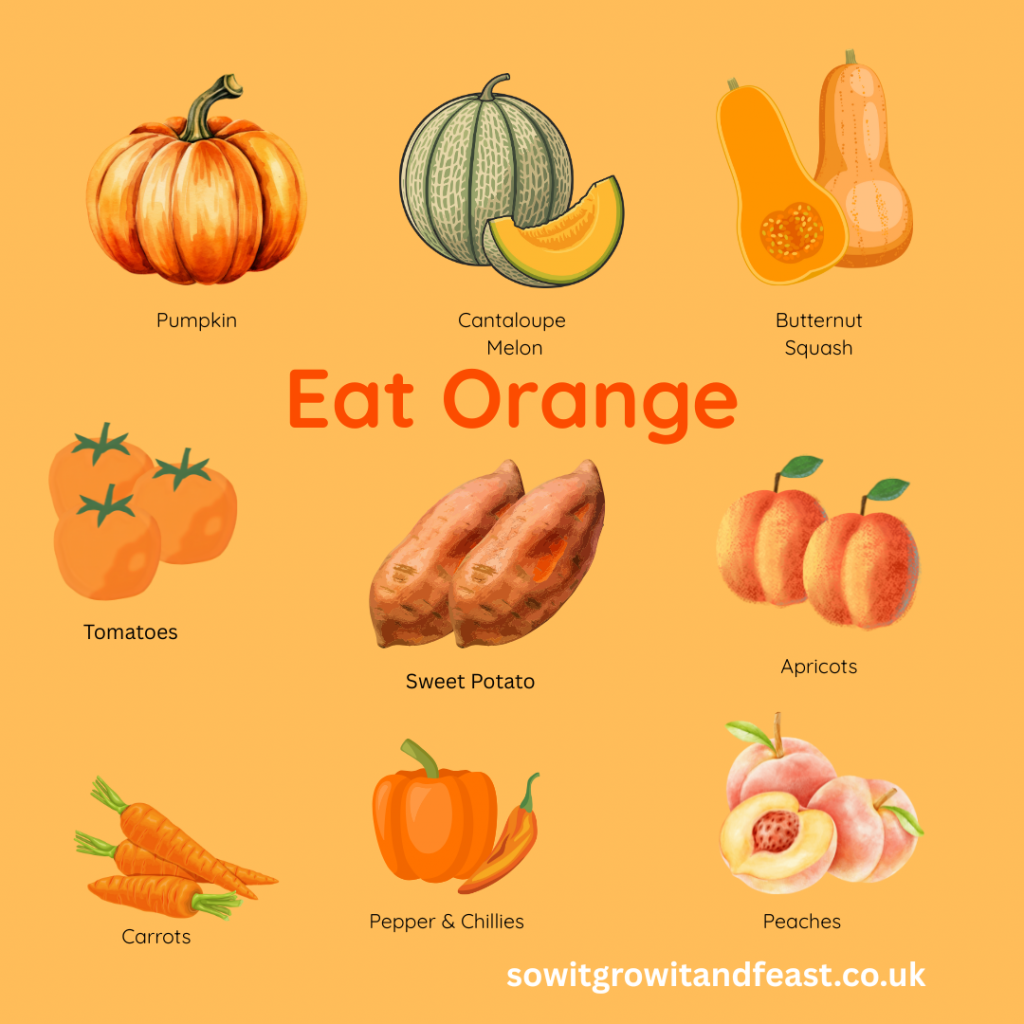
Eat Orange. Pumpkin, cantaloupe melon, butternut squash, tomatoes, sweet potato, apricots, carrots, peppers and chillies, peaches.

Why Are Some Fruits and Vegetables Orange?

That wonderful orange colour often comes from a family of plant pigments called carotenoids.

One of the best known is beta-carotene, found in foods including carrots, sweet potatoes, pumpkins and some squashes.

The body can convert beta-carotene into vitamin A, which has a number of normal functions in the body, including contributing to normal vision and immune function.

Other carotenoids include alpha-carotene, lutein and zeaxanthin.

But there’s no need to remember all their names before you’re allowed to eat a carrot.

The important thing is that different plants contain different mixtures of nutrients and plant compounds, which is one of the reasons eating plenty of different fruits and vegetables makes sense.

And growing different ones makes the vegetable garden considerably more interesting too.

Carrots

Let’s start with the obvious one.

Carrots are so closely associated with the colour orange that it’s easy to forget they also come in purple, yellow, red and white.

Orange carrots are particularly associated with beta-carotene. They also provide fibre and potassium, among other nutrients.

They’re also satisfying to grow.

Admittedly, pulling up a carrot can occasionally reveal something resembling a pair of trousers rather than a supermarket specimen.

But that’s part of the fun.

Sow it

Carrots are best sown directly into the soil because they don’t particularly enjoy being transplanted.

Sow little and often from spring onwards for a succession of roots rather than an enormous crop arriving all at once.

If your soil is heavy or stony, try growing carrots in containers filled with a finer growing medium.

Grow it

Keep the soil moist while seeds are germinating and avoid disturbing the foliage unnecessarily, as the scent can attract carrot root fly.

There are also resistant varieties and physical barriers available if carrot fly is a problem in your garden.

Feast

Eat young carrots raw, roast them, grate them into salads or add them to soups and stews.

Carrot tops can be used too, although their flavour is quite strong. Try a small amount chopped into a herby pesto rather than automatically putting all the foliage on the compost heap.

Pumpkins

Few vegetables announce the arrival of autumn quite like a pumpkin.

Technically a fruit, pumpkins are members of the squash family and range from enormous orange Halloween specimens to smaller varieties grown primarily for eating.

Their orange flesh contains carotenoids, including beta-carotene, as well as fibre and various vitamins and minerals.

But the best reason to grow an eating pumpkin is what happens when you bring it into the kitchen.

Sow it

Pumpkins need warmth, so sow seeds under cover in spring before planting outside after the risk of frost has passed.

Grow it

Give them fertile soil, plenty of water and room.

Lots of room.

A pumpkin plant can set off across a vegetable patch with the determination of someone who’s just remembered they’re late for a train.

Let the fruits mature fully on the plant and harvest them before the first serious frosts.

If properly cured, many varieties will store for months.

Feast

Roast pumpkin with herbs and garlic, make soup, add it to curries and risottos or turn it into purée.

Don’t automatically throw away the seeds either. Clean and roast them for a crunchy snack or topping.

One plant; plenty to eat.

Butternut Squash

Butternut squash has become such a familiar supermarket vegetable that it’s easy to forget you can grow it yourself.

Its deep golden-orange flesh contains beta-carotene as well as fibre, potassium and vitamin C.

It’s also an excellent crop for extending the home-grown season because properly ripened squash can be stored after harvesting.

Sow it

Start seeds somewhere warm in spring.

Grow it

Like pumpkins, butternut squash appreciate rich soil, warmth and plenty of water.

They also like to roam.

If space is limited, you can experiment with training some squash plants vertically over sturdy supports, although the developing fruits may need supporting.

Feast

Roast it, make soup, stir it through pasta or risotto, add it to curry or mash it with butter and black pepper.

A tray of roasted squash is also one of those useful things that can become several different meals over the following few days.

Orange Tomatoes

Tomatoes aren’t just red.

There are yellow, green, purple, almost black and beautifully orange varieties too.

Different tomato varieties contain different proportions of carotenoids and other plant compounds, alongside nutrients including vitamin C, potassium and folate.

But I grow unusual tomatoes primarily for something much simpler.

They taste good and look glorious together on a plate.

Sow it

Sow tomatoes indoors in late winter or early spring.

Grow it

Give them warmth, light, regular watering and feeding once the fruits begin developing.

Choose your variety according to where you’re going to grow it. Some tomatoes are happier in greenhouses while others perform well outdoors in a sunny, sheltered position.

Feast

Combine orange tomatoes with red and yellow varieties, tear over some basil and add olive oil.

That’s summer lunch sorted.

If you have a glut, roast them or turn them into sauce for the freezer.

Orange Peppers

Peppers begin green and many change colour as they ripen, depending on the variety.

Orange peppers are sweet, crisp and particularly useful in the kitchen. They’re a source of vitamin C and contain various carotenoids.

They’re also a lovely crop to grow if you have somewhere warm.

Sow it

Start peppers early indoors because they need a long growing season.

Germination is much better with warmth.

Grow it

A greenhouse is ideal, but peppers can also do well in pots in a sunny, sheltered spot.

Water consistently and feed plants once they’re fruiting.

Then be patient.

Watching a green pepper gradually turn orange is surprisingly satisfying.

Feast

Eat them raw, roast them, stuff them, add them to pasta sauces or chop them into salads.

Roasted peppers can also be frozen, which is handy when several decide to ripen at once.

Orange Chillies

Chillies are closely related to sweet peppers and come in an extraordinary range of shapes, colours and levels of heat.

Their heat comes from capsaicin, while orange varieties may also contain carotenoids responsible for their colour.

Sow it

Sow chillies early and give them warmth.

Some varieties can be slow to germinate, so don’t assume nothing is happening after a few days.

Grow it

Chillies grow beautifully in pots and can be surprisingly ornamental plants.

Give them sunshine and warmth and they’ll often keep producing well into autumn.

Feast

Use them fresh in curries, stir-fries and sauces.

If your plants produce more chillies than you know what to do with, freeze them whole or dry suitable varieties.

One productive chilli plant can supply a household for a surprisingly long time.

Especially if you accidentally chose a very hot one.

Sweet Potatoes

Sweet potatoes aren’t closely related to ordinary potatoes despite the name.

They’re a warm-climate crop and the orange-fleshed varieties are rich in beta-carotene. They also provide fibre, potassium and vitamin C.

Growing them in Britain is possible, although they need a long, warm growing season.

Grow it

Sweet potatoes are generally grown from young shoots called slips rather than from seed.

Give them your warmest, sunniest position. A greenhouse, polytunnel or large container in a sheltered spot can improve your chances.

Feast

Bake them, roast them, turn them into wedges, mash them or add them to soups and curries.

They’re naturally sweet, which also makes them surprisingly versatile.

Apricots

Apricots are one of those fruits that remind you just how much difference ripeness makes.

A ripe apricot picked from a tree is soft, fragrant and quite unlike many of the firm fruits we encounter in supermarkets.

Apricots contain carotenoids as well as fibre, potassium and vitamins including vitamin C.

Grow it

Growing apricots in Britain takes a little thought.

They flower early, which makes blossom vulnerable to frost, and they appreciate warmth and shelter.

A sunny south-facing wall can provide the sort of microclimate they enjoy.

If you’re gardening in a colder or exposed spot, they may be more of a challenge.

Feast

Eat perfectly ripe apricots fresh.

If you’re lucky enough to have a generous crop, they can also be poached, baked, turned into compote or made into jam.

Peaches

Peaches are another fruit that can be grown successfully in Britain if you give them the right conditions.

They contain fibre, vitamin C, potassium and various carotenoids and other plant compounds.

But again, flavour is the reason I’d make room for one.

Grow it

Peaches appreciate warmth and shelter, and training a tree against a sunny wall can work beautifully.

They flower early, so blossom may need protection from frost.

Growing under cover can also help with peach leaf curl, a common fungal problem.

Feast

A properly ripe peach needs very little assistance.

Eat it over the sink.

You’ll understand why.

If you’ve got more, grill them, poach them or add sliced peaches to salads and puddings.

Oranges and Mandarins

Oranges may be the most obvious orange food of all.

They provide vitamin C, folate, fibre and various plant compounds.

They’re not an obvious outdoor crop for most British gardens, but citrus trees can be grown in containers if they’re protected appropriately during colder weather.

Grow it

Citrus trees like plenty of light and will generally need winter protection in Britain.

Growing them in pots allows you to move plants between a sheltered outdoor summer position and suitable winter accommodation.

Don’t expect your home-grown oranges to replace supermarket bags any time soon.

That’s not really the point.

The first fruit you pick from your own citrus tree will feel ridiculously exciting anyway.

Feast

Eat oranges and mandarins as they are, add segments to salads or use the zest and juice in cooking and baking.

And use the zest before throwing away the peel.

There’s an extraordinary amount of flavour in it.

Melons

Orange-fleshed melons such as cantaloupe contain plenty of water as well as nutrients including vitamin C, potassium and carotenoids.

They like considerably more warmth than the average British summer reliably provides, but they’re certainly worth trying if you have a greenhouse or polytunnel.

Grow it

Start seeds in warmth and give plants the sunniest conditions you can.

Melons need consistent watering while growing, although conditions should not remain permanently soggy.

Feast

Chill them and eat them simply.

A ripe melon doesn’t require a recipe.

Turmeric and Ginger

These aren’t orange fruits or vegetables in quite the same sense as carrots and pumpkins, but they often find their way onto orange-food lists.

Turmeric contains the yellow-orange pigment curcumin, while ginger contains a range of aromatic compounds responsible for its characteristic flavour.

Both are used extensively in cooking.

They’ve also attracted enormous numbers of health claims online.

There’s interesting scientific research into compounds found in both plants, but that doesn’t mean adding a spoonful of turmeric to a smoothie will “detox” your liver or cure inflammation.

I prefer them for the reason cooks have valued them for centuries.

They taste good.

Both can also be fascinating plants to try growing somewhere warm, even if producing substantial rhizomes in the British climate can be challenging.

Grow an Orange Garden

If you’d like to grow some of the orange rainbow yourself, keep it simple.

You don’t need an allotment full of exotic crops.

Try:

Carrots + orange tomatoes + an orange pepper.

If you’ve got more room, add:

Pumpkin or butternut squash.

And if you have a greenhouse or particularly sheltered garden, perhaps experiment with:

Sweet potatoes, melons or even a citrus tree in a pot.

That’s the lovely thing about growing food.

There’s always something else to try.

Some things will thrive.

Some will sulk.

And occasionally something you’re absolutely convinced won’t work will surprise you.

What to Do With an Orange Harvest

Late summer and autumn can produce an impressive amount of orange food.

So think beyond tonight’s dinner.

Roast and freeze peppers.

Cure pumpkins and squash for winter storage.

Turn tomatoes into sauce.

Freeze chillies.

Make apricot or peach preserves.

Store suitable carrots.

And eat plenty while it’s fresh.

Preserving a harvest is satisfying, but don’t become so determined to save everything for later that you forget to enjoy it now.

Eat the Rainbow — But Grow It Too

There is good reason to eat a wide variety of fruit and vegetables.

Different plants provide different combinations of fibre, vitamins, minerals and naturally occurring plant compounds.

Orange fruits and vegetables are one colourful part of that bigger picture.

They don’t need to “detox” us.

They don’t need to transform our skin.

And we don’t need to assign each vegetable a particular health problem to solve.

A carrot can just be a carrot.

Preferably one you’ve pulled from the ground yourself, brushed off, taken into the kitchen and turned into something delicious.

Because that’s what Sow It Grow It and Feast is really about.

Grow good food. Enjoy growing it. And then feast on what you’ve grown.

Further Reading: Why You Should Eat More Purple, Why Eating Green Is Good For You, Eat the Rainbow: The Power of Red, Grow Your Own: Best Fruits for Your Garden, The Importance of Growing Your Own Food

Follow us on Instagram, Threads, BlueSky, Twitter, Pinterest & Facebook

Not sure where to start? Take a look at our Grow Your Own Packs with detailed step by step instructions, seeds and 1 years online support.

How to Grow Herbs for Italian Cooking at Home

Fresh basil in your pesto. A sprinkle of oregano on your pizza. The scent of rosemary wafting from your roast potatoes. These small but mighty herbs hold the essence of Italian cuisine, transforming simple ingredients into mouth-watering dishes bursting with flavour. But have you ever thought about growing them yourself?

Essential Herbs in Italian Cooking

Italian cooking is renowned for its bold, fresh flavours and herbs play a starring role in this. Here’s a list of the most commonly used Italian herbs, their benefits and the dishes they best complement.

Basil

Flavour profile: Sweet with a hint of peppery spice.

Benefits:

  • Contains antioxidants and anti-inflammatory properties.
  • May support healthy digestion.

Used in:

  • Pesto alla Genovese (the classic basil pesto for pasta dishes).
  • Caprese salad (with mozzarella, tomatoes, and a drizzle of olive oil).
  • Margherita pizza.

Oregano

Flavour profile: Earthy, peppery warmth with slight bitterness.

Benefits:

  • An excellent source of vitamin K and antioxidants.
  • Known for its antimicrobial properties.

Used in:

  • Traditional marinara sauce for pasta and pizza.
  • Grilled meats like lamb and chicken.
  • Salad dressings and vinaigrettes for extra depth.

Rosemary

Flavour profile: Pine-like, woody, and slightly floral.

Benefits:

  • Rich in minerals that support brain health.
  • May improve memory and concentration (hence its nickname as the “herb of remembrance”).

Used in:

  • Roasted potatoes and vegetable trays.
  • Italian focaccia bread sprinkled with sea salt and rosemary.
  • Grilled fish recipes such as branzino.

Thyme

Flavour profile: Subtle yet savoury with a floral aroma.

Benefits:

  • Packed with vitamin C which boosts immunity.
  • Antibacterial properties that may support respiratory health.

Used in:

  • Risottos for aromatic depth.
  • Soups and stews such as minestrone.
  • Herb blends like bouquet garni for broths.

Parsley

Flavour profile: Fresh, slightly peppery and clean-tasting.

Benefits:

  • High in vitamins A, C and K.
  • Aids digestion and supports kidney health.

Used in:

  • Gremolata (a bright topping of parsley, garlic and lemon zest).
  • Spaghetti alle vongole (clam pasta).
  • Garnishing soups and pastas for added freshness.

Sage

Flavour profile: Robust, slightly earthy with an almost minty edge.

Benefits:

  • Contains compounds that may help reduce inflammation.
  • Supports oral health and healing.

Used in:

  • Sage and butter sauce for gnocchi.
  • Stuffing for meat dishes like turkey and pork.
  • Tuscan beans or soups for an aromatic boost.

How to Grow These Italian Herbs at Home

You don’t need a large garden or green thumbs to grow these herbs successfully. Many can thrive in small spaces like window sills, balconies or even kitchen counters. Here’s how to get started.

1. Choose the Right Spot

Most Italian herbs love sun-soaked conditions. Select a location that offers at least 6-8 hours of sunlight per day, whether that’s outside or by a bright window. If you’re short on natural light, consider investing in a grow light to keep your herbs thriving indoors.

2. Pick Proper Containers

If you’re growing herbs in pots or containers, ensure proper drainage to avoid waterlogged roots. Terracotta pots are an excellent choice as they naturally allow moisture and air to flow, which helps keep your herbs healthy.

3. Use Quality Soil

Choose a nutrient-rich, well-draining potting mix for your herbs. Some herbs, like rosemary and thyme, prefer sandy soils to mimic their Mediterranean origins, so you can mix in a bit of sand or perlite for these plants.

4. Water Wisely

While herbs like basil thrive with regular watering, others like rosemary prefer dryer soil. The golden rule is to water herbs only when the top inch of soil feels dry to the touch. Avoid overwatering and always ensure your containers have drainage holes.

5. Harvest Regularly

Frequent harvesting doesn’t just supply you with fresh herbs for your kitchen; it also encourages your plants to grow bushier. Snip leaves from the top of the plant to promote healthy regrowth, and avoid cutting more than one-third of the plant at any time.

6. Provide Extra Care for Colder Months

Many Italian herbs are hardy, but some like basil will need a little extra love during winter. Bring tender herbs indoors when temperatures drop, and keep them above 10 degrees Celsius.

Bonus Tips for Beginners

  • Start Small: Grow one or two herbs first, and add more as you gain confidence.
  • Label Your Herbs: Especially if you’re planting multiple types.
  • Blend Edible and Decorative: Many Italian herbs double as lovely ornamental plants for patios and balconies.

Bring the Flavours of Italy into Your Home

Growing your own herbs for Italian cooking is more than just a gardening project; it’s a way to infuse your meals with unbeatable freshness and flavour, all while connecting to centuries of Italian culinary tradition.

Imagine tearing fragrant basil leaves right before blending your homemade pesto or plucking rosemary sprigs to perfectly season your roast potatoes. These small moments bring joy to cooking and deepen your appreciation of the meals you create.

Why not take the first step today? Gather a few pots, some quality soil, and your favourite herb seeds or seedlings. Before long, your home will be brimming with the irresistible scents of Italy. And when it’s time to eat, you’ll taste the difference that homegrown freshness makes.

Further Reading: BBC Good Food Italian Recipes, Grow Herbs for French Cooking

Try our Grow your Own Herb Sets here